What does pooled patient-level evidence from PARAMEDIC3 and IVIO tell us about which vascular access route to try first? Simon Carley examines survival, neurological outcomes and the practical limits of the findings for out-of-hospital cardiac arrest.
Routine sodium bicarbonate has largely disappeared from modern ALS algorithms, but it continues to be used in many cardiac arrests. We review the BIHCA trial and discuss what it means for emergency physicians and prehospital clinicians.
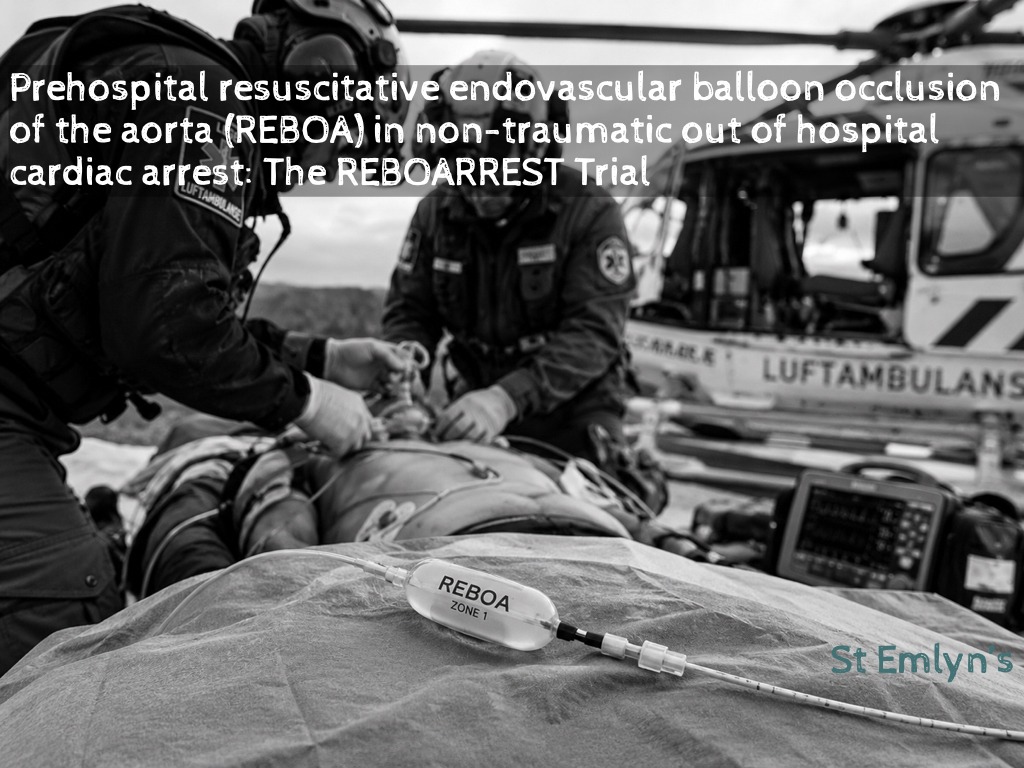
Does adding REBOA to advanced life support improve outcomes in non-traumatic out-of-hospital cardiac arrest? This appraisal of REBOARREST examines the neutral trial results, delays to aortic occlusion and incomplete delivery of the intervention, and asks what remains uncertain.
A case series from southern Gaza describes pericardiocentesis, drainage and intrapericardial tranexamic acid in 25 patients with penetrating cardiac tamponade. We examine the findings and their relevance to settings where emergency thoracotomy is unavailable, recognising the limits of this small study.
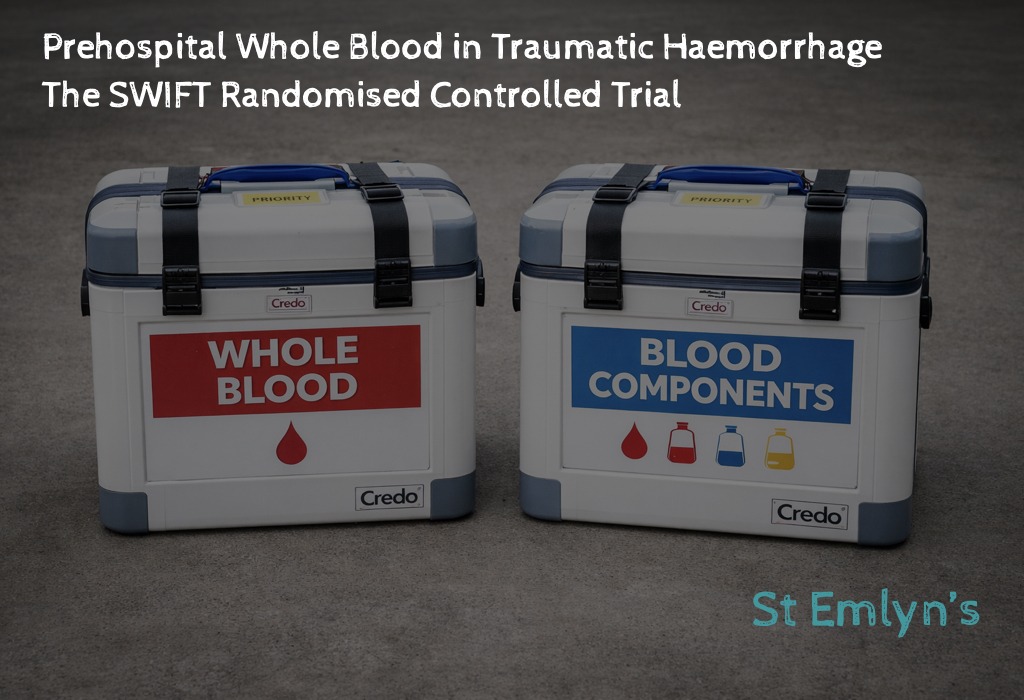
Does prehospital whole blood improve outcomes compared with blood components in traumatic haemorrhage? We critically appraise the SWiFT randomised trial, including its findings on death or massive transfusion within 24 hours and the limits of testing a prehospital-only intervention.
Intensive care papers prepared for The Big Sick 2026, covering sepsis immunotherapy, platelets, spinal cord injury, perfusion targets and prognostication after cardiac arrest. These reviews share material that did not fit into the conference session.