Author name: Iain Beardsell

Prof Iain Beardsell. MBChB (Birm), DipIMC (RCS Ed), FRCEM, SFHEA is section lead for podcasts and an Editorial Board Member St Emlyn’s blog and podcast. He is a Consultant in Emergency Medicine at University Hospital Southampton and Honorary Professor of Medical Education at University fo Southampton. Iain qualified in 1998 and over the past 20 years has trained and practiced medicine in major teaching hospitals both in the UK and overseas. He has been a consultant at University Hospital Southampton for the past eighteen years, including a three-year term as the unit’s Clinical Director. UHS is the main Major Trauma Centre for the South Coast region of England as well as the eighth largest hospital in the UK. With a significant and growing interest in medical school education, Iain is the Associate Clinical Sub Dean at UHS and the Creator of MedPod Learn - a medical podcast app and was recently made a Professor of Medical Education. An acclaimed speaker, Iain has spoken at international conferences in Australia, Ireland, Austria, Germany, Spain, Swedn and the US as well as across the UK. He is increasingly known as a conference host. Iain is also a highly regarded advisor to television medical dramas, including Casualty and Good Karma Hospital. You will find him on instagram and tiktok as @docibinsta

Ep 293 – Making Feedback Sticky, TTL Tips and more (February 2026 round up)

In this episode of the St Emlyn’s Podcast, Iain Beardsell and Simon Carley catch up on the February blog posts, recorded in the rather unseasonal context of a UK heatwave. They begin with congratulations to Simon on his reappointment as Dean of the Royal College of Emergency Medicine, before reflecting on recent conferences including IFEM in Hamburg and Don’t Forget The Bubbles in Glasgow.

Ep 293 – Making Feedback Sticky, TTL Tips and more (February 2026 round up) Read More

Ep 292 – Leadership, Culture and Psychological Safety in Pre-Hospital Care with Anna Dobbie at Trauma 2030

Recorded at Trauma 2030 at the Royal College of Surgeons in London, the conversation explores what it means to lead exceptional teams in one of the most high-pressure areas of emergency medicine. Anna reflects on six years as Clinical Lead for London HEMS, sharing lessons on leadership, culture, psychological safety, difficult conversations, managing strong personalities, and supporting clinicians to do their best work.

Ep 292 – Leadership, Culture and Psychological Safety in Pre-Hospital Care with Anna Dobbie at Trauma 2030 Read More

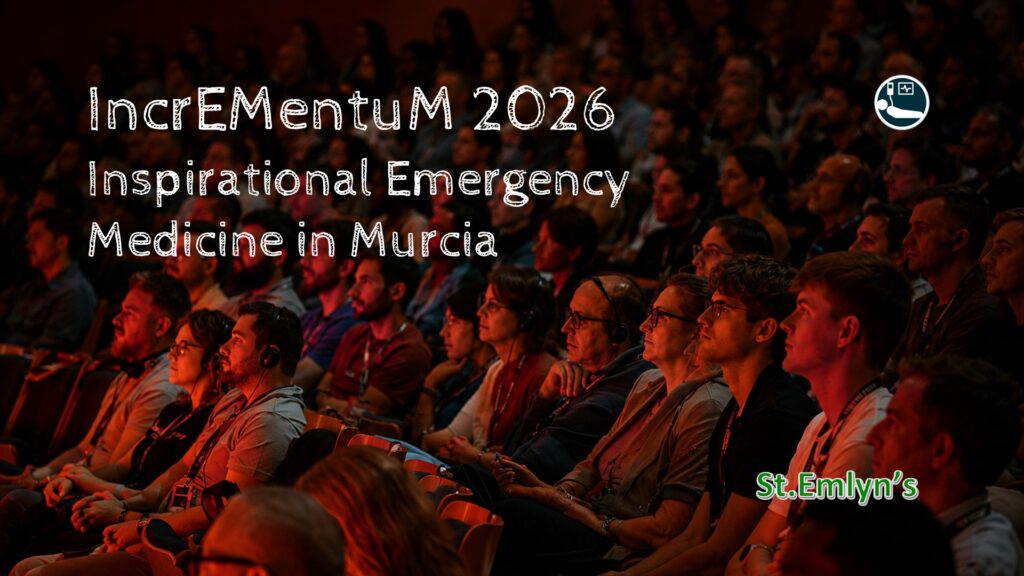
Audience members sit in a warmly lit auditorium at IncrEMentuM 2026 in Murcia, watching the stage during an Emergency Medicine conference.

IncrEMentuM 2026 – Inspirational Emergency Medicine in Murcia

IncrEMentuM 2026 in Murcia was not a conventional Emergency Medicine conference. This reflection explores how its independent design, live simulation, hosted conversations, smaller faculty, translation, production values and global audience created a learning experience that felt connected to the realities of Emergency Medicine.

IncrEMentuM 2026 – Inspirational Emergency Medicine in Murcia Read More

Ep 290 – Shock is one of the most used words in emergency medicine. It’s also one of the most misunderstood.

In this episode, recorded at Trauma 2030 at the Royal College of Surgeons, I sit down with one of St Emlyn’s own, Rich Carden, former emergency physician, now intensive care trainee and PhD graduate in trauma sciences — to explore what shock actually means beyond the blood pressure reading.

Ep 290 – Shock is one of the most used words in emergency medicine. It’s also one of the most misunderstood. Read More

Epi 289: Refractory VF, Double Sequential Defibrillation, and the Future of Cardiac Arrest

In this episode, we talk to Sheldon Cheskes about the evolving science of cardiac arrest, with a focus on refractory and recurrent ventricular fibrillation. We explore the evidence behind double sequential external defibrillation (DSED), how it compares to standard defibrillation, and what the DOSE VF trial has changed in practice. It’s about understanding why defibrillation fails, how vector and energy delivery matter, and when a different approach might improve outcomes.

Epi 289: Refractory VF, Double Sequential Defibrillation, and the Future of Cardiac Arrest Read More

Scroll to Top