
Some conferences leave you with a list of clinical updates. Others leave you with new questions. A few make you think again about how we learn, how we teach, and what it means to practise Emergency Medicine together. IncrEMentuM 2026 in Murcia was one of those events.
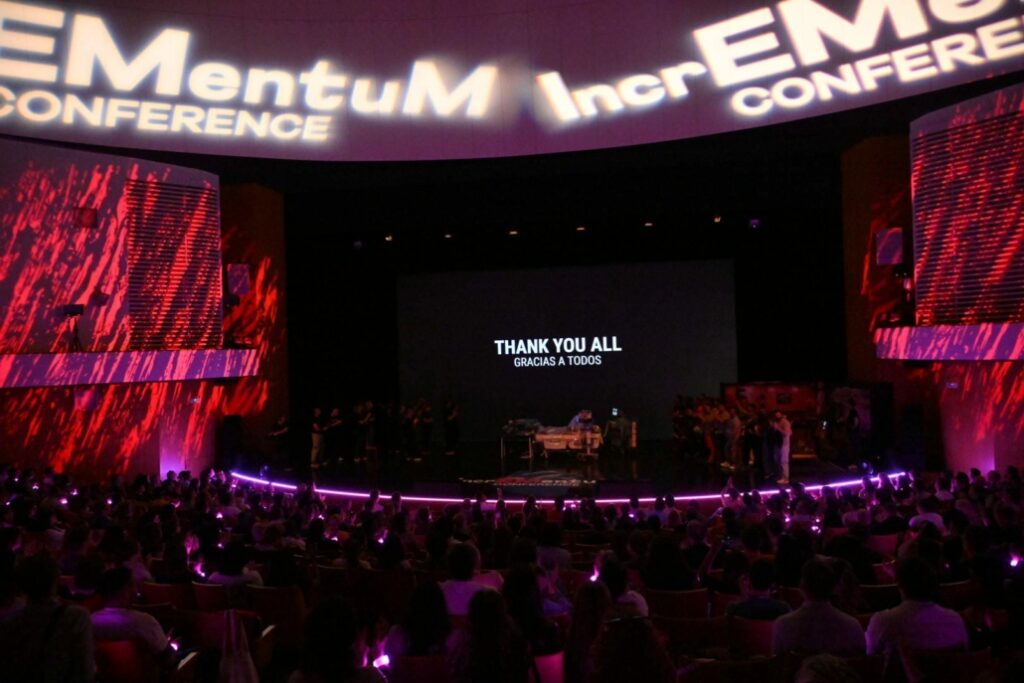
For those who have not been, IncrEMentuM is not an easy conference to describe in a single sentence. It is an Emergency Medicine event built around short clinical talks, live simulation, hosted expert conversations, carefully produced video, music, humour and moments of deliberate emotional weight. The 2026 event brought clinicians from at least 49 countries and territories to Murcia, with the programme delivered in English and supported by simultaneous translation for the large Spanish-speaking audience.
I should start with a caveat. I was not a detached observer. I was involved in hosting the event, and I had hosted the previous edition too. That makes this less a detached conference review than a reflection from close to the stage. But hosting an event is not the same as creating it. The design, production, talks, simulations, videos, music, translation, logistics and technical delivery were the work of other people: the organisers, faculty, simulation teams, production crew, translators, technicians, volunteers and venue staff who made the event happen. My role was visible, but visibility should not be confused with ownership. At most, hosting gave me a particular view of the work that others had done.
That closeness brings limitations. When you are part of something, you see some things clearly and miss others. You also have to be careful not to confuse effort with impact, or enthusiasm with educational value. The real test of a conference is not how it feels while it is happening, but what people remember, discuss, adapt and use afterwards. Still, being close to the event did offer one useful perspective. It made it possible to see the shape of the programme: the rhythm, the transitions, the way sessions interacted, and the way the audience responded.
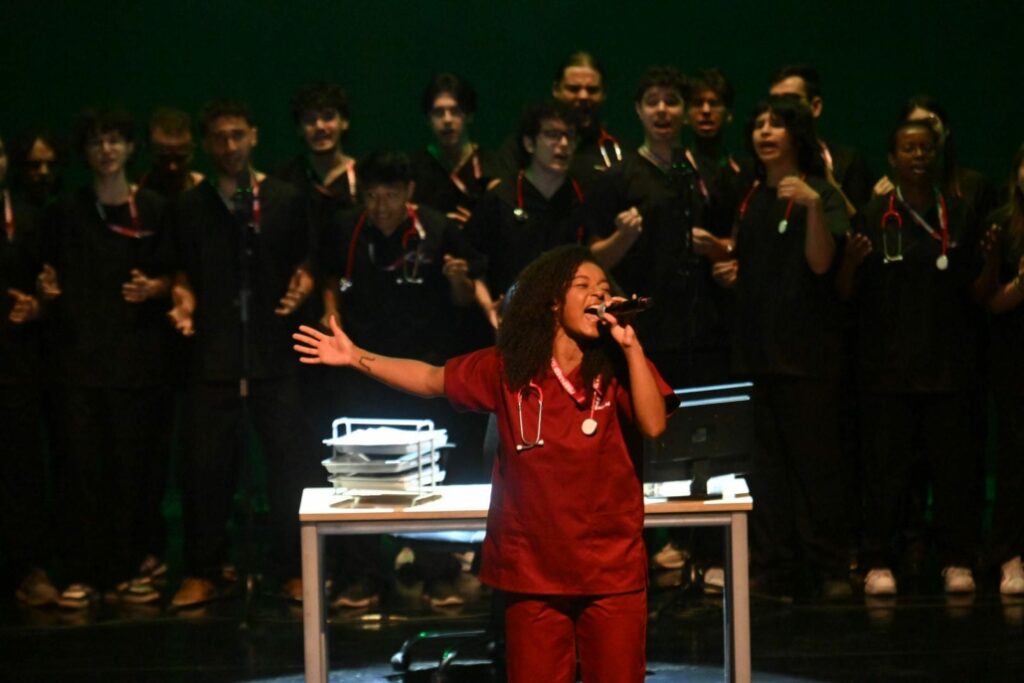
What stood out in Murcia was not simply the scale or the production, although both were impressive. It was the attempt to make Emergency Medicine education feel more like Emergency Medicine itself: fast, uncertain, collaborative, sometimes uncomfortable, often energising, and always dependent on the people in the room. There are not many Emergency Medicine conferences that would start with a live performance of Defying Gravity, but IncrEMentuM set out its stall early. This was not going to be a conventional conference. It was going to have pace, theatre, risk and energy — and the audience was invited along for the ride.
Emergency Medicine education beyond the lecture
A conference can easily become a timetable. Speaker follows speaker. Session follows session. The coffee breaks are pleasant, the slides are good, and everyone goes home with a few new ideas. There is nothing wrong with that. A well-delivered lecture remains one of the great tools of medical education. A good talk can clarify a difficult subject, challenge assumptions, summarise evidence and change practice. But Emergency Medicine is not a specialty of isolated facts. It is a specialty of integration.
Knowing the evidence matters, but so does knowing when it applies. Knowing the guideline matters, but so does communicating it under pressure. Knowing the plan matters, but so does adapting when the patient, the team, the department or the system does something unexpected. Those things are harder to teach through lectures alone.
At IncrEMentuM, the individual sessions mattered, but the event was clearly aiming for something broader. The educational value was not always contained within a single talk. It often emerged through the sequence: a focused presentation, a simulation, a hosted conversation on the Friends-style set, and then the conversations that continued outside the auditorium. The format did not rely on open audience Q&A to create dialogue. Instead, it created a rhythm in which ideas were introduced, tested, reframed and then carried into the spaces between sessions. The learning was in the connections.
That is difficult to design and easy to overclaim. Not every moment will land for every person. No conference can meet every educational need. But the ambition was noticeable: to create a space where clinical knowledge, decision-making, human factors, performance and reflection could sit together.
That feels right for Emergency Medicine.
Fewer speakers, more familiarity
One of the subtler design choices at IncrEMentuM was the size of the speaker group. Many conferences use a large faculty, with lots of speakers each delivering one talk before disappearing back into the audience, the airport or the conference dinner. There is nothing wrong with that model. It brings breadth, variety and a lot of expertise into the programme. But it also means that the audience is constantly starting again. A new speaker arrives, the room recalibrates, the tone shifts, and everyone takes a few minutes to work out who this person is, how they teach, and whether they are going to take the session somewhere useful.
IncrEMentuM felt different – There were 17 speakers, but they appeared across multiple parts of the event: talks, simulations, hosted conversations and discussions around the programme. That repeated exposure changed the relationship between the audience and the faculty. Over time, people became familiar. You started to recognise a speaker’s style, their humour, their clinical interests, their way of explaining uncertainty. That matters more than we sometimes acknowledge.
There is a kind of relaxation that comes when the audience thinks, “I’ve seen her before. I know her style. I know this is going to be good.” It reduces the work of orientating to someone new and allows people to settle into the learning more quickly. Trust builds incrementally. A speaker is no longer just a name in the programme; they become part of the rhythm of the event. That repeated exposure also added authenticity. You might hear someone speak about a topic early in the day, and later see them involved in a simulation, a hosted conversation or a practical demonstration. Ideas did not appear once and vanish; they returned, were reframed, and were tested in different formats. The faculty were not just talking about the work. They were prepared to show how they thought, acted and adapted in front of the room.
“I’ve seen her before. I know her style. I know this is going to be good.”
There is a risk, of course. A smaller speaker group can narrow the range of voices if it is not chosen carefully. But at IncrEMentuM the international mix, the range of clinical backgrounds and the variety of formats helped avoid that. The smaller faculty did not make the event feel smaller. It made it feel more coherent.
The audience was not being asked to repeatedly reset. It was being invited into a developing conversation.
Simulation, uncertainty and decision-making under pressure
One of the defining features of IncrEMentuM is the use of live simulation and performance-based education. Simulation in front of a large audience is risky. It can become too theatrical, oversimplify clinical work, or turn into spectacle rather than education. But when it works, it does something that slides cannot. It changes the emotional temperature of the room.
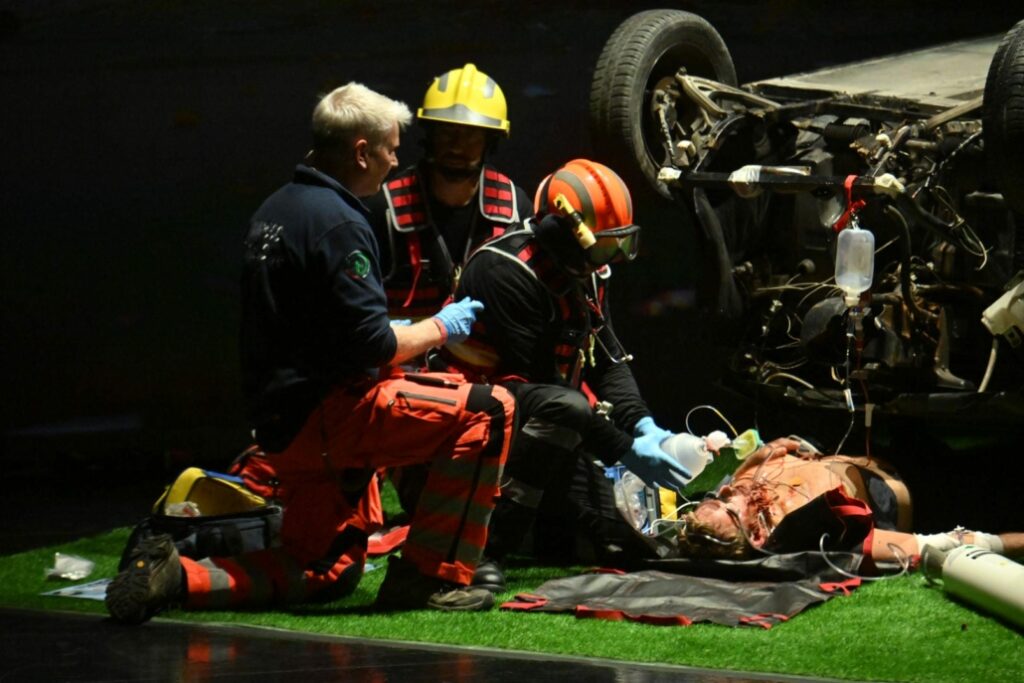
A slide can describe cognitive load. A graph can show deterioration. A speaker can explain fixation error, airway planning, role allocation or team communication. But a simulation allows the audience to feel a version of the pressure. People lean forward. They anticipate. They disagree quietly. They recognise behaviours they have seen in themselves and others.
The value of simulation is not that it is real. Everyone knows it is not. The value is that it can reveal things that are real: uncertainty, hesitation, leadership, communication, prioritisation, overload, recovery and the small decisions that shape patient care.
Whether it was the moment the simulated patient was pulled from beneath the car, the baby born despite the complications, or the collective uncertainty about whether the local anaesthetic had been effective enough to allow laryngoscopy during an awake intubation demonstration, the audience seemed to hold its breath.
What was striking was the generosity in the room. People were not watching for failure. They were willing the teams on. When the demonstrations worked, the success felt shared and collegiate rather than distant or performative.
That generosity was not accidental. It reflected the atmosphere created by the organisers, faculty and simulation teams. The room felt demanding, but supportive. It allowed people to take visible educational risks without making the point of the exercise public embarrassment.
Hosted Q&A and the Friends-style set
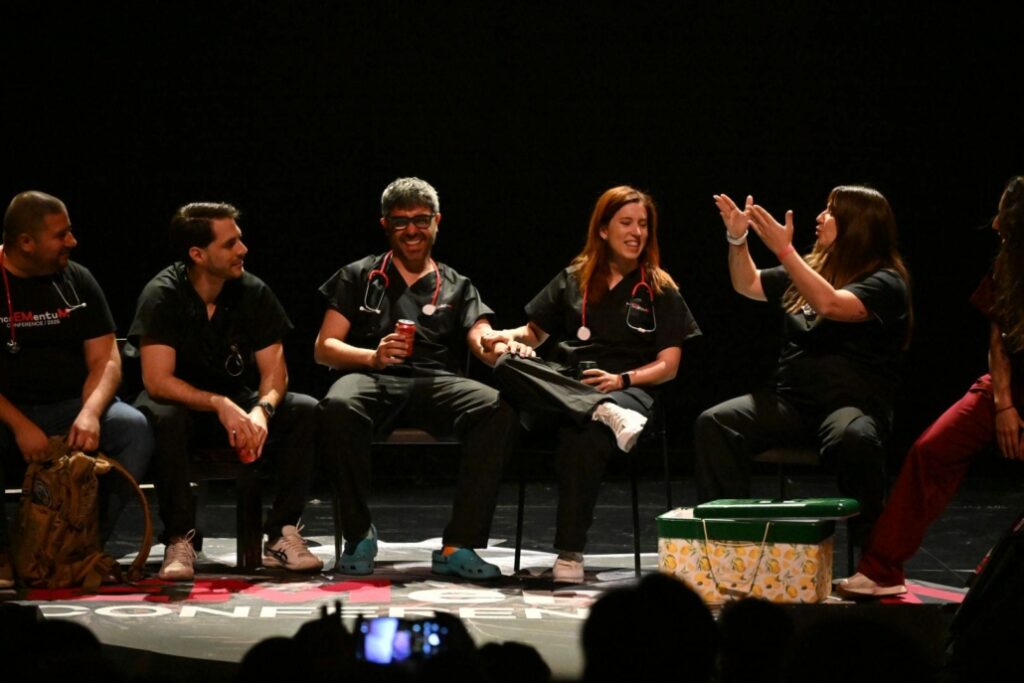
The same was true of the question-and-answer sessions. These were not delivered from lecterns or arranged as formal panels behind a table. They took place on a deliberately informal Friends-style set, with speakers brought into a space that looked and felt more like a conversation than an interrogation.
From the host’s chair, it was clear that the environment changed the tone. The value of those sessions came from the speakers’ willingness to think aloud and from the environment the organisers had created around them.
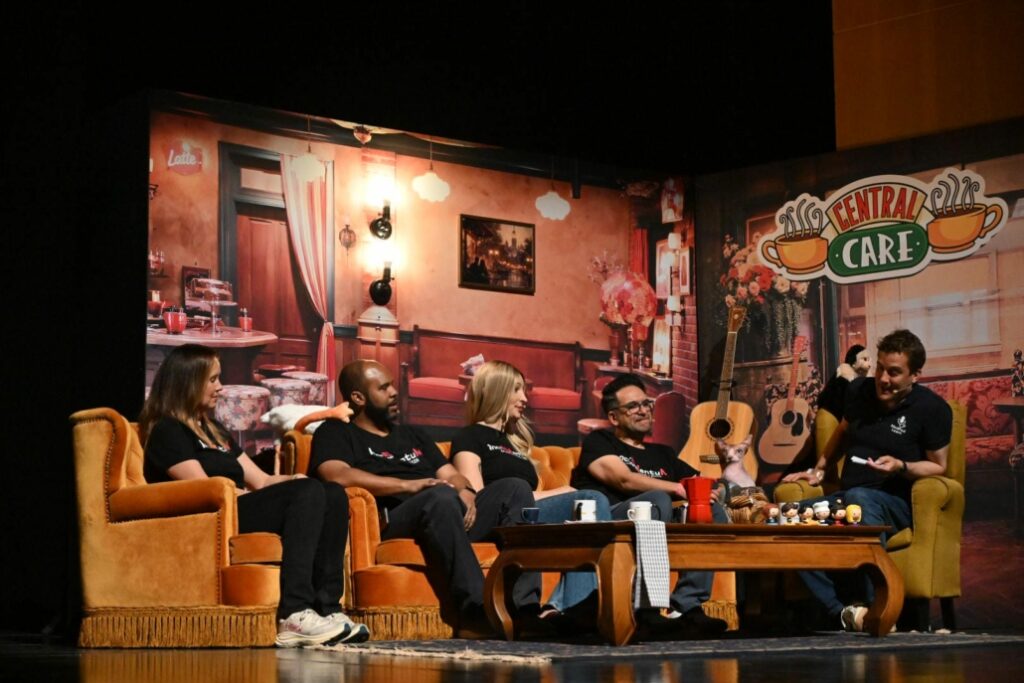
It would be easy to dismiss that sort of staging as a gimmick. I do not think it was. The set softened the hierarchy between speaker and audience and made the discussion feel more human. After the intensity of a talk or simulation, it created a conversational space in which ideas could be tested, clarified and gently challenged.
Hosted Q&A can make uncertainty visible. It is where the polished certainty of the presentation can be opened up a little. It is where a speaker can say, “Actually, this is difficult,” or “In our system we do it this way, but that may not work everywhere.” It is also where the audience can watch experts think aloud, rather than only hear their conclusions.
The Friends-style set made those moments feel less like a performance of expertise and more like a conversation between colleagues.
It also removed one of the familiar jeopardies of conference Q&A: the roaming microphone, the not-quite-question, and the collective squirm while everyone waits to see where the intervention is going. IncrEMentuM avoided that. The audience could relax and listen, while the hosted conversations still allowed uncertainty, challenge and nuance to surface.
Introductory videos, music and the heartbeat motif
The introductory videos before each talk were another example of that same care. They were not just filler while the next speaker walked to the stage. Each one seemed deliberately constructed: carefully chosen music, well-selected quotations, visual humour, and occasionally scenes that were unexpectedly moving or even heartbreaking. Those videos changed the way talks began. They gave each speaker an emotional and intellectual frame before a word had been spoken. Sometimes they lifted the room. Sometimes they made people laugh. Sometimes they quietened everyone down. They created a shared moment of attention before the teaching started, which is a small thing only if it is done badly.
The recurring heartbeat motif was particularly effective. It gave the event a constant pulse, running underneath the clinical content, the simulation, the conversations and the movement between sessions. In an Emergency Medicine conference, that image did not need much explanation. It reminded us, gently but repeatedly, that beneath all the education, debate, performance and technology, there is always a patient, a team, and a pulse. That could easily have been overdone. It was not. It became part of the rhythm of the event.
Again, that was not incidental. It was production work, editorial work and creative work. The videos, music and transitions showed how much thought had gone into the moments before the formal teaching began. They helped the speakers land well, but they were not the speakers’ work alone. They were part of the architecture built around them.
Why attention matters in medical education
All of this took attention seriously. Medical conferences sometimes treat attention as though it is guaranteed. It is not. Attention has to be earned, protected and renewed, especially now that so much educational content can be accessed anywhere. The staging, timing, music, lighting, humour, introductory videos and pace at IncrEMentuM were not decorative extras. They were part of the educational environment. That does not mean style matters more than substance. It means style can help substance land.
The point here is not that every conference needs a stage set, live performance or carefully edited video. It is that attention is part of learning. At IncrEMentuM, the organisers and production team seemed to understand that the way an audience arrives at a teaching moment can influence what it is able to take from it.
One of the important things to understand about IncrEMentuM is that it was not built under the umbrella of a College, a large institution or an established professional machine. It was organised by a group of passionate and committed Spanish Emergency Physicians who chose to create something different. That matters.
An independent Emergency Medicine conference with room to be disruptive
But independence can also create freedom. Without needing to fit a traditional institutional template, IncrEMentuM was able to take creative risks: short talks, live simulation, performance, informal hosted conversations, introductory videos, translation, and emotional as well as cognitive engagement.
Independence should not be romanticised too easily. Running an event like this without institutional backing carries financial, reputational and personal risk. The margins for error are smaller, and the people behind it carry a burden that may not be obvious to delegates sitting in the auditorium.
That does not make the event perfect, or mean every choice will work for every delegate. But it does make the achievement more interesting. IncrEMentuM was not simply a conference delivered to Emergency Physicians. It was a conference created by Emergency Physicians willing to take some risks on behalf of the specialty.
A global Emergency Medicine audience
The breadth of the audience added another layer.
Delegates came from at least 49 countries and territories. The list I have includes Aruba, Australia, Austria, Belgium, Botswana, Brazil, Canada, Chile, Colombia, Costa Rica, Croatia, Czech Republic, Denmark, Estonia, Ethiopia, Finland, France, Germany, Greece, Iceland, India, Ireland, Israel, Italy, Japan, Jersey, Lithuania, Malta, Mexico, Nepal, Netherlands, New Zealand, Nicaragua, Norway, Oman, Pakistan, Peru, Poland, Portugal, Romania, Singapore, Slovenia, Spain, Sweden, Switzerland, Trinidad and Tobago, the United Arab Emirates, the United Kingdom and the United States. I suspect even that list may miss a few.
The event itself was delivered in English, which made sense for an international faculty and audience, but that could easily have created a problem. In Spain, with a large contingent of Spanish-speaking delegates from Spain and Latin America, an English-only event might have unintentionally made some of the people closest to the event feel more distant from it.
The simultaneous translation helped prevent that. It was not just a technical extra. It was an important part of the event’s accessibility and hospitality. It allowed IncrEMentuM to function as an international conference without asking Spanish-speaking delegates to be passive observers in their own linguistic space. That felt especially important given that the event was organised by Spanish Emergency Physicians, hosted in a Spanish city, and attended by so many Spanish-speaking clinicians.
How do you do this where you work?
Translation is sometimes treated as a logistical detail, but here it felt like part of the educational design. It made the room larger without making it less connected. It allowed the event to be delivered in a common international language while still recognising the people, place and professional community that had made it possible.
Emergency Medicine is delivered locally, but many of its challenges are shared. The systems differ, the resources differ, the training structures differ, and the pressures are not identical. But there are familiar themes everywhere: crowding, uncertainty, risk, resuscitation, communication, leadership, fatigue, training, and the need to make decisions with incomplete information.
In a room with clinicians from so many places, a discussion about airway management is not only about one system’s practice. A conversation about flow is not only about one country’s pressures. A simulation about decision-making under stress is recognisable to people working in very different settings.
That does not mean the differences disappear. They should not. The differences are often where the learning is. A perspective from someone in a different system can expose an assumption. A conversation with someone working in a different clinical culture can make familiar problems look different.
Some of the most useful learning happens outside the formal programme: in the coffee queue, after a session, over dinner, walking between venues, or in the conversation that starts with, “How do you do this where you work?”
In Murcia, the formal programme created the shared focus, but the room itself carried much of the learning.
Why Murcia was the perfect venue for IncrEMentuM
Place mattered too, and Murcia felt like the right place for IncrEMentuM. Not simply because it was warm, welcoming and easy to enjoy, although all of that helped, but because it gave the event a particular kind of focus.
People travelled for the conference, and then found themselves in a city that seemed genuinely pleased to have them there. Murcia offered a real Spanish experience without becoming a distraction from the reason people had come. There was food, conversation, hospitality, warmth and a sense of place, but not the constant anxiety that you were missing some major landmark, exhibition, gallery or essential tourist experience by staying in the room.
That mattered more than I expected.
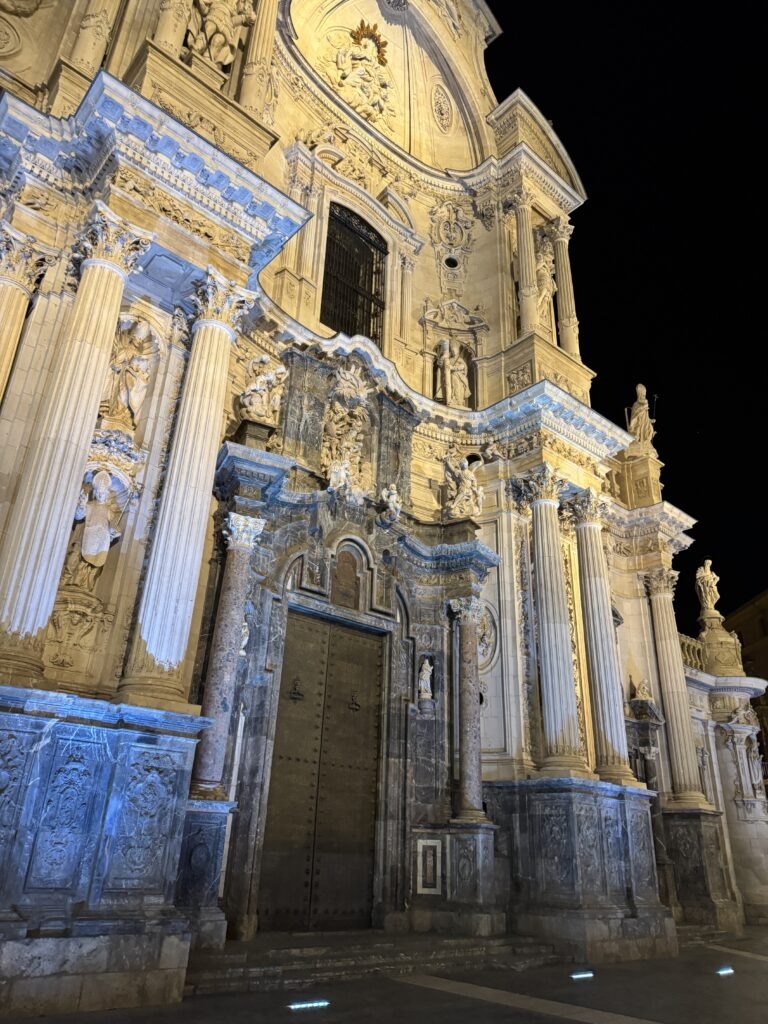
In a larger, more obvious destination — Madrid or Barcelona, for example — IncrEMentuM might have gained some things, but I suspect it would also have lost something. There is a particular tension at some conferences between being present for the programme and feeling that you should be outside seeing the city. Murcia reduced that tension. It allowed the conference to be the reason for being there, while still giving delegates a memorable and recognisably Spanish experience around it.
The city did not compete with the event. It held it.
That is not a small thing. The best conferences do not end when the final slide disappears. They continue in corridors, restaurants, late conversations and unexpected introductions. Ideas often develop in those spaces. Collaborations begin there. Professional friendships deepen there. People become more than names, roles or institutions.
Murcia seemed to make that easier. You could see that in the small groups walking back to hotels, still talking through cases, systems and sessions, passing the now-familiar outdoor tables in the streets around the venue.
It had enough energy to make the event feel alive, but not so much noise that the conference became secondary. It gave people space to gather, talk, eat, walk and return. It made the in-person element feel worthwhile not just because people were in the same auditorium, but because they were sharing the same place.
Spanish Emergency Medicine and professional identity
There was also something significant about the setting. IncrEMentuM took place in Spain at a time when Emergency Medicine there has a strong sense of momentum and identity. That gave the event an additional context. It was not just an international educational conference that happened to be in Murcia. It felt connected to a broader professional story.
Specialty identity is built through training programmes, curricula, examinations, departments and systems. But it is also built through events like this: through shared standards, visible role models, debate, simulation, and seeing a community take its own work seriously.
There was celebration, but it did not feel complacent. There was pride, but also challenge. The event did not simply say, “Emergency Medicine is important.” It asked how emergency clinicians think, communicate, lead, decide and improve.
That distinction matters. A specialty grows not only by declaring what it is, but by continuing to ask what it should become.
What IncrEMentuM teaches us about educational design
The most useful reflection I took from Murcia was that educational design matters. A conference is not simply a programme. It is an experience shaped by sequence, contrast, timing, recovery, surprise and reflection.
The smaller faculty, repeated across multiple formats, was part of that design. So were the simulations, hosted conversations, videos, translation, staging and use of Murcia itself. None of that happened by accident, and none of it was the work of one person.
Events like IncrEMentuM depend on organisers, educators, simulation teams, technical staff, speakers, volunteers, sponsors, venue teams, translators and delegates. Much of that work is invisible when things go well, which is probably how it should be.
Good conferences are not about the most visible roles. They are about the learning that becomes possible in the room.
The bottom line from IncrEMentuM 2026
IncrEMentuM 2026 was ambitious, energetic and deliberately different. No conference is perfect, and not every format will work equally well for every delegate. The real value of any educational event is only seen later, in what people remember, discuss, question, adapt and use.
But from Murcia, there was plenty to reflect on.
IncrEMentuM offered a model of Emergency Medicine education that paid attention not only to content, but to context: attention, emotion, rehearsal, conversation, translation, continuity, place and community. It also showed that useful disruption often comes from people willing to take risks. In this case, a group of Spanish Emergency Physicians created something independent, ambitious and distinctive, without the safety net of a large institutional structure behind them.
For three days, clinicians from at least 49 countries and territories came together in Murcia to think about the work of Emergency Medicine. That, in itself, felt valuable. Not because any conference has all the answers, but because shared learning still matters. Because seeing how others approach the same problems still matters. Because being reminded that Emergency Medicine is both local and global still matters.
And because, sometimes, being in the room together helps us return to our own rooms — our departments, resus bays, teams and patients — with a little more clarity about the work we are trying to do.
Algunos congresos te dejan una lista de actualizaciones clínicas. Otros te dejan nuevas preguntas. Unos pocos te hacen pensar de nuevo sobre cómo aprendemos, cómo enseñamos y qué significa ejercer juntos la Medicina de Urgencias y Emergencias. IncrEMentuM 2026, en Murcia, fue uno de esos eventos.
Para quienes no han estado, IncrEMentuM no es un congreso fácil de describir en una sola frase. Es un evento de Medicina de Urgencias y Emergencias construido alrededor de ponencias clínicas breves, simulación en directo, conversaciones expertas moderadas, vídeo cuidadosamente producido, música, humor y momentos de deliberado peso emocional. La edición de 2026 reunió en Murcia a clínicos de al menos 49 países y territorios, con un programa desarrollado en inglés y apoyado por traducción simultánea para el numeroso público hispanohablante.
Debo empezar con una salvedad. No fui un observador distante. Participé como presentador del evento, y también había presentado la edición anterior. Eso hace que esto sea menos una reseña externa de un congreso y más una reflexión desde cerca del escenario. Pero presentar un evento no es lo mismo que crearlo. El diseño, la producción, las ponencias, las simulaciones, los vídeos, la música, la traducción, la logística y la ejecución técnica fueron obra de otras personas: organizadores, ponentes, equipos de simulación, equipo de producción, traductores, técnicos, voluntarios y personal de la sede que hicieron posible el evento. Mi papel fue visible, pero la visibilidad no debe confundirse con la autoría. Como mucho, presentar me dio una perspectiva concreta del trabajo que otros habían hecho.
Esa cercanía tiene limitaciones. Cuando formas parte de algo, ves algunas cosas con claridad y te pierdes otras. También hay que tener cuidado de no confundir esfuerzo con impacto, o entusiasmo con valor educativo. La verdadera prueba de un congreso no es cómo se siente mientras ocurre, sino qué recuerdan, comentan, adaptan y utilizan después las personas que asistieron. Aun así, estar cerca del evento ofreció una perspectiva útil. Permitió ver la forma del programa: el ritmo, las transiciones, cómo interactuaban las sesiones y cómo respondía el público.
Lo que destacó en Murcia no fue solo la escala ni la producción, aunque ambas fueron impresionantes. Fue el intento de hacer que la educación en Medicina de Urgencias y Emergencias se sintiera más parecida a la propia Medicina de Urgencias y Emergencias: rápida, incierta, colaborativa, a veces incómoda, a menudo energizante y siempre dependiente de las personas en la sala. No hay muchos congresos de Medicina de Urgencias y Emergencias que empiecen con una interpretación en directo de Defying Gravity, pero IncrEMentuM marcó el tono desde el principio. Esto no iba a ser un congreso convencional. Iba a tener ritmo, teatro, riesgo y energía, y el público estaba invitado a subirse a ese viaje.
La educación en Medicina de Urgencias y Emergencias más allá de la ponencia
Un congreso puede convertirse fácilmente en un horario. Ponente tras ponente. Sesión tras sesión. Las pausas para café son agradables, las diapositivas son buenas y todo el mundo vuelve a casa con unas cuantas ideas nuevas. No hay nada malo en eso. Una ponencia bien impartida sigue siendo una de las grandes herramientas de la educación médica. Una buena charla puede aclarar un tema difícil, cuestionar supuestos, resumir la evidencia y cambiar la práctica. Pero la Medicina de Urgencias y Emergencias no es una especialidad de hechos aislados. Es una especialidad de integración.
Conocer la evidencia importa, pero también importa saber cuándo se aplica. Conocer la guía importa, pero también importa comunicarla bajo presión. Conocer el plan importa, pero también importa adaptarse cuando el paciente, el equipo, el departamento o el sistema hacen algo inesperado. Esas cosas son más difíciles de enseñar solo mediante ponencias.
En IncrEMentuM, las sesiones individuales importaban, pero el evento aspiraba claramente a algo más amplio. El valor educativo no siempre estaba contenido en una sola charla. A menudo emergía a través de la secuencia: una presentación enfocada, una simulación, una conversación moderada en el set al estilo Friends, y después las conversaciones que continuaban fuera del auditorio. El formato no dependía de preguntas abiertas del público para crear diálogo. En su lugar, creaba un ritmo en el que las ideas se introducían, se ponían a prueba, se reformulaban y luego se llevaban a los espacios entre sesiones. El aprendizaje estaba en las conexiones.
Eso es difícil de diseñar y fácil de exagerar. No todos los momentos funcionarán para todas las personas. Ningún congreso puede cubrir todas las necesidades educativas. Pero la ambición era evidente: crear un espacio en el que conocimiento clínico, toma de decisiones, factores humanos, desempeño y reflexión pudieran convivir.
Eso parece adecuado para la Medicina de Urgencias y Emergencias.
Menos ponentes, más familiaridad
Una de las decisiones de diseño más sutiles en IncrEMentuM fue el tamaño del grupo de ponentes. Muchos congresos utilizan una facultad amplia, con muchos ponentes que imparten una sola charla antes de desaparecer de nuevo entre el público, hacia el aeropuerto o hacia la cena del congreso. No hay nada malo en ese modelo. Aporta amplitud, variedad y mucha experiencia al programa. Pero también significa que el público está empezando de nuevo constantemente. Llega un ponente nuevo, la sala se recalibra, el tono cambia y todo el mundo necesita unos minutos para averiguar quién es esa persona, cómo enseña y si va a llevar la sesión hacia algún lugar útil.
IncrEMentuM se sintió diferente. Había 17 ponentes, pero aparecían en múltiples partes del evento: ponencias, simulaciones, conversaciones moderadas y debates alrededor del programa. Esa exposición repetida cambió la relación entre el público y el profesorado. Con el tiempo, las personas se volvieron familiares. Empezabas a reconocer el estilo de un ponente, su humor, sus intereses clínicos, su forma de explicar la incertidumbre. Eso importa más de lo que a veces reconocemos.
Hay una especie de relajación que aparece cuando el público piensa: “Ya la he visto antes. Conozco su estilo. Sé que esto va a ser bueno.” Reduce el esfuerzo de orientarse ante alguien nuevo y permite que las personas entren más rápido en el aprendizaje. La confianza se construye de forma incremental. Un ponente deja de ser solo un nombre en el programa; pasa a formar parte del ritmo del evento. Esa exposición repetida también añadió autenticidad. Podías escuchar a alguien hablar de un tema temprano en el día y, más tarde, verlo participar en una simulación, una conversación moderada o una demostración práctica. Las ideas no aparecían una vez y desaparecían; volvían, se reformulaban y se probaban en distintos formatos. Los ponentes no se limitaban a hablar del trabajo. Estaban dispuestos a mostrar cómo pensaban, actuaban y se adaptaban delante de la sala.
“Ya la he visto antes. Conozco su estilo. Sé que esto va a ser bueno.”
Existe un riesgo, por supuesto. Un grupo más pequeño de ponentes puede estrechar el rango de voces si no se elige con cuidado. Pero en IncrEMentuM la mezcla internacional, la variedad de perfiles clínicos y la diversidad de formatos ayudaron a evitarlo. La facultad más pequeña no hizo que el evento pareciera más pequeño. Lo hizo más coherente.
Al público no se le pedía reiniciarse una y otra vez. Se le invitaba a entrar en una conversación en desarrollo.
Simulación, incertidumbre y toma de decisiones bajo presión
Una de las características definitorias de IncrEMentuM es el uso de simulación en directo y educación basada en el desempeño. La simulación ante un gran público es arriesgada. Puede volverse demasiado teatral, simplificar en exceso el trabajo clínico o convertirse en espectáculo más que en educación. Pero cuando funciona, hace algo que las diapositivas no pueden hacer. Cambia la temperatura emocional de la sala.
Una diapositiva puede describir la carga cognitiva. Un gráfico puede mostrar el deterioro. Un ponente puede explicar el error de fijación, la planificación de la vía aérea, la asignación de roles o la comunicación en equipo. Pero una simulación permite al público sentir una versión de la presión. La gente se inclina hacia delante. Anticipa. Discrepa en silencio. Reconoce comportamientos que ha visto en sí misma y en otras personas.
El valor de la simulación no está en que sea real. Todo el mundo sabe que no lo es. Su valor está en que puede revelar cosas que sí son reales: incertidumbre, vacilación, liderazgo, comunicación, priorización, sobrecarga, recuperación y las pequeñas decisiones que dan forma a la atención del paciente.
Ya fuera el momento en que el paciente simulado era sacado de debajo del coche, el bebé nacía a pesar de las complicaciones, o la incertidumbre colectiva sobre si el anestésico local había sido lo bastante eficaz para permitir la laringoscopia durante una demostración de intubación despierta, el público parecía contener la respiración.
Lo llamativo fue la generosidad en la sala. La gente no estaba mirando para ver fallar a nadie. Estaba deseando que los equipos lo consiguieran. Cuando las demostraciones funcionaban, el éxito se sentía compartido y colegiado, no distante ni performativo.
Esa generosidad no fue accidental. Reflejaba la atmósfera creada por los organizadores, los ponentes y los equipos de simulación. La sala se sentía exigente, pero de apoyo. Permitía asumir riesgos educativos visibles sin convertir el objetivo del ejercicio en la vergüenza pública.
Preguntas y respuestas moderadas y el set al estilo Friends
Lo mismo ocurrió con las sesiones de preguntas y respuestas. No se desarrollaron desde atriles ni se organizaron como paneles formales detrás de una mesa. Tuvieron lugar en un set deliberadamente informal al estilo Friends, con ponentes llevados a un espacio que parecía y se sentía más como una conversación que como un interrogatorio.
Desde la silla del presentador, era evidente que el entorno cambiaba el tono. El valor de esas sesiones venía de la disposición de los ponentes a pensar en voz alta y del entorno que los organizadores habían creado a su alrededor.
Sería fácil descartar ese tipo de escenografía como un truco. No creo que lo fuera. El set suavizaba la jerarquía entre ponente y público, y hacía que la conversación se sintiera más humana. Después de la intensidad de una charla o una simulación, creaba un espacio conversacional en el que las ideas podían ponerse a prueba, aclararse y desafiarse con suavidad.
Las preguntas y respuestas moderadas pueden hacer visible la incertidumbre. Es donde la certeza pulida de la presentación puede abrirse un poco. Es donde un ponente puede decir: “En realidad, esto es difícil”, o “En nuestro sistema lo hacemos así, pero puede que no funcione en todas partes”. También es donde el público puede ver a expertos pensar en voz alta, no solo escuchar sus conclusiones.
El set al estilo Friends hacía que esos momentos se sintieran menos como una exhibición de experiencia y más como una conversación entre colegas.
También eliminaba uno de los riesgos familiares de los turnos de preguntas en los congresos: el micrófono que va pasando por la sala, la intervención que no acaba de ser una pregunta y la incomodidad colectiva mientras todo el mundo espera a ver hacia dónde va aquello. IncrEMentuM evitó eso. El público podía relajarse y escuchar, mientras las conversaciones moderadas seguían permitiendo que aparecieran la incertidumbre, el desafío y los matices.
Vídeos introductorios, música y el motivo del latido
Los vídeos introductorios antes de cada charla fueron otro ejemplo de ese mismo cuidado. No eran simple relleno mientras el siguiente ponente caminaba hacia el escenario. Cada uno parecía deliberadamente construido: música cuidadosamente elegida, citas bien seleccionadas, humor visual y, en ocasiones, escenas inesperadamente conmovedoras o incluso desgarradoras. Esos vídeos cambiaban la forma en que empezaban las charlas. Daban a cada ponente un marco emocional e intelectual antes de que se pronunciara una sola palabra. A veces levantaban la sala. A veces hacían reír. A veces silenciaban a todo el mundo. Creaban un momento compartido de atención antes de que empezara la enseñanza, algo pequeño solo si se hace mal.
El motivo recurrente del latido fue especialmente eficaz. Daba al evento un pulso constante, corriendo por debajo del contenido clínico, la simulación, las conversaciones y el movimiento entre sesiones. En un congreso de Medicina de Urgencias y Emergencias, esa imagen no necesitaba mucha explicación. Nos recordaba, de forma suave pero repetida, que debajo de toda la educación, el debate, la actuación y la tecnología, siempre hay un paciente, un equipo y un pulso. Podría haberse exagerado fácilmente. No fue así. Se convirtió en parte del ritmo del evento.
De nuevo, eso no fue incidental. Fue trabajo de producción, trabajo editorial y trabajo creativo. Los vídeos, la música y las transiciones mostraban cuánto pensamiento se había invertido en los momentos previos a la enseñanza formal. Ayudaban a los ponentes a entrar bien, pero no eran solo obra de los ponentes. Formaban parte de la arquitectura construida a su alrededor.
Por qué la atención importa en la educación médica
Todo esto se tomaba la atención en serio. Los congresos médicos a veces tratan la atención como si estuviera garantizada. No lo está. La atención tiene que ganarse, protegerse y renovarse, especialmente ahora que tanto contenido educativo puede consultarse desde cualquier lugar. La escenografía, el ritmo, la música, la iluminación, el humor, los vídeos introductorios y el paso de IncrEMentuM no eran extras decorativos. Formaban parte del entorno educativo. Eso no significa que el estilo importe más que la sustancia. Significa que el estilo puede ayudar a que la sustancia llegue.
La idea no es que todos los congresos necesiten un set, una actuación en directo o vídeos cuidadosamente editados. Es que la atención forma parte del aprendizaje. En IncrEMentuM, los organizadores y el equipo de producción parecían entender que la forma en que un público llega a un momento docente puede influir en lo que es capaz de llevarse de él.
Un congreso independiente de Medicina de Urgencias y Emergencias con espacio para ser disruptivo
Una de las cosas importantes que hay que entender sobre IncrEMentuM es que no fue construido bajo el paraguas de un Colegio, una gran institución o una maquinaria profesional ya establecida. Fue organizado por un grupo de médicos de Urgencias españoles, apasionados y comprometidos, que decidieron crear algo diferente. Eso importa.
Pero la independencia también puede crear libertad. Sin necesidad de encajar en una plantilla institucional tradicional, IncrEMentuM pudo asumir riesgos creativos: ponencias breves, simulación en directo, actuación, conversaciones moderadas informales, vídeos introductorios, traducción y compromiso emocional además de cognitivo.
La independencia no debe romantizarse con demasiada facilidad. Organizar un evento así sin respaldo institucional conlleva riesgos financieros, reputacionales y personales. Los márgenes de error son menores, y las personas que están detrás cargan con un peso que quizá no es evidente para los delegados sentados en el auditorio.
Eso no hace que el evento sea perfecto, ni significa que todas las decisiones funcionen para todos los delegados. Pero sí hace que el logro sea más interesante. IncrEMentuM no fue simplemente un congreso entregado a médicos de Urgencias. Fue un congreso creado por médicos de Urgencias dispuestos a asumir algunos riesgos en nombre de la especialidad.
Una audiencia global de Medicina de Urgencias y Emergencias
La amplitud del público añadió otra capa.
Los delegados llegaron de al menos 49 países y territorios. La lista que tengo incluye Aruba, Australia, Austria, Bélgica, Botsuana, Brasil, Canadá, Chile, Colombia, Costa Rica, Croacia, República Checa, Dinamarca, Estonia, Etiopía, Finlandia, Francia, Alemania, Grecia, Islandia, India, Irlanda, Israel, Italia, Japón, Jersey, Lituania, Malta, México, Nepal, Países Bajos, Nueva Zelanda, Nicaragua, Noruega, Omán, Pakistán, Perú, Polonia, Portugal, Rumanía, Singapur, Eslovenia, España, Suecia, Suiza, Trinidad y Tobago, Emiratos Árabes Unidos, Reino Unido y Estados Unidos. Sospecho que incluso esa lista puede dejarse algunos fuera.
El evento se impartió en inglés, lo cual tenía sentido para una facultad y un público internacionales, pero eso podría haber creado fácilmente un problema. En España, con un gran contingente de delegados hispanohablantes de España y América Latina, un evento solo en inglés podría haber hecho que algunas de las personas más cercanas al evento se sintieran, involuntariamente, más alejadas de él.
La traducción simultánea ayudó a evitarlo. No fue solo un extra técnico. Fue una parte importante de la accesibilidad y la hospitalidad del evento. Permitió que IncrEMentuM funcionara como un congreso internacional sin pedir a los delegados hispanohablantes que fueran observadores pasivos en su propio espacio lingüístico. Eso se sintió especialmente importante porque el evento estaba organizado por médicos de Urgencias españoles, acogido en una ciudad española y asistido por muchos clínicos hispanohablantes.
¿Cómo lo hacéis donde trabajáis?
La traducción a veces se trata como un detalle logístico, pero aquí se sintió como parte del diseño educativo. Hizo la sala más grande sin hacerla menos conectada. Permitió que el evento se desarrollara en una lengua internacional común, reconociendo al mismo tiempo a las personas, el lugar y la comunidad profesional que lo habían hecho posible.
La Medicina de Urgencias y Emergencias se presta localmente, pero muchos de sus desafíos son compartidos. Los sistemas difieren, los recursos difieren, las estructuras formativas difieren y las presiones no son idénticas. Pero hay temas familiares en todas partes: saturación, incertidumbre, riesgo, reanimación, comunicación, liderazgo, fatiga, formación y la necesidad de tomar decisiones con información incompleta.
En una sala con clínicos de tantos lugares, una conversación sobre manejo de vía aérea no trata solo de la práctica de un sistema. Una conversación sobre flujo no trata solo de las presiones de un país. Una simulación sobre toma de decisiones bajo estrés resulta reconocible para personas que trabajan en entornos muy diferentes.
Eso no significa que las diferencias desaparezcan. No deberían. Las diferencias suelen ser precisamente donde está el aprendizaje. Una perspectiva de alguien que trabaja en otro sistema puede exponer una suposición. Una conversación con alguien de otra cultura clínica puede hacer que problemas familiares parezcan distintos.
Parte del aprendizaje más útil ocurre fuera del programa formal: en la cola del café, después de una sesión, durante la cena, caminando entre sedes, o en la conversación que empieza con: “¿Cómo lo hacéis donde trabajáis?”
En Murcia, el programa formal creó el foco compartido, pero la sala en sí misma llevó gran parte del aprendizaje.
Por qué Murcia fue el lugar perfecto para IncrEMentuM
El lugar también importó, y Murcia se sintió como el lugar adecuado para IncrEMentuM. No solo porque era cálida, acogedora y fácil de disfrutar, aunque todo eso ayudó, sino porque dio al evento un tipo particular de foco.
La gente viajó por el congreso y luego se encontró en una ciudad que parecía genuinamente encantada de recibirla. Murcia ofreció una experiencia española real sin convertirse en una distracción del motivo por el que la gente había venido. Había comida, conversación, hospitalidad, calidez y sentido de lugar, pero no la ansiedad constante de estar perdiéndose algún monumento, exposición, galería o experiencia turística imprescindible por quedarse en la sala.
Eso importó más de lo que esperaba.
En un destino más grande y más obvio —Madrid o Barcelona, por ejemplo— IncrEMentuM quizá habría ganado algunas cosas, pero sospecho que también habría perdido algo. Hay una tensión particular en algunos congresos entre estar presente para el programa y sentir que deberías estar fuera viendo la ciudad. Murcia redujo esa tensión. Permitió que el congreso fuera la razón de estar allí, al mismo tiempo que ofrecía a los delegados una experiencia memorable y reconociblemente española alrededor de él.
La ciudad no competía con el evento. Lo sostenía.
Eso no es poca cosa. Los mejores congresos no terminan cuando desaparece la última diapositiva. Continúan en pasillos, restaurantes, conversaciones nocturnas e introducciones inesperadas. Las ideas a menudo se desarrollan en esos espacios. Las colaboraciones empiezan ahí. Las amistades profesionales se profundizan ahí. Las personas dejan de ser solo nombres, cargos o instituciones.
Murcia parecía facilitarlo. Se veía en los pequeños grupos que volvían caminando a sus hoteles, todavía hablando de casos, sistemas y sesiones, pasando junto a las ya familiares mesas al aire libre en las calles alrededor de la sede.
Tenía suficiente energía para hacer que el evento se sintiera vivo, pero no tanto ruido como para que el congreso pasara a un segundo plano. Daba a la gente espacio para reunirse, hablar, comer, caminar y volver. Hizo que el componente presencial valiera la pena no solo porque las personas estaban en el mismo auditorio, sino porque compartían el mismo lugar.
Medicina de Urgencias y Emergencias en España e identidad profesional
Había también algo significativo en el contexto. IncrEMentuM tuvo lugar en España, en un momento en el que la Medicina de Urgencias y Emergencias había sido reconocida recientemente como especialidad, lo que daba al evento un contexto adicional de impulso e identidad. No era solo un congreso educativo internacional que casualmente ocurría en Murcia. Se sentía conectado con una historia profesional más amplia.
La identidad de una especialidad se construye a través de programas formativos, currículos, exámenes, departamentos y sistemas. Pero también se construye a través de eventos como este: mediante estándares compartidos, referentes visibles, debate, simulación y la experiencia de ver a una comunidad tomarse en serio su propio trabajo.
Había celebración, pero no se sentía complaciente. Había orgullo, pero también desafío. El evento no decía simplemente: “La Medicina de Urgencias y Emergencias es importante”. Preguntaba cómo piensan, se comunican, lideran, deciden y mejoran los clínicos de Urgencias.
Esa distinción importa. Una especialidad crece no solo declarando lo que es, sino siguiendo preguntándose qué debería llegar a ser.
Lo que IncrEMentuM nos enseña sobre diseño educativo
La reflexión más útil que me llevé de Murcia fue que el diseño educativo importa. Un congreso no es simplemente un programa. Es una experiencia moldeada por secuencia, contraste, tiempo, recuperación, sorpresa y reflexión.
La facultad más pequeña, repetida en múltiples formatos, formaba parte de ese diseño. También lo hacían las simulaciones, las conversaciones moderadas, los vídeos, la traducción, la puesta en escena y el uso de la propia Murcia. Nada de eso ocurrió por accidente, y nada fue obra de una sola persona.
Eventos como IncrEMentuM dependen de organizadores, educadores, equipos de simulación, personal técnico, ponentes, voluntarios, patrocinadores, equipos de la sede, traductores y delegados. Gran parte de ese trabajo es invisible cuando las cosas van bien, que probablemente es como debe ser.
Los buenos congresos no tratan sobre los roles más visibles. Tratan sobre el aprendizaje que se hace posible en la sala.
La conclusión de IncrEMentuM 2026
IncrEMentuM 2026 fue ambicioso, enérgico y deliberadamente diferente. Ningún congreso es perfecto, y no todos los formatos funcionarán igual de bien para todos los delegados. El verdadero valor de cualquier evento educativo solo se ve después, en lo que las personas recuerdan, comentan, cuestionan, adaptan y utilizan.
Pero desde Murcia, había mucho sobre lo que reflexionar.
IncrEMentuM ofreció un modelo de educación en Medicina de Urgencias y Emergencias que prestaba atención no solo al contenido, sino también al contexto: atención, emoción, ensayo, conversación, traducción, continuidad, lugar y comunidad. También mostró que la disrupción útil a menudo viene de personas dispuestas a asumir riesgos. En este caso, un grupo de médicos de Urgencias españoles creó algo independiente, ambicioso y distintivo, sin la red de seguridad de una gran estructura institucional detrás.
Durante tres días, clínicos de al menos 49 países y territorios se reunieron en Murcia para pensar sobre el trabajo de la Medicina de Urgencias y Emergencias. Eso, por sí solo, se sintió valioso. No porque ningún congreso tenga todas las respuestas, sino porque el aprendizaje compartido sigue importando. Porque ver cómo otros abordan los mismos problemas sigue importando. Porque recordar que la Medicina de Urgencias y Emergencias es tanto local como global sigue importando.
Y porque, a veces, estar juntos en la sala nos ayuda a volver a nuestras propias salas —nuestros departamentos, boxes de reanimación, equipos y pacientes— con un poco más de claridad sobre el trabajo que intentamos hacer.

Thank you so much for this, Iain.
Reading your words was genuinely moving for me. You didn’t just describe IncrEMentuM, you captured how it felt from the inside: the intention, the energy, and the meaning behind it all. That’s something incredibly hard to do, and even harder to find reflected back so clearly.
In many ways, it felt like you gave words to things we hadn’t fully managed to express ourselves.
It was also a privilege to have you as part of the conference. The way you hosted and connected everything across the days was a huge part of what made it feel so special.
We’re very grateful you were there and even more grateful for the honesty and thoughtfulness with which you’ve shared it with the wider community.
Thank you, truly 🤍
Sara