
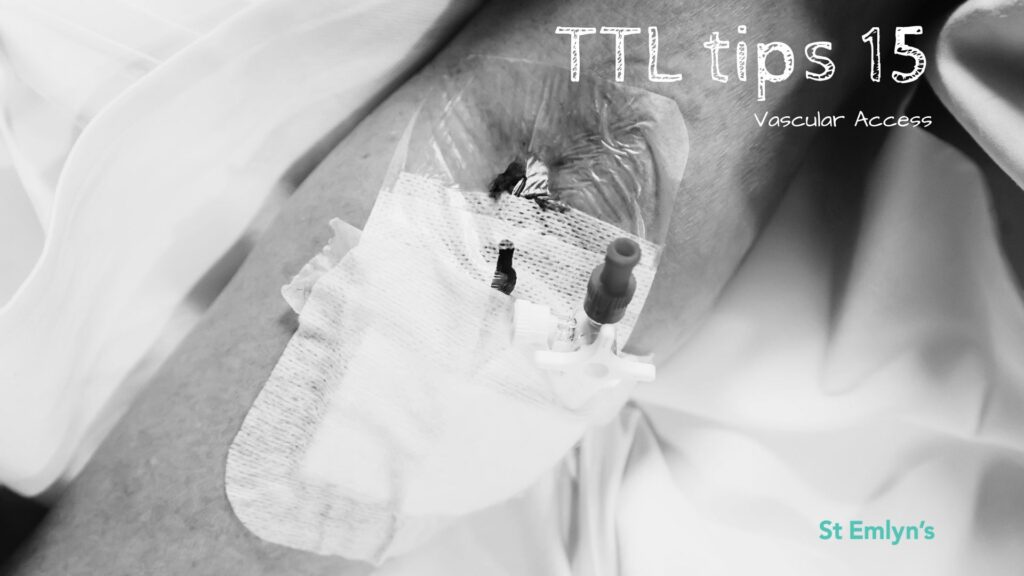
Trauma resuscitation often depends on rapid vascular access, yet this can be one of the most difficult procedures in critically injured patients. Peripheral cannulation may fail due to shock, vasoconstriction, obesity or previous IV drug use. In these situations, clinicians need alternative strategies. This TTL tip reviews practical options for vascular access in trauma, including external jugular cannulation, ultrasound-guided access, central lines and intraosseous access. If you find the team is struggling with their usual techniques consider the following.
- External Jugular: The external jugular is a common alternative in patients who may have previously damaged arm/leg veins. However, it is difficult to access if you are using c-spine precautions and ideally you need to put the patient head down which is not great if they have a head injury. These limitations mean that we cannot always use it in trauma, but for some patients it may be quick and easy.
- Ultrasound: USS placement may be possible, but often takes a lot longer than you think and unless you use a longer line, they often come out. So time and reliability issues mean that they are not as useful as you might think.
- Central access: Subclavian lines can be placed very rapidly using a landmark technique if the operator is skilled in this approach (or you can use USS if that’s your comfy place). We have some large rapid access central lines for this purpose. I use Prelude 5F and 8F lines, but other lines are available (such as MAC or haemocat). I love a central line. Top tip – if your patient is awake/agitated then a smidge of ketamine can make this a lot easier.
- Intraosseous access: is excellent in the trauma patient. The location of choice is the humeral head with a yellow needle. Remember to use lignocaine if the patient is conscious as infusion is painful. You will need high pressures to infuse fluids, and especially if using blood products (which are your resuscitation fluids of choice in bleeding trauma patients). The time to consider an IO in a time critical trauma patient is after 2 failed attempts at peripheral cannulation. Use the IO as a bridge to getting better access (it’s rarely enough on its own).
- Right Atrium: If you have performed a thoracotomy it is possible to directly transfuse into the right atrium/right atrial appendage. This can be tricky and is best practiced on a cadaver course. It can be done with a simple cannula (holding it in position may be tricky though) or secured using a purse string suture. In Virchester you should be assisted in this by cardio-thoracic colleagues.
- RIC lines are also an option if you have them See this link.
- Small line to Big line. One trick to getting a big line is to put a small one in the hand…..leave the tourniquet on and infuse 50ml of saline to make the more proximal veins pop up – and then cannulate them.
Lastly, getting intravascular access is both a rate limiting, and essential step in trauma resuscitation. Peripheral access is often left to the most junior and potentially least skilled member of your team. If that’s your usual practice maybe reconsider that decision….., this is the most skilled procedure of all for the patient in front of you and starting with someone who is excellent at it may well be the best thing to do.
vb
S
