How should emergency medicine education change when information is instantly available and learning crosses borders? This 2017 talk companion challenges fact-recall assessments, explores personal learning networks and argues that online engagement must be accompanied by critical appraisal skills.
A sceptical 2017 appraisal of a systematic review of intravenous thrombolysis for acute stroke. The post examines functional outcomes, bleeding and mortality, showing how interpretation of benefits and harms fuels disagreement; it presents the author’s historical critique rather than current treatment guidance.
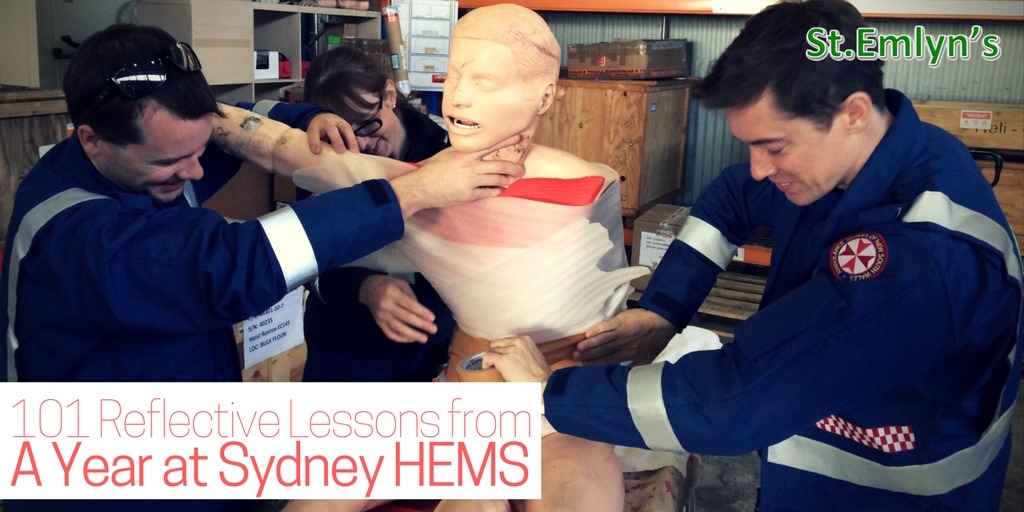
Small interpersonal habits matter when teams work under pressure. In the second Sydney HEMS reflection, Natalie May explores introductions, shared plans, checklists, fatigue and learning from mistakes, showing how everyday communication can support colleagues during demanding retrieval work.
How were emergency medicine’s research priorities chosen in 2017? This report and podcast introduction describe the James Lind Alliance and RCEM process, bringing patients, clinicians and researchers together to rank unanswered questions and guide future research beyond individual interests.
Can emergency medicine remain a broad specialty as clinical practice becomes more specialised? Reflecting on his SMACCDub debate with Scott Weingart, Simon Carley examines generalism, critical-care skills and the risk that subspecialisation fragments the team’s ability to care for undifferentiated patients.
What does an ED handover look like from the other side of the stretcher? Ashley Liebig draws on prehospital experience to discuss respect, a calm reception and uninterrupted communication, then asks teams to agree and practise a shared approach to transferring care.