
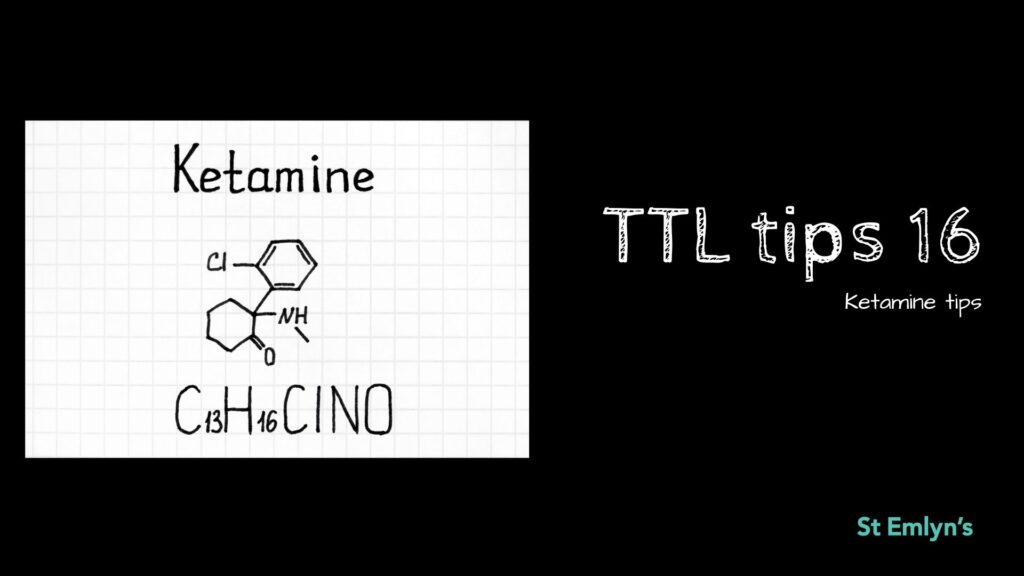
Ketamine is one of the most useful drugs in trauma resuscitation. It provides excellent analgesia, preserves cardiovascular stability in most patients, and at higher doses is an effective dissociative sedative and induction agent. Here are a few top tips (and remember to check your drug doses against local guidelines).
Ketamine for analgesia
Consider ketamine when conventional analgesia has plateaued. If your patient remains in significant pain despite 1 g IV paracetamol and an appropriate dose of opioids (e.g. around 20 mg IV morphine in an adult), simply giving more opioid often adds side effects without much additional benefit.
I titrate to effect, and adjust for the patient, but often end up using using:
- 0.25 mg/kg IV, or
- 5–10 mg IV boluses, titrated to effect.
Low-dose ketamine is an excellent opioid-sparing adjunct.
Ketamine for procedural sedation
Some patients require a short period of dissociation to allow essential interventions before definitive care. A typical example is the haemodynamically stable major trauma patient with a displaced fracture or dislocation causing neurovascular or skin compromise that needs reducing before whole-body CT.
I often end up (adjusted for patient and often in incremental boluses:
- 0.5–1 mg/kg IV
This provides rapid, effective dissociative sedation while preserving airway reflexes in many patients, although clinicians should always be prepared to manage the airway if required.
Monitoring
All patients receiving ketamine in the resuscitation room should receive full physiological monitoring (P, BP, RR, SaO2). Capnography (ETCO₂) should be standard practice for any major trauma patient receiving ketamine.
Midazolam and antiemetics
I don’t routinely co-administer midazolam. It has not been shown to reduce emergence phenomena or improve outcomes. Vomiting is relatively common after dissociative doses of ketamine. Consider administering ondansetron to patients in whom emesis could be particularly harmful, such as those with:
- spinal precautions
- traumatic brain injury
- ocular injury
- penetrating abdominal trauma.
Delayed Sequence Induction (DSI)
Ketamine is an important component of Delayed Sequence Induction (DSI) for the combative or severely hypoxic patient who cannot be safely prepared or preoxygenated. Typical doses are:
- 1 mg/kg IV, or
- 1–3 mg/kg IM
DSI is an advanced airway technique and should only be undertaken by clinicians with appropriate airway expertise.
Comorbidities
Reduce the dose in patients with:
- shock or significant haemodynamic compromise – for these patients I siginificantly reduce the dose. Remember you can always give more ketamine, but you can’t take it out once given.
- hepatic impairment
- frailty or advanced age.
Ketamine is a remarkably versatile drug, but it remains a potent anaesthetic agent. Use it deliberately, monitor carefully and titrate to the clinical effect you require.
Bottom line
Don’t keep escalating opioids when they have stopped working. Low-dose ketamine is an excellent opioid-sparing analgesic, dissociative doses are ideal for short trauma procedures, and every patient receiving ketamine in the resuscitation room should be appropriately monitored, including continuous capnography.
vb
S
