
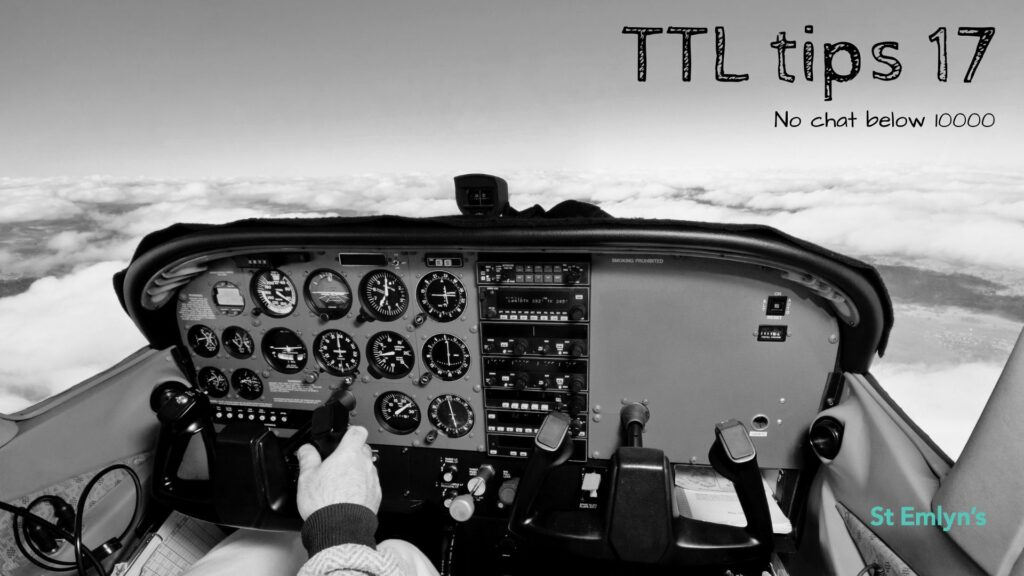
In aviation there is a rule that when the plane is within 10,000 feet of the ground then the only conversations allowed on the flight deck are those that directly relate to aviation. A similar principle can be applied during a trauma call.
- No chat below 10,000 in resus: For trauma calls this means that when the TTL identifies a task that requires specific attention then the team is alerted to this fact and the environment is controlled by the TTL to facilitate it.
- Why do we need this? There are two main reasons.
- Firstly, there are often concurrent activities going on during a trauma resuscitation. In general this is something that we strongly encourage as it is more efficient. However, there are times that we do need to focus on one particular intervention so that they don’t interfere with each other. This technique optimises the team dynamics to achieve a successful outcome for the patient.
- Secondly, interruptions are common in the resus room. Interruptions are dangerous and especially so when the team is performing a difficult or potentially dangerous procedure.
- Examples: There are many times you might use this technique. RSI, Thoracotomy or other surgical procedures are common examples.
- How to do it: Very simply, as TTL you call the team’s attention to yourself and state what is required.
- Example pre-RSI: ‘Listen in everyone, we are about to perform an RSI on this patient. The anaesthetic team are prepared to proceed, but this is a high risk procedure and we need to ensure that we help them do this. So, until we are informed that the ETT tube is securely placed and in the right place we will only interrupt them or the rest of the team if it directly relates to the RSI or a time critical risk. Please address questions to me during this time’
- Once the procedure is complete, the TTL should clearly announce that normal communication can resume.
Bottom line
A trauma team should be busy, but it should not be noisy. During critical procedures, create a “No Chat Below 10,000” period. Minimise interruptions, focus the team on the task in hand, and allow the operator to perform safely.
