How can feedback help clinicians and teams improve? Drawing on a 2018 conference session in Graz, Simon Carley distinguishes appreciation, coaching and evaluation. He explores receiving difficult feedback, agreeing its purpose, peer observation and the practical choices that make a conversation more useful.
What makes a teaching course useful back in the clinical workplace? This report from Cape Town’s Teaching CoOp in 2018 explores presentation skills, educational theory, bedside teaching and simulation. It highlights supportive learning cultures, understanding learners’ reasoning and making practical teaching work with available resources.
This archived announcement introduces Manchester’s Teaching Co-Operative Course on 10–12 October 2018. It outlines a practical approach to clinical education, connecting learning theory with bedside teaching, presentations, simulation, feedback and wellbeing, and introduces the international faculty behind the three-day programme.
How can reflection become useful learning rather than a compulsory portfolio exercise? Natalie May explores planned and spontaneous reflection, patient follow-up, feedback and the biases that shape our accounts. Her article and accompanying podcast consider how educators can create safer, more meaningful opportunities to learn from practice.
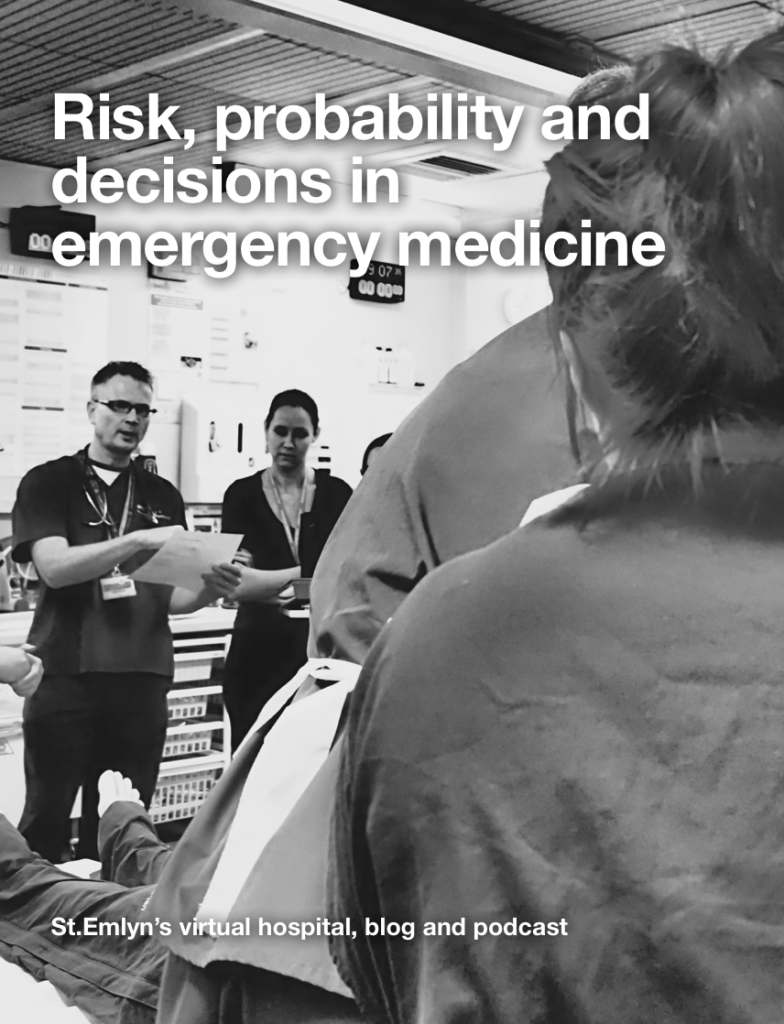
How do we make decisions when time is short and information incomplete? This introduction to St Emlyn’s first e-book brings together risk, probability and metacognition, explaining why thinking about our thinking matters in emergency medicine.
Behind St Emlyn’s tongue-in-cheek mottos are practical ideas about working in emergency medicine: choosing our response to events, recognising our limits, staying calm and taking initiative. The team explains how these philosophies shape its clinical and educational work.