
Well yesterday was fab, what a great start to the conference, we hope you enjoyed it too, and if you missed out then you can catch up with our summary from Day 1 here.
Straight into day 2 then and Chris was up early for the conference 5k (actually 5.6k!) run down the canal and back. It was lovely to run alongside colleagues and catch up with some great chat on the way, thankfully no canal-related injuries. Following this it was back to the conference with Simon to find out what fun we’d learn today. Let’s get into it.
Rod Little Prize Papers
The Rod Little Prize is an annual award given by the Royal College of Emergency Medicine (RCEM) to a UK-based trainee for outstanding research presented at the RCEM Annual Conference. The prize celebrates the work of emerging researchers in Emergency Medicine and is presented to the winner of the best research abstract submitted to the conference following their oral presentation of the research and some searching questions from the panel.
Dr Jack Almy talked about the work the Physician Response Unit (PRU) performs, responding to patients across east London with the aim of providing hospital level care at home. Jack explored how the PRU has worked alongside their oncology service for admission avoidance in patients who would otherwise be directed from a telephone triage hotline to attend their local ED. The upshot was a conveyance rate of only 25%, with the remaining facilitated to stay at home having maybe received bloods, fluids, antibiotics or other treatments. Only 23% of those left at home had an unscheduled attendance to emergency services within the subsequent 28 days. Lots of questions about whether EM services were the right ones to plug this gap or whether this should be the remit of oncology…
Next up, Dr Karen Erskine walked us through the upcoming RCEM consensus statement on angioedema. There is huge variability on practice in this area and the guideline looks to standardise ED care, enhance patient safety and reduce morbidity and mortality by providing guidance on treatment options, escalation framework, and safety netting advice. The guideline has been reviewed by the expert consensus group and we can expect to see this later this year hopefully, watch this space as we’ll review it when it’s out.
Dr James Lai performed a systematic review to try to establish whether clinicians were better at identifying injuries from blunt chest trauma alone, or with the help of AI. James found that the addition of AI improved sensitivity, PPV, and time to diagnosis, with the biggest impact in junior clinicians and minimal impact in senior clinicians, which is not unexpected, however he acknowledged that this was not necessarily transferable to our working lives as studies included didn’t involve emergency clinicians.
Halfway through, and we’re with Dr Ryan McHenry who looked at NHS attempts to redirect low acuity patients to other services and how this impacted patients with different socioeconomic status. He found that those living “in the most deprived areas are more likely to be redirected to other services from triage despite evidence of higher mortality and poorer access to primary care in these groups.” Really excellent and thoughtful stuff from Ryan, and we heard more from him later in the day.
The majority of traumatic brain injury is minor, and most do not require a CT. We first heard from Dr Sophie Richter at the RCEM Annual Scientific Conference in 2019 when she won the Young Investigator of the Year Award. Today we heard that her research into imaging such as CT and MRI for these head injury patients found that these imaging modalities are no better than clinician gestalt on the risk of onward complications! Certainly very interesting and reassuring that we’re probably getting it right with our follow up of TBI patients, they don’t all need an MRI. Prof Dan Horner has blogged about TBI management here at St Emlyn’s and referenced the CENTER-TBI trial that Sophie was also first author for. Certainly a lot of excellent work from Sophie over the years and with her volume of research since then, clearly well deserved of the award 7 years ago.
Dr Frances Steele performed a post-hoc secondary analysis of the CoMiTED trial (which isn’t even out yet!) looking specifically at the frail population and intervention for traumatic pneumothoraces. Difficult to say too much as CoMiTED is embargoed, however the outcome was that frailty doubles the chest drain major complication risk, and so maybe we should think carefully about intervening in frail patients. This needs early senior clinician input, shared decision-making approach, and routine frailty assessment to make patient-oriented decisions in a tricky population. We’re looking forward to reviewing CoMiTED when it is published but it was great to hear some early thoughts.
Finally, Dr Hannah Wilkin-Crowe on airway management in emergency medicine. Where we work we are hugely fortunate to have a supportive and responsive anesthetic team but this is not a nationwide experience and it seemed like there was consensus that emergency physicians should be the experts in emergency intubation. Despite this, with a hands-up session in the audience it was clear to see that there were few hands from consultant EM colleagues who had recent airway experience and felt comfortable supervising junior colleagues to intubate in the emergency department. Hannah’s work showed that very few trainees were getting sufficient airway experience, and only 7% of trainees felt that they had sufficient experience to be competent in intubation. A reminder though from us that the tube is not the only part of emergency intubation, and there is huge skill and risk in the associated areas of drug selection and dosing, patient optimisation, and the human factors around physiologically challenging intubations.
The winner was announced later in the day but we won’t make you scroll further to find out… Dr Ryan McHenry was awarded the prize by HRH Princess Anne in the main auditorium – congratulations Ryan!
After the break it was time for streams
Three big papers
Great session but sadly two papers were embargoed awaiting publication.
First up was the SWIFT trial with Jason Smith. You should know this one. A prehospital RCT of whole blood vs. blood products. Over 900 patients randomised, 616 analysed and no difference in mortality or major haemorhage at 24 hours (47.7% vs. 48.7%). So perhaps the end of the debate. That said I was PI for this study in the NW and also recruited and whole blood is a much easier product to work with, so I rather hope it makes a return. Jason alluded that there is more and interesting data to come. So let’s see what it shows.
Edd Carlton and Katy Coates brought the results of the CoMiTED trial, but sadly it’s embargoed. This RCT of conservative vs. chest drain management of traumatic pneumothorax was quite a logistical challenge, but it’s fantastic work. You will be very interested in the results (no spoilers).
Similarly the uncorked study of crowding in UK EDs is fascinating and will undoubtably change national policies. The data is perhaps not unexpected, but it is shocking. Can’t wait to see the full paper. Also a reminder that if you are clinician interested in research then please get involved with the TERN network, it’s an amazing organisation that’s doing meaningful work.
Vulnerable populations and health inequities
We started with Dr Simone Hermann talking us through the challenges of homelessness and the high rates of abuse, neglect, substance and alcohol misuse, and other adverse events they face alongside significant rates of illness and disease. For multiple reasons, approximately 50% of homeless people do not have GP access, and there is a high rate of self-discharge from secondary care. All of these factors lead to difficulties in ensuring good healthcare for these patients. Surprisingly it is warmer weather that brings a higher mortality rate for those experiencing homelessness as data from the Museum of Homelessness Dying Homeless Project demonstrate. Key learning points were to think about what matters from a patient perspective, start with simple measures, and link in with community resources.
Dr Katie Brill next with some hard hitting truths about sexism in the emergency department. From a patient perspective, women wait longer to be seen for the same presentations, trans people wait even longer, leading to delays in care and delays in treatment. There were so many excellent learning points, but for a start we need to make sure we call patients by their preferred names, don’t misgender them, and call out microaggressions and aggressions when we see them in our place of work. We need to improve our own knowledge and proactively educate ourselves. We need to be proactive bystanders, and to not make assumptions based on patient appearances or presentations. A call from Katie to ensure that a ‘females see females’ healthcare system is not the norm – exposing male colleagues to female problems reduces ‘othering’ in practice.
“Every person we see is a universe with their own experiences that matter.”
– Dr Katie Brill
Dr Ryan McHenry expanded on his Rod Little Prize presentation, reiterating messages from this around the higher avoidable mortality, and significantly less access to GP services, for socially vulnerable groups. Advocating for these groups to the people who can fund services is key, alongside education aroudn health inequalities. This blog from RCEMLearning is a great start. Have a think about how your department approaches vulnerable and socially deprived patients, spend more time with them during consultations, and think about how these patients are triaged and streamed – is it different to other patients who access your services?
Princess Anne
Princess Anne as patron of the college is a fantastic ally and supporter of our work. She gave one of her usual excellent speeches, with a fair bit of ad lib and reflections on the prior talk from Prof Steve Goodacre. It’s always a highlight to see her at our events. She made the point several times that it’s so important to come together and share our experiences and knowledge face to face. Online events are OK, but nothing beats getting together in the same time and place.
Death and dying
Death in the emergency department happens, and it can be a big problem, we don’t have private and calm space, we don’t have the kit, don’t have the experience, don’t have the time or the staffing levels to really do a good job and allow someone an excellent death. We also experience patients who have terminal illness and frequent contact with other specialties yet have never had any discussions about death or ceilings of care, and these patients often end up in the ED at 3am, unwell, with a clinician they’ve never met before having these discussions with them for the first time, with their primary clinician absent.
The key themes from this session were around communication and collaboration. We need to use clear language having checked the understanding of the people we are talking to. We can use tools to help these conversations when talking about dying for the first time, giving hope linked with concern, using hypothetical statements and generalisations to introduce the concept of death and dying to patients and their families. We also need to collaborate, involving our palliative care services with inreach into acute and emergency settings – but we need to be better at recognising patients who would benefit from this. Ask yourself “would I be surprised if they died in the next 12 months?” Your gestalt is key and having palliative care in your mind can be the trigger to allow other teams involvement and advance care planning.
A fascinating end to the session with a talk on normothermic regional perfusion, essentially the use of femoral VA ECMO alongside a descending thoracic aortic balloon to perfuse abdominal organs without perfusing brain or heart, in patients who have had resuscitation stopped following a cardiac arrest in the community. Studies are currently ongoing to determine the role and effectiveness, as well as the public perception and acceptance, of such technologies to improve organ donation rates.
Major incidents
First up Chris Cooper, a paramedic and lawyer, talked about major incidents that have taken place over the last 25 years with the main lesson from most of these that emergency services seek to eliminate rather than manage risk, leading to delays in patients receiving emergency care – the “Care Gap”. Work is underway to create multi-agency models for casualty management and optimal clinical care. Three key phases of care include immediate care with key life-saving capabilities and undertaken by zero responders, optimised care for clinical stabilisation, and transition of care covering everything from discharge at scene to handover to another service. The aim is to think about these phases from the patient’s perspective and create patient-centric narratives to drive discussion and decision-making.
Dr Phil Cowburn took this further by first exploring the advances in triage with the introduction of Ten Second Triage, proven to be rapid and being performed prior to healthcare arrival, Once healthcare is on scene, we should be focused on the next steps – prioritising the P1s (who is the PeeWunniest?), making decisions on those labelled not breathing if there is ability to do so, and then moving onto the P2s and then extricating the P3s.
Other upcoming advances include:
- Fentanyl which is coming into JRCALC for frontline paramedics to use which will make oral transmucosal fentanyl (lollipops) and intranasal fentanyl a possibility
- IM tranexamic acid – effective even in shocked patients, timing is key, Phil and team are looking to autoinjectors with lower volume the key, and giving to every P1 on TST – could we make it a schedule 19 drug so anyone can give it?
- Blood products are ubiquitous in PHEM but expensive and limited supply, there are additional requirements for storage and distribution – could we use lyophilised plasma?
- National interoperable mass casualty vehicles with a modular concept to reduce human factors and improve efficiency
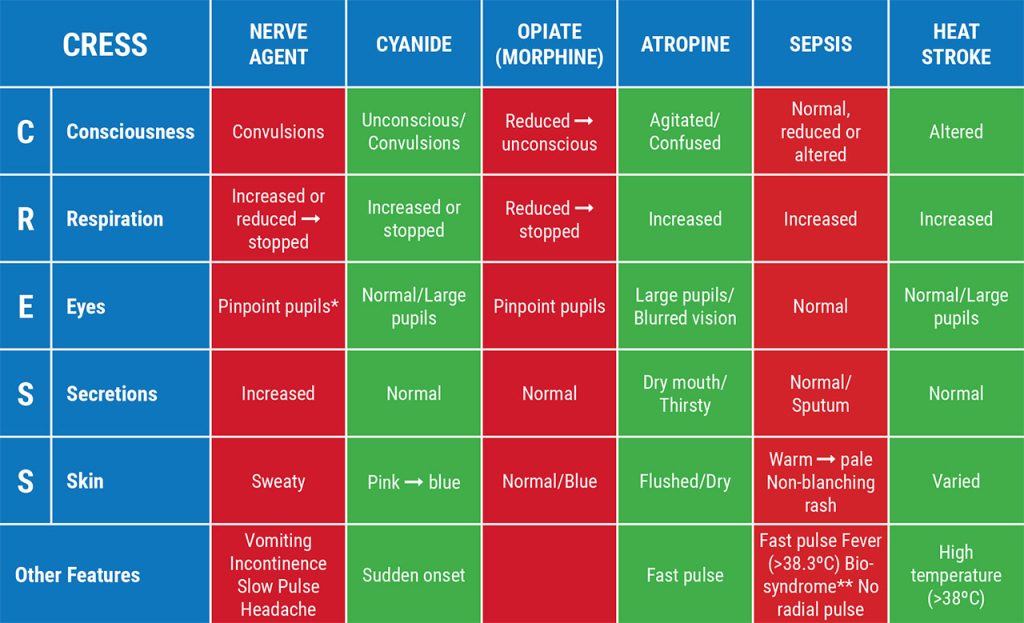
Last key learning point from Phil’s talk was around learning from public inquiries and the development of the CRESS tool to enable key information to be gained and used to help to distinguish between very similar presentations including hazardous substances
To round off the day, Dr Jo-Anna Robson encouraged us all to get involved with Emergency Preparedness, Resilience and Response (EPRR), engage with anything offered in your department from training to writing and editing guidelines. Prepare for a major incident by going on HMIMMS, increasing your knowledge, and looking through your trust plans. Know where your guidelines are and have these to hand. If your resources are failing, ensure they go on the risk register.
Well that was day 2, another great day, see you again for the final day of RCEM Annual Conference 2026!
vb
Simon and Chris
