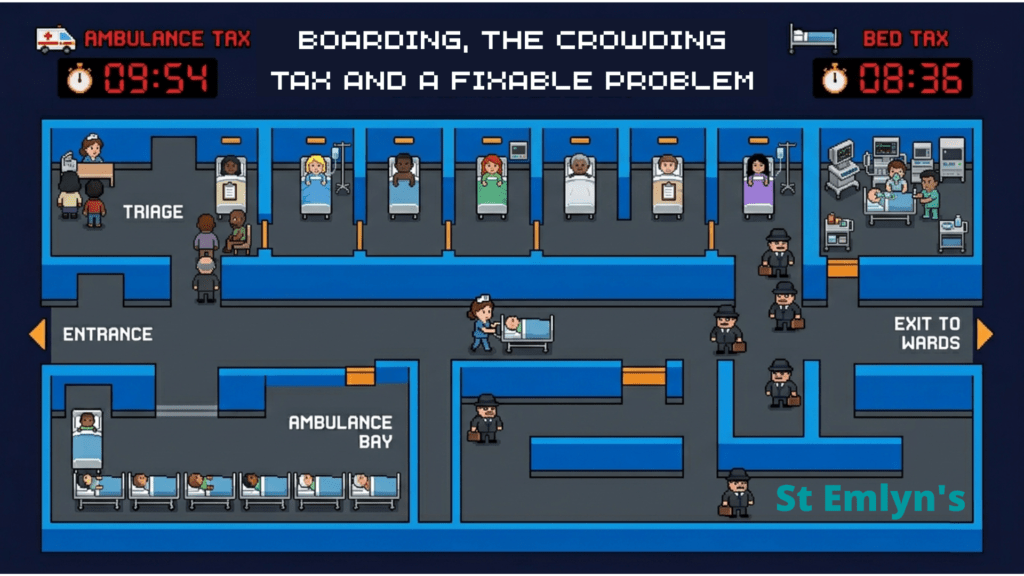
What does medical boarding cost patients and the wider emergency care system? Stevan Bruijns reviews regional data linking boarding with mortality, longer stays and ambulance delays, then explores the limitations of the evidence and the argument for action within acute trusts.
Iain Beardsell and Simon Carley revisit the February 2026 posts on trauma team leadership and feedback. The discussion covers interpreting CT reports, maintaining momentum after imaging, purposeful log rolls and making feedback specific enough for learners to use.
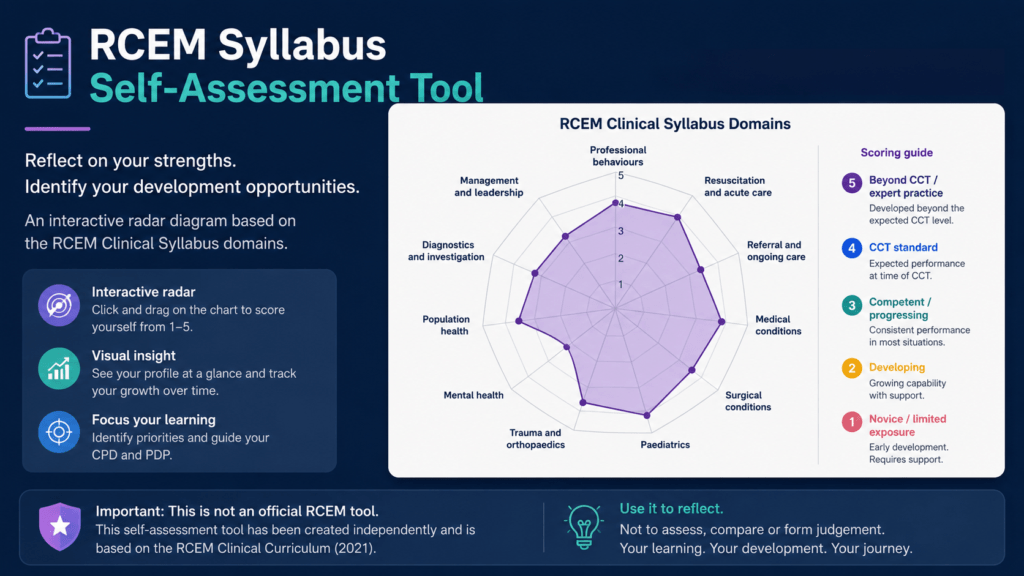
Map your confidence across the clinical domains of emergency medicine with an interactive radar chart based on the RCEM syllabus. This St Emlyn's tool supports reflection, revision and learning plans; it is neither an official RCEM product nor a formal assessment.
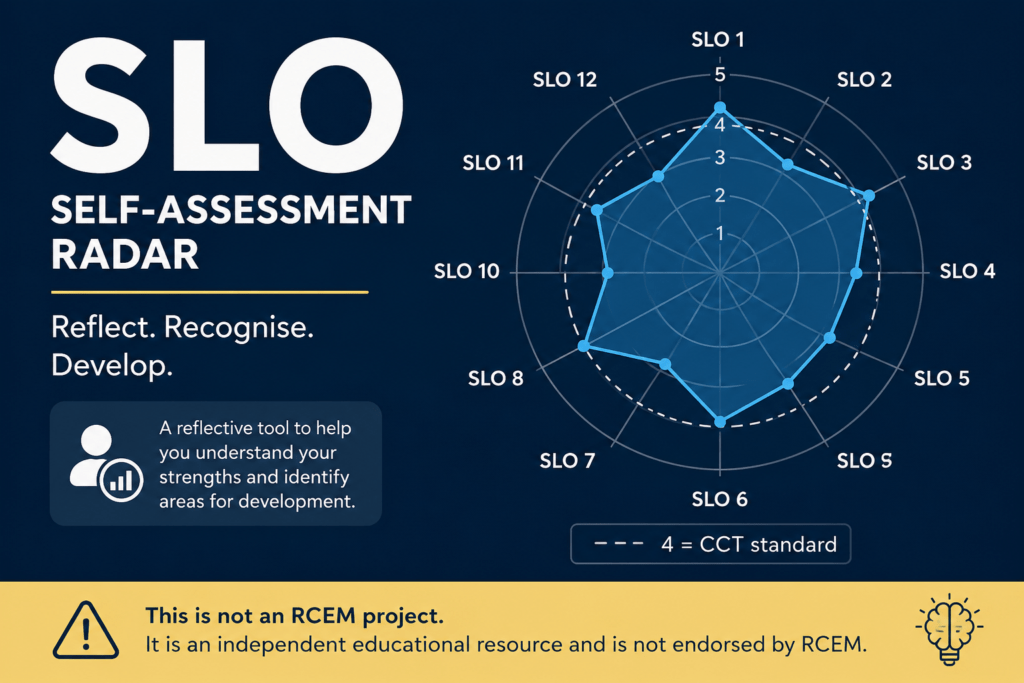
We’ve built a simple SLO self-assessment tool based on the 12 RCEM Specialty Learning Outcomes in the RCEM curriculum. Designed for trainees, consultants and educators in emergency medicine, this reflective tool helps clinicians visualise strengths, development needs and their overall training profile using an interactive radar chart. It's not an RCEM product but relates to the curriculum.
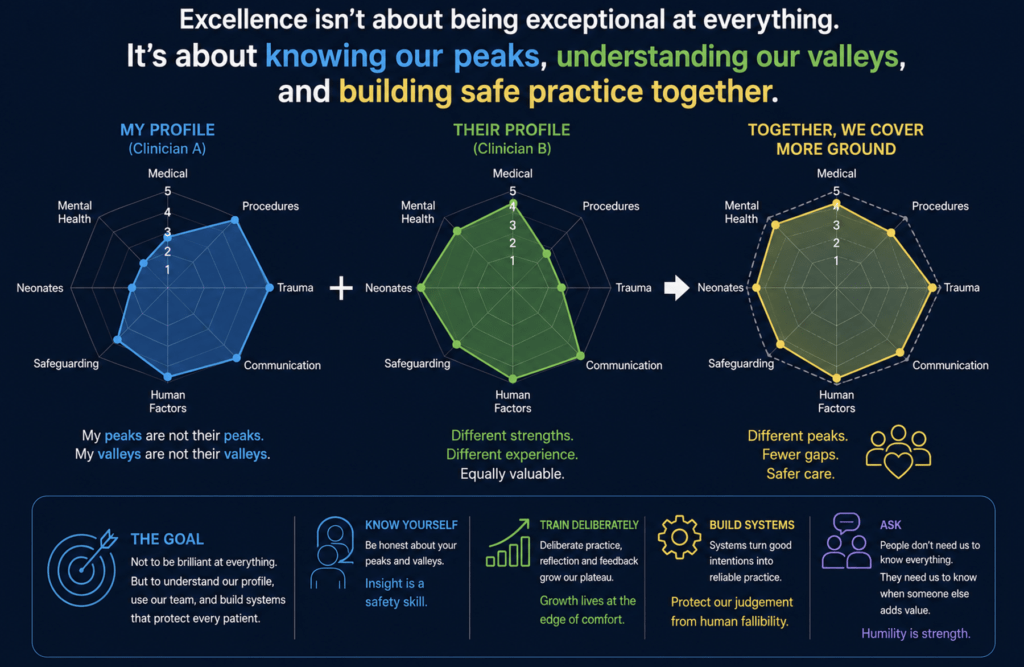
What does excellence in everyday emergency care look like? Drawing on his DFTB26 keynote in Glasgow, Simon Carley explores reliable practice, awareness of our own limitations and teams whose different strengths help them get the fundamentals right.
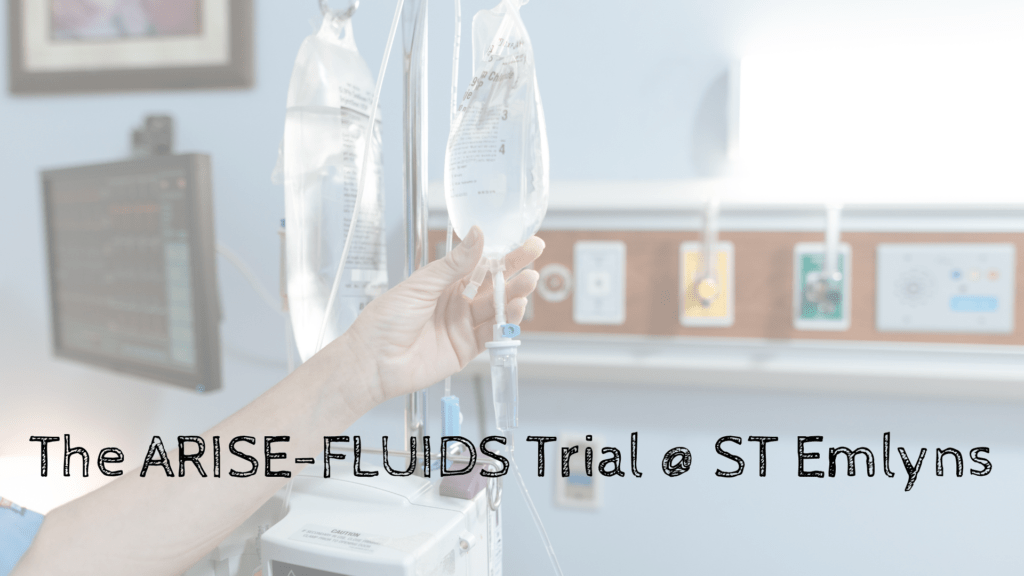
Does early vasopressor therapy improve outcomes in septic shock? We review the ARISE-FLUIDS trial presented at Critical Care Reviews 2026.