
I’ve been thinking a great deal about this question recently as I prepare for a talk at IFEM in Hamburg. It is one of those deceptively simple questions that initially feels straightforward to answer. take a moment to think about people that you’ve worked with who you would consider to be excellent. Whenever I’ve asked this question of colleagues they rarely find it difficult to answer. In fact they always give me name, and it’s surprisingly common for people to choose the same individuals. Most of us can immediately think of colleagues we regard as outstanding clinicians. We know who we would want treating our relatives at three o’clock in the morning. We know who we hope is on shift when the department is overcrowded, the waiting room is overflowing and the resus room has become uncomfortably busy. Maybe that person is you, and interestingly if you are then you might well be the sort of person who would not know it’s you! More on this later…..
The interesting thing, though, is that when you begin reflecting on those individuals, they are often remarkably different from one another. Some are diagnosticians of extraordinary precision. Some are technically brilliant proceduralists. Some are exceptional communicators. Others possess a remarkable ability to create calmness and clarity in environments that feel chaotic to everybody else. A few seem to have an almost uncanny situational awareness, able to anticipate problems long before they fully emerge. Yet despite these differences there is usually a recognisable thread running through them. Over the years I’ve worked with some truly exceptional emergency physicians and, looking back, what has always struck me is that they are not typically the people trying hardest to appear exceptional. In fact many would probably feel uncomfortable being described in those terms at all (which is why I won’t embarrass them by mentioning their names here, but I know who you are).
Emergency medicine has always had a slightly romantic relationship with itself. Many of you currently be watching ‘The Pitt’ and those of my generation grew up with TVs shows like St Elsewhere, ER, and Casualty. They illustrate the idealised emergency physician as we celebrate decisive action, dramatic interventions and impossible diagnoses made under pressure. Yet, we also know that the reality of daily practice is very different. That said we do have the best stories, and it’s no surprise that emergency departments dominate medical television dramas and conference highlight reels. The mythology of the heroic emergency physician remains deeply embedded within our specialty culture: the doctor who knows everything, fixes everything and never appears uncertain.
But that’s not the reality is it. Or at least it’s not my reality. Even in a busy MTC and with my prehospital experience, I spend most of my time doing work that’s far removed from what’s shown on primetime TV. The more time I spend in emergency medicine, the less convinced I am that this is what excellence really looks like. It’s not about resus and saving lives in the moment, or amazing diagnoses. I see peaks of excellence, there is no doubt about that, but the thing about peaks are that they are spiky and you come down the other side. Perhaps we need to be thinking more about plateaus of routine excellence rather than peaks of truly exceptional performance? Being satisfactory at everything is a good baseline, and far better than just excellent in one area at the expense of a far greater number of patients elsewhere.
We also need to be mindful that we don’t want everyone in our team to be a resus nerd. It’s just as important to build a team with a range of abilities and interests. No-one, least of all me would want a department of clones of me or anyone else! I work with an amazing team who have different interests and who have great knowledge in those areas that I am weak on. We are all equally valuable and important to the team. A good emergency physician is competent across the curriculum, perhaps exceptional in a small area. A good team is also competent, but has lots of peaks of excellence across the broad range of our speciality. When one of my colleagues with expertise in an area where I am weak speaks and advises, I listen and follow. I’m not an expert in their area and I trust them.

So what does excellence look like?
Many of the clinicians I most admire are notable precisely because they understand the limits of individual performance. They recognise early when another opinion is needed, when a team requires additional expertise or when somebody else is better placed to solve a particular problem. Rather than diminishing their authority, this seems to strengthen it. They understand instinctively that emergency medicine is fundamentally a team endeavour and that the role of the excellent emergency physician is often not to dominate the environment, but to make the environment function better. There is absolutely nothing wrong with being a team player, being the zero on the team as Commander Hadfield would say…., basically you cannot be the most amazing clinician in the world, all the time and in all areas of practice. Our curriculum is huge and NOBODY is awesome at everything. Those people simply don’t exist. For myself, I know that I’m not the best at emergency gynae, mental health or frailty, but I work with colleagues who are and I follow their lead, and let’s face it from a flow/volume perspective there is a lot more frailty and mental health than resus work.
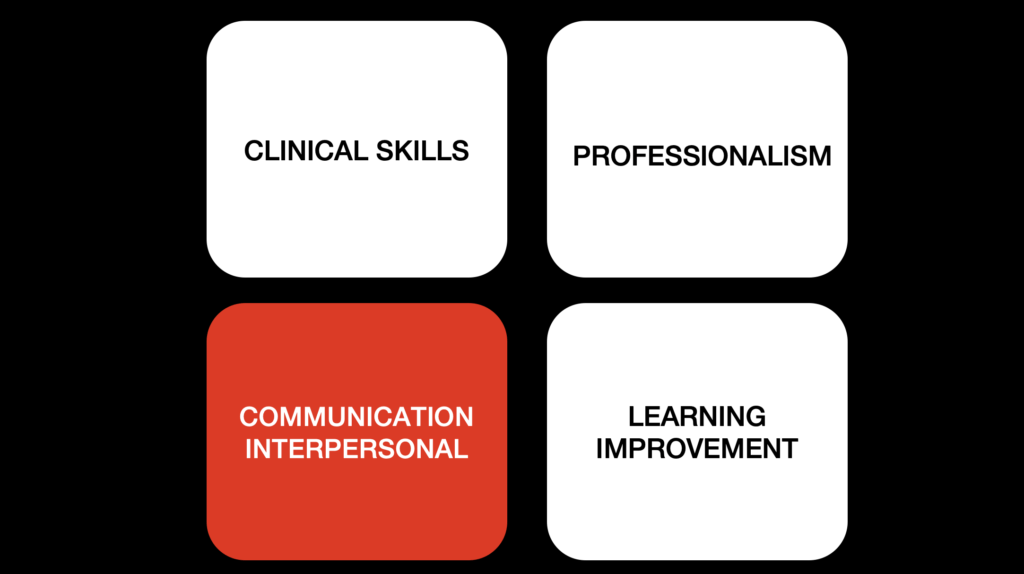
One of the most interesting papers I encountered whilst preparing this talk examined emergency physicians identified by their peers as exemplary clinicians. The authors expected medical knowledge and technical expertise to dominate the findings. Instead, interpersonal skills, communication and professionalism emerged as the defining characteristics of excellence.[1] That finding resonated with me immediately because it feels deeply familiar to anyone who has spent enough time working in emergency departments. It reminded me of one of the things I teach new trauma team leaders, and that’s don’t put gloves on. The chances that you’ll need to touch the patient are minimal, but what you will need to do is excel at communication, interpersonal skills and professional interactions. Our current TTL series speaks to that as many of the posts in that series have been, and will be, about communication.
When I think about the consultants and senior clinicians I have admired most over the years, what stands out is often not simply what they know, but how they behave when the system is under pressure. They are usually the people who create clarity when everybody else feels overloaded. They make departments safer not through force of personality, but through calmness, communication and reliability. Their colleagues feel able to ask questions around them. Nursing colleagues feel heard. Difficult conversations are approached directly and honestly rather than avoided. They can disagree with colleagues without creating conflict and they rarely seem driven by the need to appear clever.
In many ways this is slightly countercultural for medicine. Healthcare systems often reward visible confidence, speed and certainty. Humility is quieter and therefore easier to overlook. Yet the truly exceptional emergency physicians I know are often remarkably comfortable with uncertainty. They revise decisions when new information emerges. They openly acknowledge limits. They seek advice. They change their minds without embarrassment. There is a professional self-awareness about them that allows continuous improvement long after formal training has ended.
Interestingly, this aligns closely with the wider evidence base. A systematic review examining the characteristics of excellent physicians across specialties identified competence, motivation and personality as the central domains associated with excellence. Importantly, personality traits such as flexibility, humility and empathy featured repeatedly alongside clinical expertise.[2] That is an important observation because it challenges the idea that excellence in emergency medicine is simply a product of intelligence or technical mastery. The evidence increasingly suggests that excellence is relational as much as intellectual.
The literature around expertise also consistently points towards the importance of deliberate practice. Simulation, structured feedback, reflective practice and continual adaptation all appear to contribute meaningfully to long-term performance.[3–5] This probably explains why some clinicians continue to improve across decades of practice whilst others plateau relatively early. Raw intelligence undoubtedly matters, but curiosity and reflection may matter more over the span of an entire career.
I have certainly met extraordinarily intelligent doctors who seemed to stop developing once they reached a certain level of competence. Equally, I have worked with clinicians who were perhaps not initially the most academically gifted members of their cohort but who became outstanding over time because they possessed an almost relentless commitment to improvement. They reviewed difficult cases honestly, actively sought feedback and remained intellectually open long after many peers had become defensive or fixed in their thinking.
My perspective on all of this changed further when I became a patient myself. Before my valve surgery I developed atrial fibrillation and heart failure. Thankfully I am now completely well again, but spending time inside the healthcare system from the other side of the bed was a genuinely important experience professionally as well as personally. The world looks different after having your chest opened and being in cardiac arrest (I’m over-dramatising, but I was on bypass for a few hours).
As doctors we sometimes assume that patients are most impressed by technical brilliance. Looking back, I’m not convinced that is really true. Of course competence matters enormously, and patients absolutely need clinicians with expertise and judgment, but what I remember most vividly from that period was something rather different. I remember the feeling of safety created by clinicians who communicated clearly and honestly. I remember teams that appeared genuinely connected to one another. I remember calmness, kindness and professionalism under pressure. Most importantly, I remember having confidence that the people looking after me would recognise when they needed help rather than trying to manage everything alone.
The clinicians who impressed me most as a patient were remarkably similar to the clinicians I had admired throughout my own career. They were highly competent, certainly, but their excellence extended well beyond competence itself. They combined expertise with emotional intelligence, humility, communication skills and the ability to make other people around them function better.
This becomes particularly important when one considers the nature of emergency medicine itself. Ours is a specialty practised in uncertainty, complexity and time pressure. The challenge is rarely just identifying the correct diagnosis or choosing the right intervention. The challenge is helping an entire team move effectively through uncertainty whilst simultaneously caring for another human being who is often frightened, vulnerable and experiencing one of the worst days of their life.
That requires far more than knowledge alone.
It also explains why communication repeatedly appears throughout the literature on excellence in emergency medicine. Communication is not a “soft skill” existing somewhere separate from clinical practice; it is one of the core mechanisms through which safe emergency care actually happens. Excellent emergency physicians communicate in ways that improve team cognition, reduce error, build trust and maintain psychological safety. In practical terms this means they create environments where junior staff feel able to speak up, where nurses can challenge decisions safely and where difficult conversations occur early rather than after problems have escalated.
Leadership literature within emergency medicine and prehospital care reflects similar themes. High-performing teams are associated not simply with technical expertise, but with communication structures, leadership behaviours, debriefing practices and shared mental models.[6,7] The best emergency physicians I know understand this intuitively. They know that excellent performance under pressure is usually collective rather than individual.
Another interesting aspect of the evidence concerns career progression and ageing within emergency medicine. Some cognitive and multitasking abilities appear to decline with age, particularly under time pressure, but communication, judgment and empathy often remain stable or even improve.[8,9] I think that is important because emergency medicine can sometimes overvalue speed and intensity whilst undervaluing experience, reflection and perspective. The best departments need both youthful energy and mature judgment. Excellence is not static across a career; it evolves.
So when trainees ask me how to become an excellent emergency physician, I increasingly find myself giving a different answer than I might have given twenty years ago. Of course they must learn their medicine thoroughly. Of course they must become clinically competent and technically capable. They must be competent in the resus room, but they must also know and value all the other much more common and valuable medicine outside of it. But alongside that they must learn how to listen properly, how to communicate clearly, how to function effectively within teams and how to remain reflective throughout a career spent operating in uncertainty.
Most importantly, perhaps, they must resist the temptation to confuse confidence with excellence. Because the best emergency physicians I have ever known were rarely the heroes of the story. They were the people who allowed everybody else to succeed.
vb
S

IFEM in Hamburg has been amazing so far. If you get chance to visit the city, or get to an ICEM conference then you should. This year the main stage was in the round, which I initially thought was going to be tough, but actually it worked out really well.
References
- Spruill T, Nazario S, Birenbaum D. Interpersonal and communication skills and professionalism are the competencies most often noted in emergency medicine physicians judged as exemplary by their peers. J Commun Healthc. 2020;13:27–34.
- Khawar A, Frederiks F, Nasori M, et al. What are the characteristics of excellent physicians and residents in the clinical workplace? A systematic review. BMJ Open. 2022;12:e065333.
- Rogers L, Narvaez Y, Venkatesh A, et al. Improving emergency physician performance using audit and feedback: a systematic review. Am J Emerg Med. 2015;33:1505–14.
- Wang L, Zhao Y, Wang P, et al. Application of clinical thinking training system based on entrustable professional activities in emergency teaching. BMC Med Educ. 2024;24:6302.
- Pines JM, Alfaraj S, Batra S, et al. Factors important to top clinical performance in emergency medicine residency: results of an ideation survey and Delphi panel. AEM Educ Train. 2018;2:269–76.
- Fernandez R, Vozenilek J, Hegarty C, et al. Developing expert medical teams: toward an evidence-based approach. Acad Emerg Med. 2008;15:1025–36.
- Deodatus J, Kratz M, Steller M, et al. Attributes of leadership skill development in high-performance pre-hospital medical teams: results of an international multi-service prospective study. Scand J Trauma Resusc Emerg Med. 2024;32:1221.
- Henretig F, Wood J, Shea J, et al. Pediatric emergency medicine physicians’ perceptions of colleagues’ clinical performance over career span. Pediatr Emerg Care. 2022;39:304–10.
- Li C, Syue Y, Tsai T, et al. The impact of emergency physician seniority on clinical efficiency, emergency department resource use, patient outcomes, and disposition accuracy. Medicine. 2016;95:e2706.
