Does a 2 g TXA bolus differ from a 1 g bolus followed by a 1 g infusion in traumatic brain injury? This appraisal examines a subgroup analysis of patients with CT-confirmed bleeding, separating its mortality and neurological findings from the limits of post hoc evidence.
A Central Australian case series explores adrenaline infusions for shock in remote settings with limited resources. This appraisal examines the observational evidence, gaps in the safety data and practical concerns about labelling, flow control and supervision before considering wider use of the technique.
The June 2024 podcast round-up discusses nebulised ketamine, intubation risks, defibrillation strategies and preoxygenation, including the PREOXI trial. It also considers how to give better presentations and how research findings translate into practice when equipment and local routines differ.
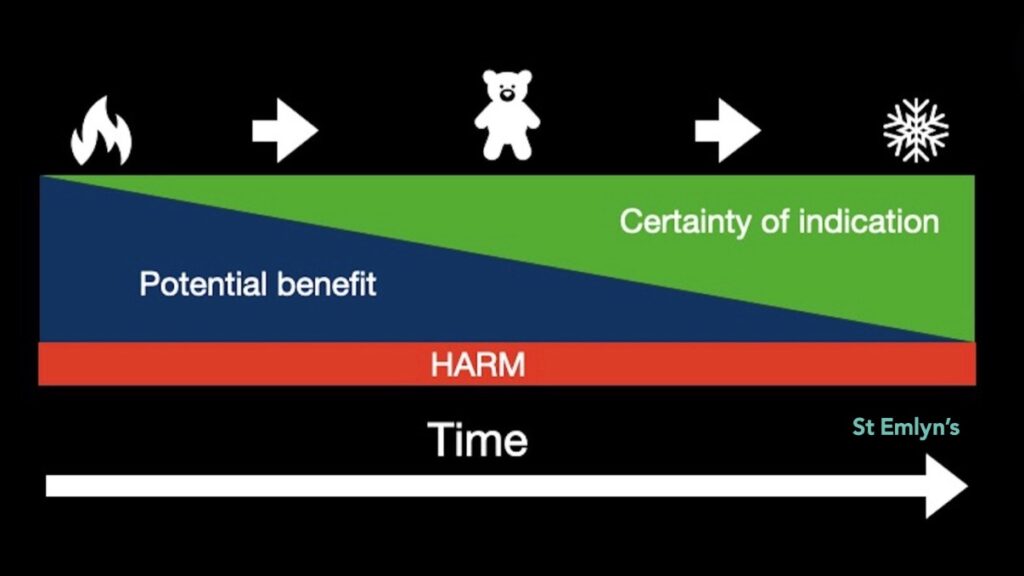
When is the right moment to perform a high-stakes emergency procedure? This reflection uses the Goldilocks analogy to explore the harm of acting too early or too late, the uncertainty between those extremes and how training and peer review might develop judgement.
A London Air Ambulance cohort study explores partial REBOA for trauma patients with life-threatening bleeding and recent or imminent cardiac arrest. This appraisal considers feasibility, survival and patient selection, alongside the limits of a small observational study and the training and systems needed to deliver the technique.
In the second part of this podcast special, Iain and Simon discuss research on major haemorrhage, trauma and cardiac arrest. Papers include REBOA, cryoprecipitate, tranexamic acid and defibrillation strategies, with links to the studies and accompanying appraisals.