
To squeeze or not to squeeze. The ARISE-FLUIDS trial
21 min read
Does early vasopressor therapy improve outcomes in septic shock? We review the ARISE-FLUIDS trial presented at Critical Care Reviews 2026.
Does early vasopressor therapy improve outcomes in septic shock? We review the ARISE-FLUIDS trial presented at Critical Care Reviews 2026.
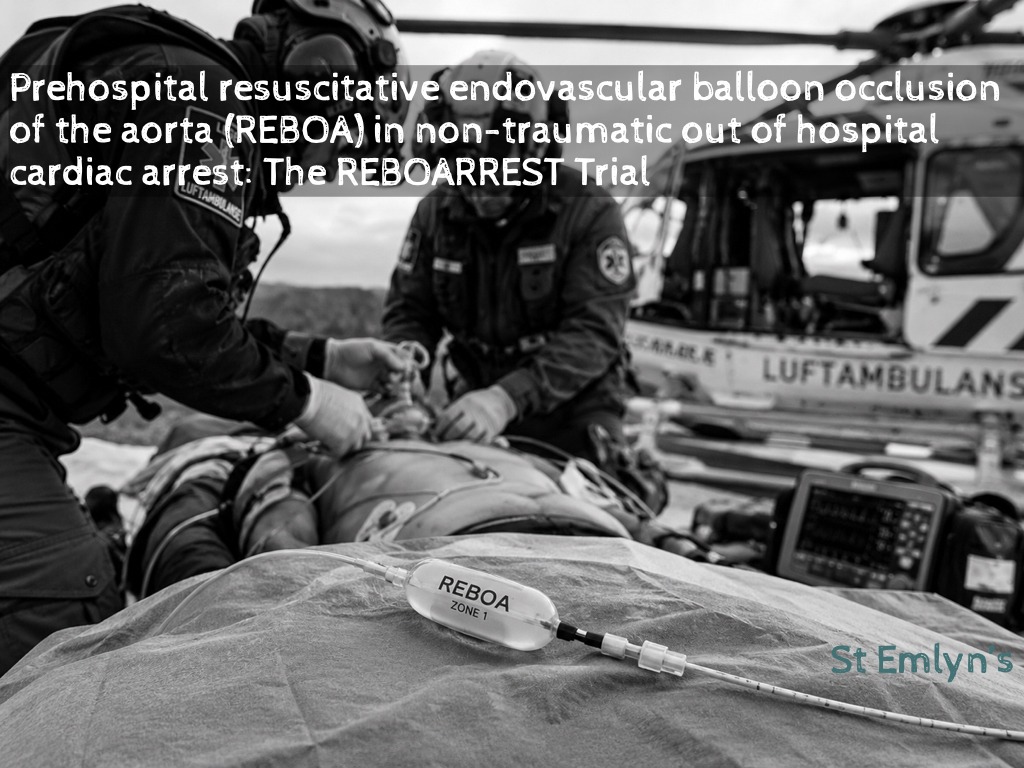
Does adding REBOA to advanced life support improve outcomes in non-traumatic out-of-hospital cardiac arrest? This appraisal of REBOARREST examines the neutral trial results, delays to aortic occlusion and incomplete delivery of the intervention, and asks what remains uncertain.
Can prehospital emergency anaesthesia improve survival after major trauma? This review examines a UK study using machine learning and causal modelling, with attention to patient selection, residual confounding and why an observational estimate is not definitive proof of benefit.
In this episode, recorded at Trauma 2030 at the Royal College of Surgeons, I sit down with one of St Emlyn's own, Rich Carden, former emergency physician, now intensive care trainee and PhD graduate in trauma sciences — to explore what shock actually means beyond the blood pressure reading.
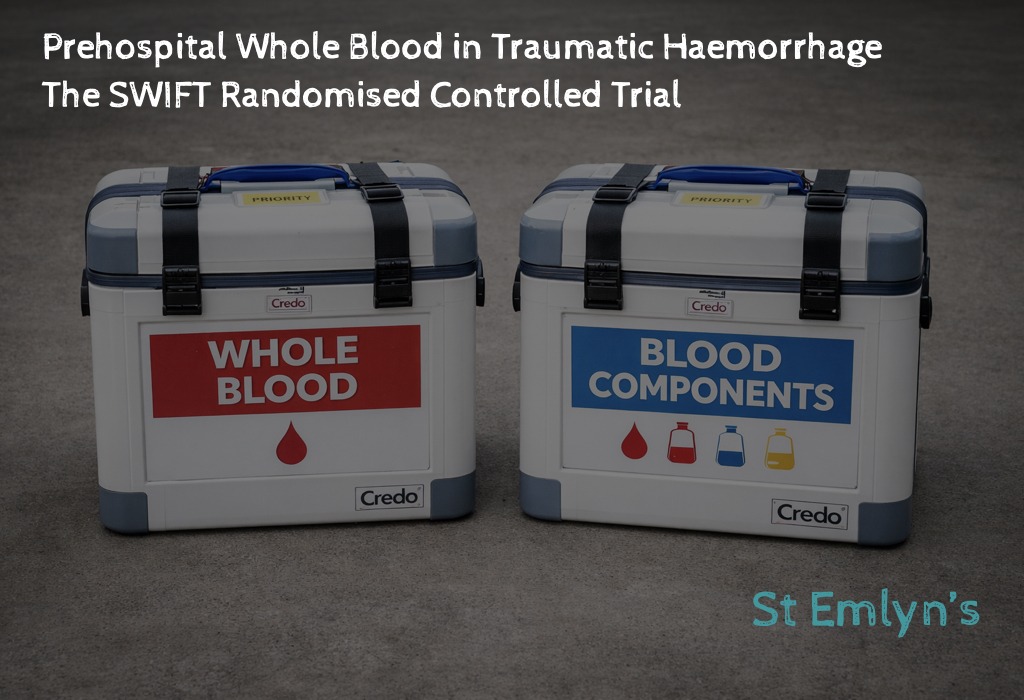
Does prehospital whole blood improve outcomes compared with blood components in traumatic haemorrhage? We critically appraise the SWiFT randomised trial, including its findings on death or massive transfusion within 24 hours and the limits of testing a prehospital-only intervention.
A review of the 2026 AHA/ACC multi-society guideline on acute pulmonary embolism, covering its A–E clinical categories, diagnostic approach, treatment and follow-up. The article considers the changes alongside UK practice and explains where the author sees their greatest relevance.
Practical perspectives on trauma care and team leadership.
Explore the series →