Simon Carley selects ten trauma papers for the 2018 Trauma Care UK conference, focusing on questions that might change bedside practice. Topics range from imaging and transport to brain injury, pneumothorax and team performance, with critical discussion of study limitations and the challenges of translating evidence into care.
How should clinicians balance bleeding and thrombosis when anticoagulation causes problems? This 2018 RCEM CPD discussion covers haemorrhage, reversal strategies, adverse reactions, treatment failure and monitoring. It emphasises individual risk, practical delivery of care and making complex pathways usable, reflecting the drugs and evidence available at the time.
Should injured children receive whole-body or selective CT? Natalie May examines a 2018 observational study of paediatric trauma, explaining propensity-score adjustment and what its mortality findings can—and cannot—tell us. The discussion challenges the assumption that adult imaging practice should automatically transfer to children.
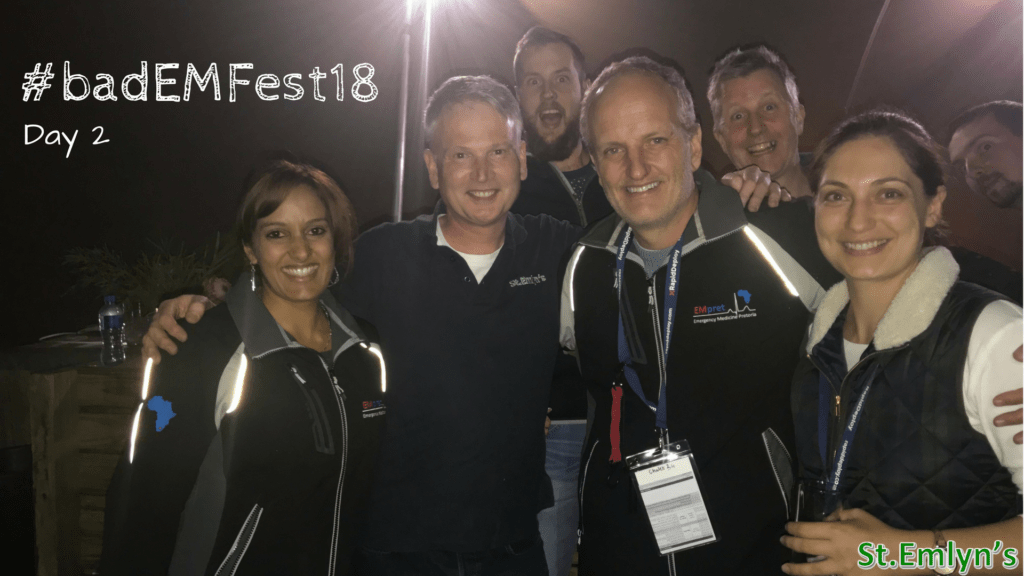
The second day of badEMfest 2018 combines practical emergency care with questions about leadership and humanity. This report covers paediatric problems, imaging in pregnancy, trauma resuscitation and South African emergency services, alongside feedback, staff support, sleep and kindness in clinical encounters.
What information do we lose when a test result becomes simply ‘positive’ or ‘negative’? Using biomarkers and the T-MACS model, this reflection explores continuous measurements, diagnostic probability and shared decisions. It asks whether yes-or-no labels obscure distinctions that matter to an individual patient.
Ashley Liebig reflects on caring for Noah Galloway after his injuries in Iraq and the friendship that followed. Their shared story explores what patients remember: our words, preparation, respect for privacy and everyday kindness, and how those experiences can shape both recovery and a clinician’s practice.