This archived announcement introduces the first St Emlyn’s Live conference, scheduled for Manchester on 9 October 2018. It outlines the meeting’s focus on evidence, clinical excellence, the philosophy of emergency care and wellbeing, with early speaker introductions and the educational aims behind the event.
What makes a teaching course useful back in the clinical workplace? This report from Cape Town’s Teaching CoOp in 2018 explores presentation skills, educational theory, bedside teaching and simulation. It highlights supportive learning cultures, understanding learners’ reasoning and making practical teaching work with available resources.
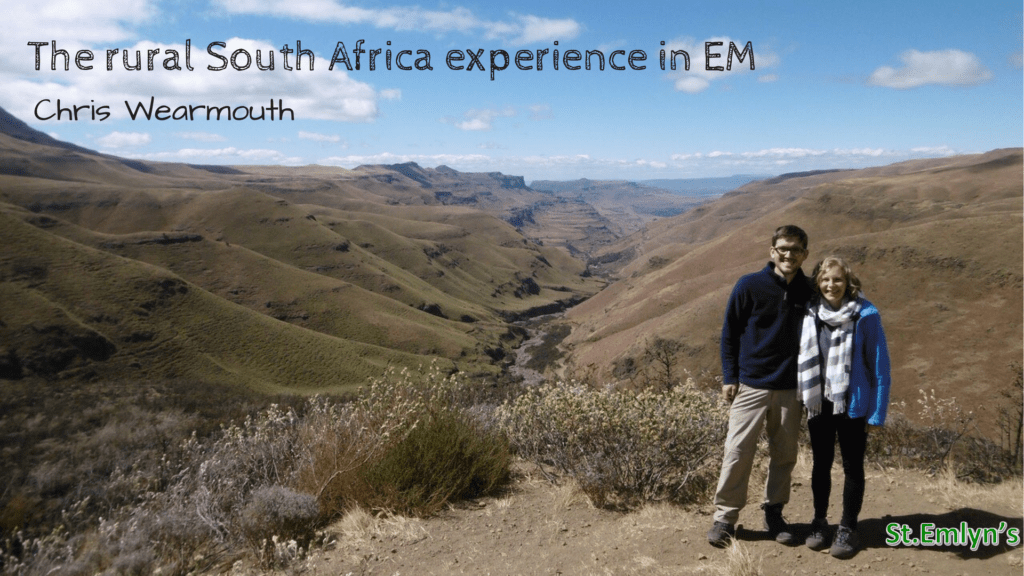
Chris Wearmouth reflects on working in rural South Africa after foundation training. His 2018 account explores resource constraints, responsibility, supervision and the limits of competence, alongside the value of reciprocal teaching and sustainable improvement. It offers a candid perspective on both the opportunities and the personal costs of working abroad.
SALT-ED compared balanced crystalloids with saline in adults admitted from the emergency department to non-critical-care beds. This 2018 appraisal distinguishes the neutral primary outcome from the signal in kidney outcomes, examining pragmatic trial design, follow-up and the limits of applying one centre’s findings more widely.
Did the SMART trial settle the debate about balanced fluids and saline in intensive care? This 2018 journal club examines its cluster-randomised design, small difference in a composite kidney outcome and interpretation of mortality findings. It asks how much weight clinicians should give the results.
Rusty Carroll shares a personal account of post-traumatic stress in emergency care, describing its effects on work, relationships and everyday life. His reflection explores recognising distress, seeking help and the importance of family, colleagues and a workplace culture that supports staff through psychological injury.