Drawing on Simon Mardel's outbreak experience, this November 2020 article examines infection control during the second COVID-19 wave. It considers crowding, fatigue, workplace hierarchy and the systems needed to help staff protect patients and colleagues, rather than relying on individual vigilance alone.
After a second lockdown was announced in the UK in October 2020, Iain Beardsell spoke with Liz Crowe about coping with the months ahead. The conversation focuses on simple, practical ways to keep going through the continuing strain of the pandemic, whether working in healthcare or not.
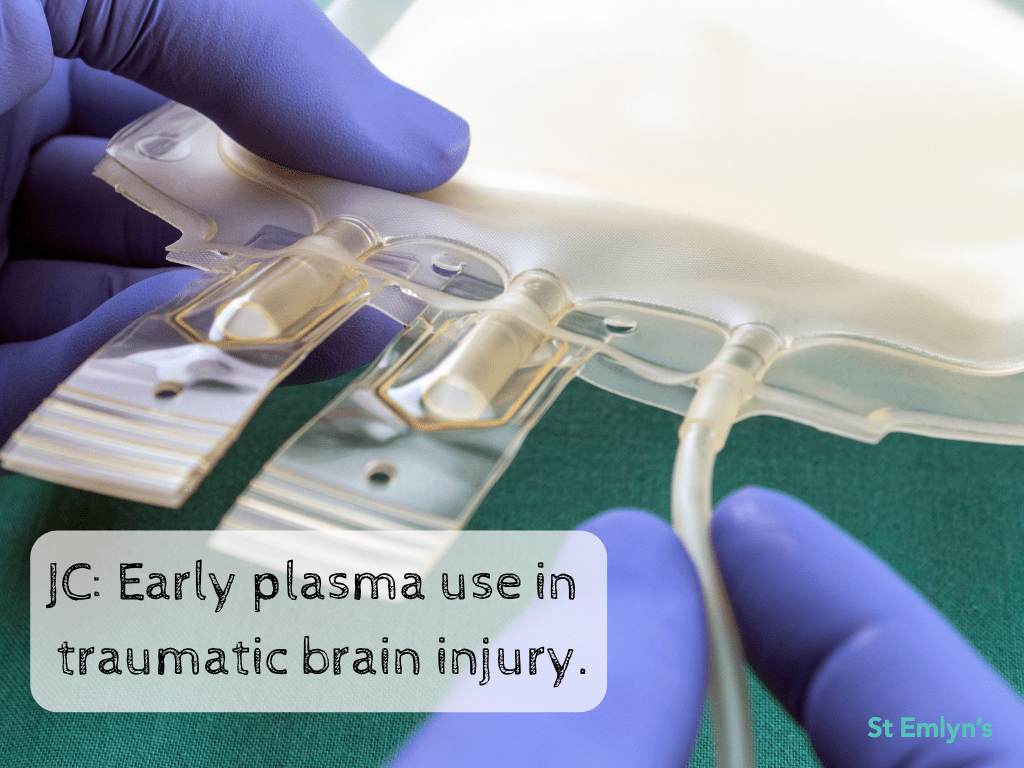
Could early prehospital plasma help trauma patients with brain injury? This 2020 review examines a secondary analysis of PAMPer, its apparent survival signal and why post-hoc findings, uncertain mechanisms and unanswered neurological-outcome questions require caution before changing practice.
Could carotid ultrasound make pulse checks more reliable? Natalie May examines a proof-of-concept study using recordings from patients undergoing cardiac surgery, and explains why interpreting those images is a different challenge from obtaining and using them during a real cardiac arrest.
What does STAAMP add to the evidence for prehospital tranexamic acid after trauma? This 2020 appraisal examines the lack of a clear overall mortality benefit, recruitment and power limitations, safety findings and the caution needed when interpreting encouraging timing, shock and dosing subgroups.
Can TEG or ROTEM improve outcomes when added to major haemorrhage care? Natalie May reviews the iTACTIC trial's comparison with conventional coagulation testing, separating faster treatment decisions from demonstrated patient benefit and examining the limits of its size and subgroup findings.