The final part of Natalie May’s better-learning series considers how to sustain learning alongside a demanding clinical career. It explores kindness towards yourself, realistic priorities, rest, interests outside medicine and the value of learning with colleagues, finding mentors and building a supportive professional network.
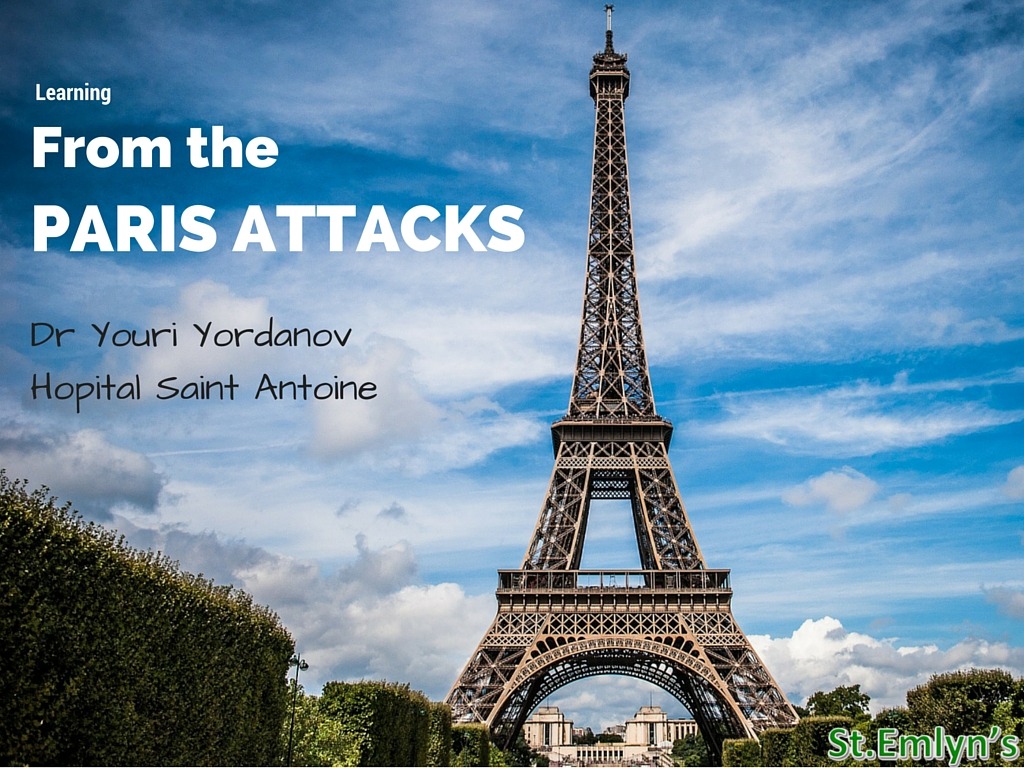
Dr Youri Yordanov describes the emergency department response to the Paris attacks of 13 November 2015. This podcast introduction and accompanying resources focus on organising teams and caring for critically injured casualties arriving without warning at an already busy Saint Antoine hospital.
How can clinicians take more control of their learning? Part two of Natalie May’s series explores memory, mental rehearsal, simulation and spaced repetition, then considers how preparing to teach, anticipating questions and reflecting on teaching can deepen the teacher’s own understanding.
Could a single high-sensitivity troponin I result help rule out acute coronary syndrome at presentation? This 2015 appraisal examines a diagnostic cohort study, distinguishing negative predictive value from sensitivity and asking how the findings fit with ECG interpretation, clinical risk and different patient populations.
This short video introduction describes a turban-style scalp bandage intended to stay in place over a closed wound. It explains the purpose of the demonstration and its important limitation: the bandage does not apply direct wound pressure and has limited use during active bleeding.
Becoming a better learner starts with understanding yourself. In the first part of her series, Natalie May explores motivation, uncertainty, learning from failure and critical reflection, with practical questions for recognising knowledge gaps and seeking feedback that can change clinical practice.