Natalie May shares learning from the opening sessions of the 2018 FemInEM Ideas Exchange. Her reflections connect gender equity, racial and gender bias, uncertainty and the human experience of being a doctor, asking how listening to different stories can challenge assumptions and support more inclusive workplaces.
Does cricoid pressure still have a place in rapid sequence induction? Simon Carley appraises a large 2018 randomised trial, weighing aspiration outcomes against difficulties with laryngoscopy. He also considers the limits of applying operating-theatre evidence to emergency department patients and groups excluded from the study.
How can teaching fit into a busy emergency department? Simon Carley’s 2018 RSM presentation explores ways to make learning part of clinical work, including Post-it pearls, tailored FOAMed resources and structured hot debriefs. The emphasis is on preparation and practical approaches that need little time or money.
The August 2018 podcast roundup revisits learning from EMSA, clinical apps, biotin interference with troponin testing and the CESR route. Its written guide also links a review of intravenous fluids in critical illness and a discussion of moral injury in emergency and prehospital care.
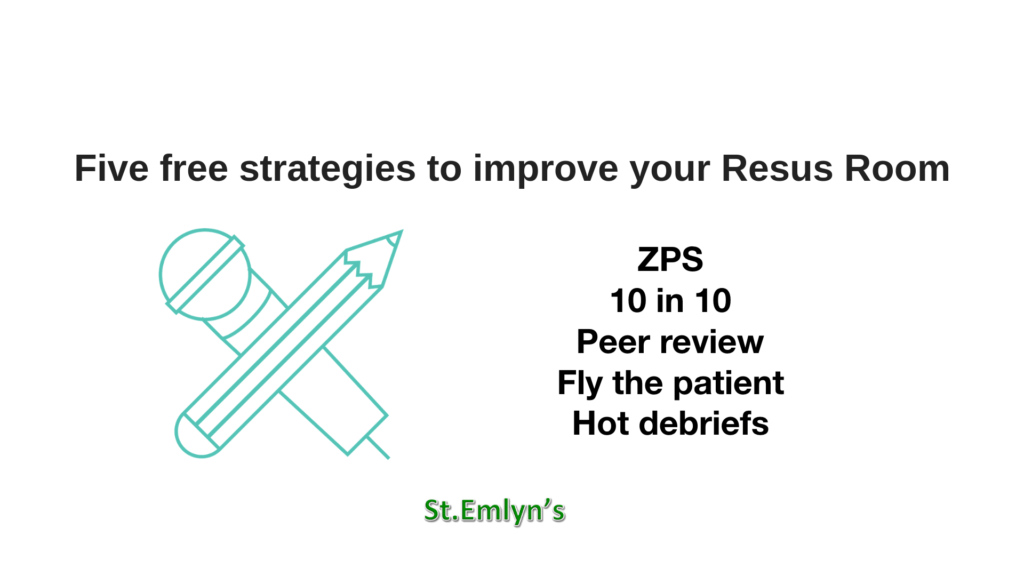
Simon Carley sets out five approaches to resuscitation practice that require no new equipment: preparation with the Zero Point Survey, regular team updates, separating immediate care from strategic thinking, peer observation and hot debriefs. This St Emlyn’s Live 2018 talk focuses on how teams work together.
In the third part of his personal account of PTSD, Rusty Carroll describes his experience of eye movement desensitisation and reprocessing therapy. He reflects on waiting for treatment, the emotional demands of therapy and the changes that helped him rebuild his wellbeing.