The 2018 PARAMEDIC-2 trial challenged assumptions about adrenaline in cardiac arrest. Simon Carley examines the distinction between improved survival and favourable neurological outcomes, the trial’s patient selection and the competing arguments about practice, stressing why the results need more than a simple yes-or-no interpretation.
Simon Carley shares highlights from the 2018 BASICS North West conference, spanning prehospital care, sepsis, stroke research and support for clinicians. The report ends with his torso trauma discussion, covering changing interventions, paediatric injuries, assessment of shock and the challenges of care across the patient journey.
Does the speed or composition of intravenous rehydration affect neurological outcomes in children with DKA? This review examines the 2018 PECARN trial, its four fluid regimens and the limits of its findings. Simon Carley explains why challenging established assumptions does not remove the need for careful fluid management.
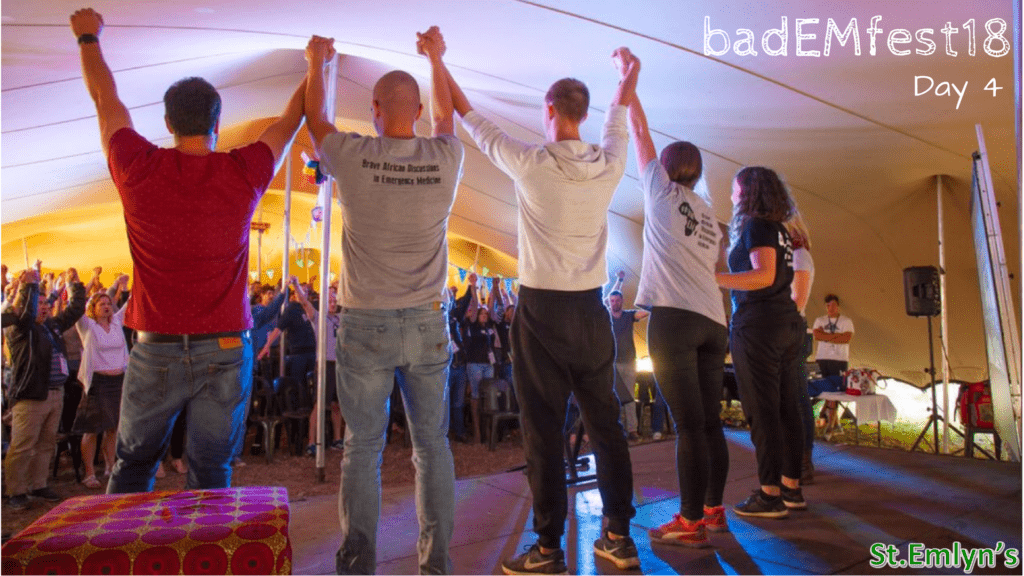
The final report from badEMfest 2018 brings together workshops on simulation, major incidents and venomous plants and animals, followed by talks on organ donation, cruise ship medicine and patient safety. Simon Carley and Natalie May reflect on the shared learning and connections that made the gathering memorable.
What can emergency clinicians learn from an audit of perioperative anaphylaxis? Chris Gray reviews NAP6, focusing on recognition, cardiovascular collapse and reactions associated with antibiotics, muscle relaxants and chlorhexidine. This 2018 discussion considers how findings from anaesthetic practice relate to the emergency department.
Does tranexamic acid improve recovery after spontaneous intracerebral haemorrhage? This 2018 appraisal of TICH-2 examines death and dependence, haematoma expansion and the uncertainty around the results. It explores why a possible effect on bleeding does not necessarily establish a meaningful improvement in patients’ longer-term outcomes.