Can short-term targets distract us from the purpose of healthcare? Craig Ferguson uses finite and infinite game theory to explore the tension between measurable performance and lasting quality, including how targets can distort priorities, consume resources and produce unintended consequences in emergency medicine.
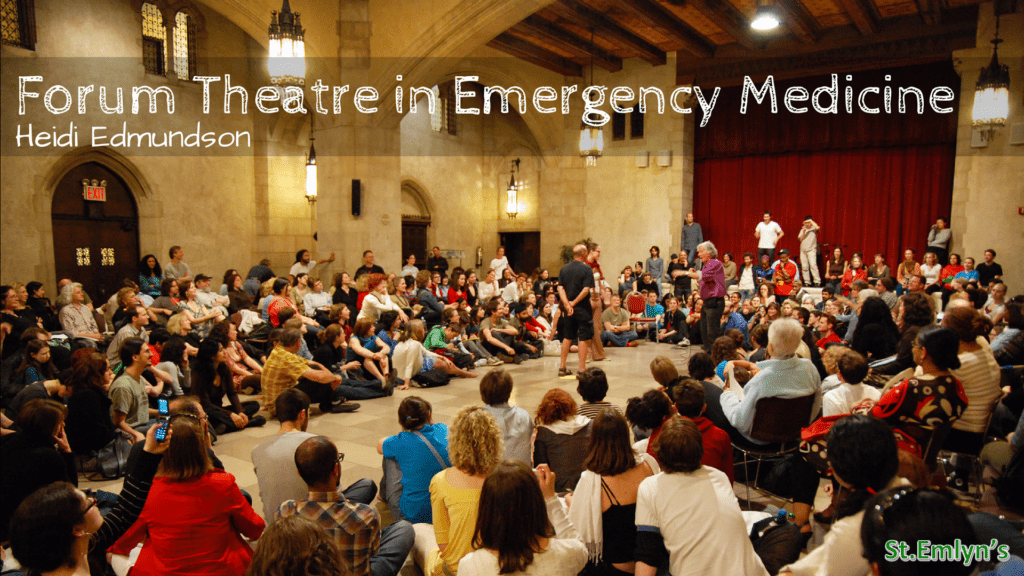
Heidi Edmundson describes bringing Forum Theatre into the emergency department to explore communication, power and staff wellbeing. By replaying difficult situations with audience members trying alternative responses, the project gave colleagues a way to examine everyday tensions together and consider how interactions might change.
How can emergency departments avoid separating a patient’s mental and physical health needs? This 2018 podcast with Kevin Mackway-Jones introduces the APEx course and its joint emergency medicine and psychiatry approach. The accompanying article explores unified assessment, risk and the assumptions that can delay care.
Ashley Liebig reflects on caring for Noah Galloway after his injuries in Iraq and the friendship that followed. Their shared story explores what patients remember: our words, preparation, respect for privacy and everyday kindness, and how those experiences can shape both recovery and a clinician’s practice.
How can feedback help clinicians and teams improve? Drawing on a 2018 conference session in Graz, Simon Carley distinguishes appreciation, coaching and evaluation. He explores receiving difficult feedback, agreeing its purpose, peer observation and the practical choices that make a conversation more useful.
This archived announcement introduces Manchester’s Teaching Co-Operative Course on 10–12 October 2018. It outlines a practical approach to clinical education, connecting learning theory with bedside teaching, presentations, simulation, feedback and wellbeing, and introduces the international faculty behind the three-day programme.