How do privilege and prejudice shape access to emergency care? In this reflection on equality and global health, updated in 2023, Stevan Bruijns challenges his own assumptions and asks readers to consider whose experiences, research and opportunities are represented in medicine.
What stays with clinicians after a lesson learned the hard way? Natalie May reflects on an EMSA 2018 session covering handover, prehospital priorities, career values and preparation. Her own contribution examines implicit bias, privilege and the need to understand a patient’s perspective rather than assume it matches our own.
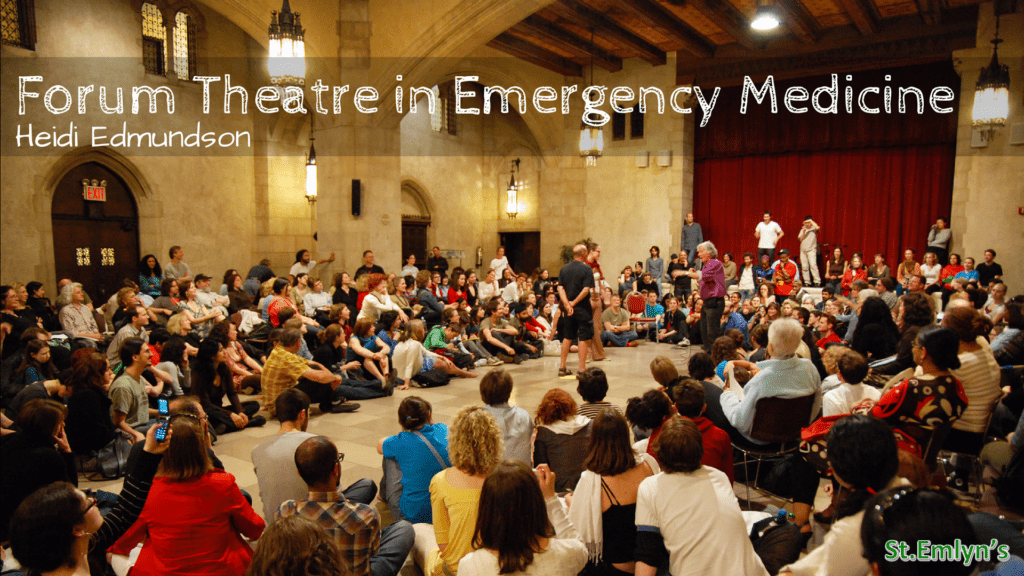
Heidi Edmundson describes bringing Forum Theatre into the emergency department to explore communication, power and staff wellbeing. By replaying difficult situations with audience members trying alternative responses, the project gave colleagues a way to examine everyday tensions together and consider how interactions might change.
Rusty Carroll shares a personal account of post-traumatic stress in emergency care, describing its effects on work, relationships and everyday life. His reflection explores recognising distress, seeking help and the importance of family, colleagues and a workplace culture that supports staff through psychological injury.
Chris Gray reports from the 2018 Northern Emergency Medicine conference in Durham. The programme connects end-of-life care, frailty and prehospital developments with workforce roles, burnout and major-incident preparation. Reflections on the Manchester attack underline the importance of understanding both the response plan and support for colleagues.
Natalie May introduces the e-book collecting her reflections from Sydney HEMS, with 104 lessons drawn from the original blog series. This 2017 announcement explains the collection’s additional photographs, foreword and chapter on entering prehospital and retrieval medicine, and links back to the seven source posts.