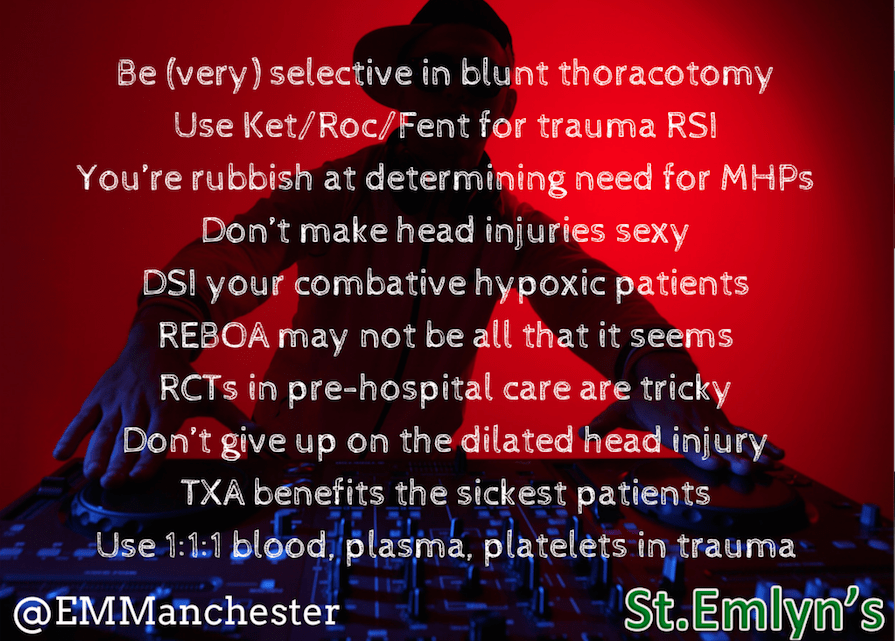
Simon Carley selects ten trauma papers from 2014–2015, with an accompanying discussion with Simon Laing. The review spans transfusion, brain injury, prehospital care, airway management, haemorrhage prediction and thoracotomy, linking to the original studies and highlighting questions raised by this period’s trauma research.
How can emergency departments reduce delays for patients who need transfer for primary PCI? This 2015 account of Manchester’s DIDO-30 project examines early ECG recording, recognition and escalation, with practical ideas for improving pathways through staff feedback, shared responsibility and rehearsing the whole process.
Can a trauma team leader’s early judgement predict which patients will need massive transfusion? Simon Carley examines a 2015 study comparing clinical gestalt with scoring systems, questioning the outcome definition, selection of patients and the limits of relying on a single early assessment.
A 2015 review of acute otitis media in children, exploring diagnosis, pain relief and the balance of benefits and harms from antibiotics. The article discusses immediate, delayed and no-antibiotic approaches, communication with families and the importance of recognising unwell children, complications and additional risk factors.
Karim Brohi discusses vascular injury in a short podcast recorded at the 2014 London Trauma Conference. The accompanying introduction highlights recognising the ischaemic injured limb, questioning assumptions about hard and soft signs, and the role of interventional radiology in major trauma care.
Why is ‘I don’t know’ so hard to say? Drawing on Think Like a Freak, this reflection explores intellectual humility, curiosity, reframing problems and seeking useful feedback, asking how ideas from outside medicine can help emergency clinicians recognise their limits and approach difficult decisions differently.