A 2022 review of Essex and Herts Air Ambulance's six-year experience with resuscitative thoracotomy. It considers outcomes after blunt and penetrating trauma, patient selection, timing and the training, governance and transport arrangements needed to support the procedure.
How should patients and clinicians help decide what emergency medicine researches next? This February 2022 post introduces a renewed James Lind Alliance priority-setting exercise, reflecting on earlier funded questions and explaining how ideas were gathered for the next round.
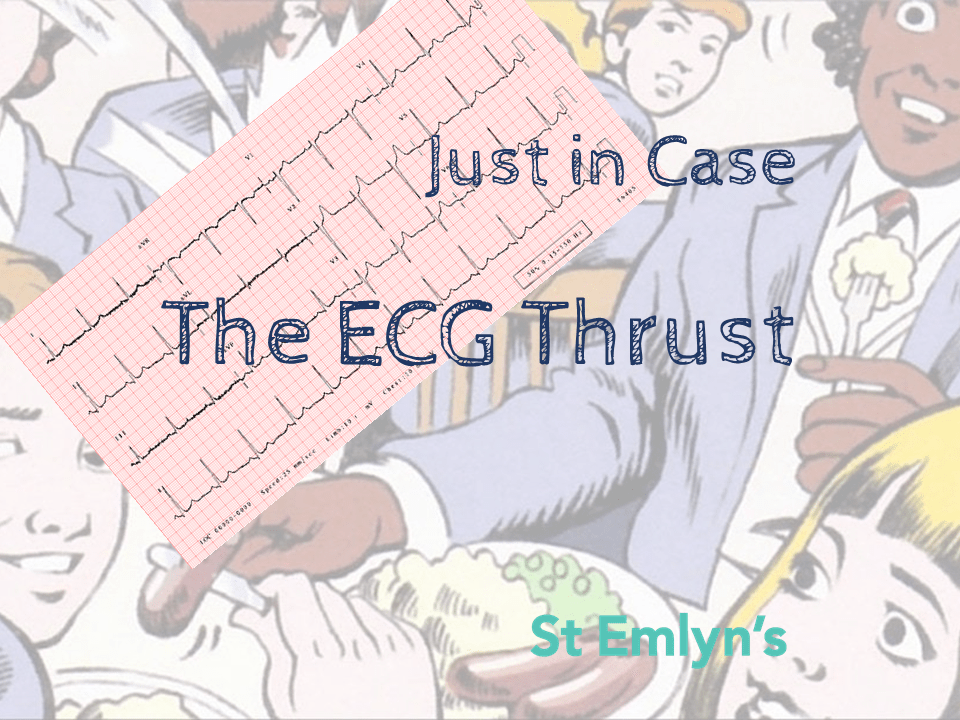
What happens when an ECG is requested or handed over for a signature 'just in case'? Iain Beardsell examines targeted testing, clinical context, interruptions and respectful teamwork, questioning routine habits without arguing that patients should stop having ECGs.
A 2022 appraisal of a randomised trial comparing etomidate and ketamine for emergency intubation. It considers seven-day and 28-day survival, cardiovascular outcomes and the limits of applying results from a single US centre to other patients and airway systems.
Iain and Simon revisit highlights from the St Emlyn's blog in December 2021. The episode combines the monthly round-up with reflections on the year and a look ahead to 2022.
Why might a bleeding trauma patient have a slow heart rate? Rich Carden explores the Bezold-Jarisch reflex, its proposed role in bradycardia during haemorrhage and the danger of assuming that an absence of tachycardia means an absence of blood loss.