What do clinicians mean when they talk about ‘gestalt’? Simon Carley introduces its origins in perception, uses visual examples to explain how patterns emerge from fragments, and considers how these ideas relate to bedside assessment, ECG interpretation, clinical judgement and information that is difficult to measure.
Can experiencing physiological stress make blood gas results more meaningful to learners? This account describes an exercise-based teaching experiment using lactate measurements, then examines the value and limits of comparing healthy volunteers with critically ill patients. It also discusses consent, organisational approval and the absence of patient-outcome evidence.
Rich Carden uses Star Wars and Robert Cialdini’s principles of persuasion to explore everyday interactions in emergency medicine. The reflection connects reciprocity, consistency, social proof, liking, authority and scarcity with referrals, teamwork and diagnostic bias, encouraging awareness of psychological influences rather than manipulation of patients or colleagues.
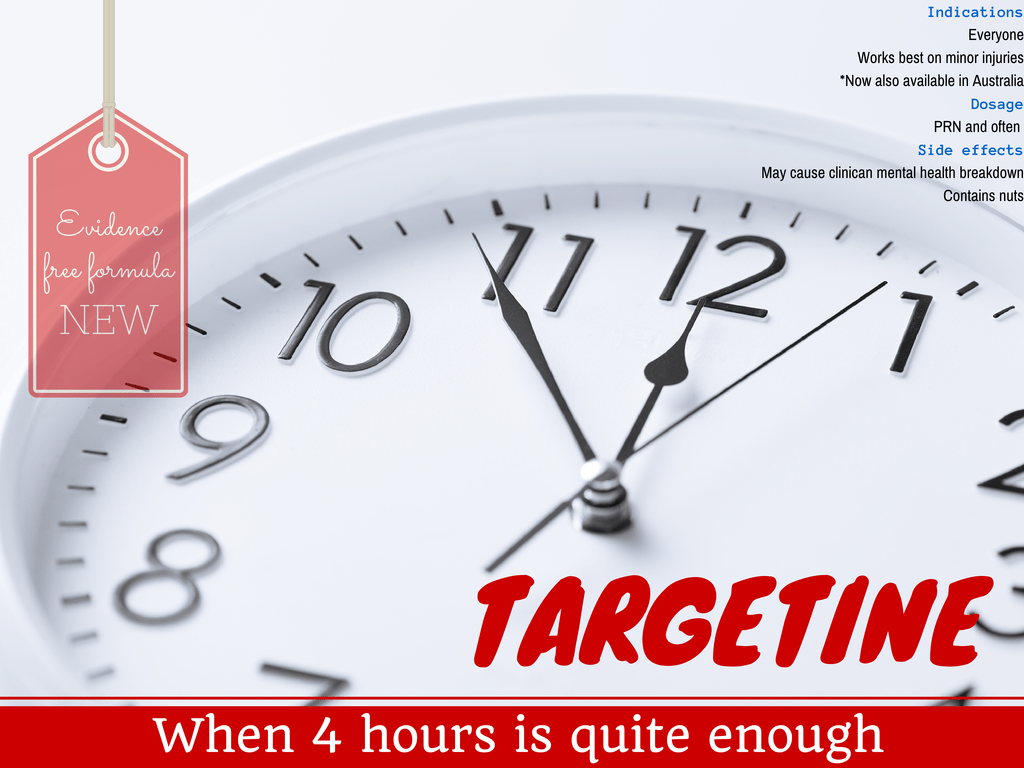
A 2014 satire recasts the emergency department four-hour target as a fictional drug, ‘Targetine’. Iain Beardsell uses the analogy to question the evidence behind performance targets, their unintended effects on priorities and staff wellbeing, and whether patient-centred outcomes receive the same scrutiny as compliance.
Who should be seen next when the emergency department cannot see everyone immediately? Rick Body uses hypothetical triage dilemmas to explore fairness, waiting time, clinical urgency and suffering, asking how fast-tracking, staffing decisions and performance targets affect the balance between individual patients and the wider department.
The first few shifts in emergency medicine can be daunting. Here are some top tips about how you can not just survive, but thrive.