How can reflection become useful learning rather than a compulsory portfolio exercise? Natalie May explores planned and spontaneous reflection, patient follow-up, feedback and the biases that shape our accounts. Her article and accompanying podcast consider how educators can create safer, more meaningful opportunities to learn from practice.
The September 2018 podcast roundup revisits airway management after out-of-hospital cardiac arrest, the Zero Point Survey and pulmonary embolism. Its linked reading also covers neonatal emergencies, equality in emergency medicine and reports from EMS Gathering, ResusTO and EuSEM, bringing together the month’s clinical and professional discussions.
What makes a conference question worth everyone’s time? Simon Carley revisits a tongue-in-cheek question-asking algorithm and the serious point behind it: making discussion useful for the whole audience. He considers moderated social-media questions, their limitations and ways to encourage focused debate without silencing participation.
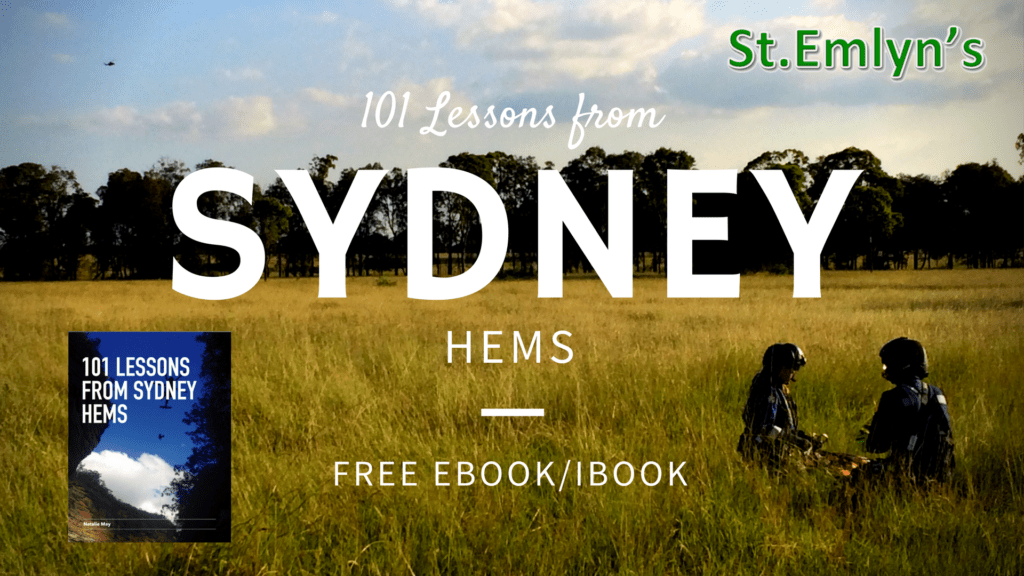
Natalie May introduces the e-book collecting her reflections from Sydney HEMS, with 104 lessons drawn from the original blog series. This 2017 announcement explains the collection’s additional photographs, foreword and chapter on entering prehospital and retrieval medicine, and links back to the seven source posts.
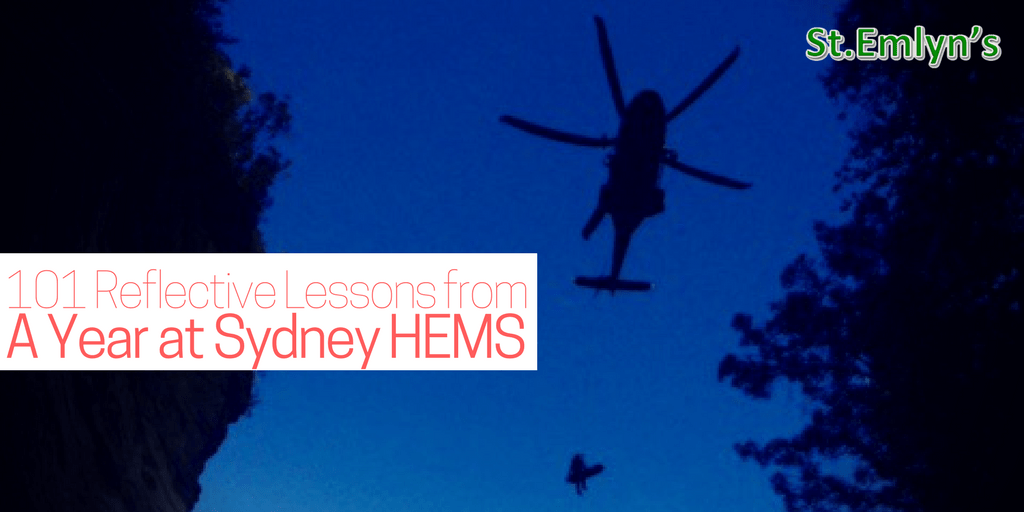
A year with Sydney HEMS offers lessons beyond clinical practice. The final instalment explores facing fears, recognising fatigue, responding to frustration and making time for the people who matter, alongside the value of humility and reflection.
Behind St Emlyn’s tongue-in-cheek mottos are practical ideas about working in emergency medicine: choosing our response to events, recognising our limits, staying calm and taking initiative. The team explains how these philosophies shape its clinical and educational work.