Should injured children receive whole-body or selective CT? Natalie May examines a 2018 observational study of paediatric trauma, explaining propensity-score adjustment and what its mortality findings can—and cannot—tell us. The discussion challenges the assumption that adult imaging practice should automatically transfer to children.
Can the Ottawa subarachnoid haemorrhage rule reduce unnecessary investigation without missing serious disease? This 2017 appraisal examines its prospective validation, patient selection and the tradeoff between sensitivity and specificity. Natalie May considers testing burden, clinician interpretation and why careful documentation of headache onset matters.
Should major trauma imaging start with whole-body CT or a selective approach? This 2016 review of REACT-2 examines mortality, imaging speed and radiation exposure, while questioning exclusions, overlapping imaging between groups and whether a trial finding no difference establishes equivalence.
Should abdominal and pelvic CT be added to cancer screening after an unprovoked venous thromboembolism? This 2015 appraisal examines a Canadian randomised trial, missed cancers during follow-up and the limits of applying results from specialist clinics to other settings.
An August 2015 overview of NICE’s draft major trauma guidance during its stakeholder consultation. The post summarises the proposed approach to airway care, bleeding, imaging, analgesia and communication, and explains how clinicians could comment; it records the consultation rather than the final or current guidance.
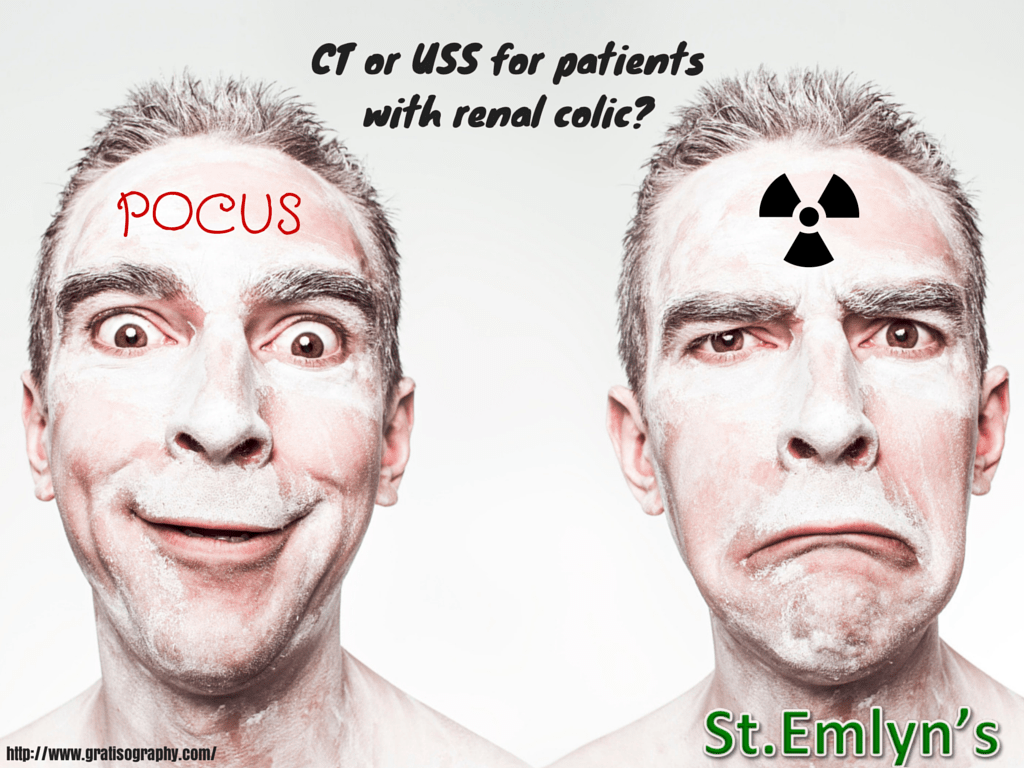
Should ultrasound or CT be the first investigation for suspected renal colic? This 2014 appraisal examines a trial comparing emergency physician ultrasound, radiologist ultrasound and CT, focusing on patient outcomes, missed diagnoses, cumulative radiation and the need for additional imaging after the initial test.