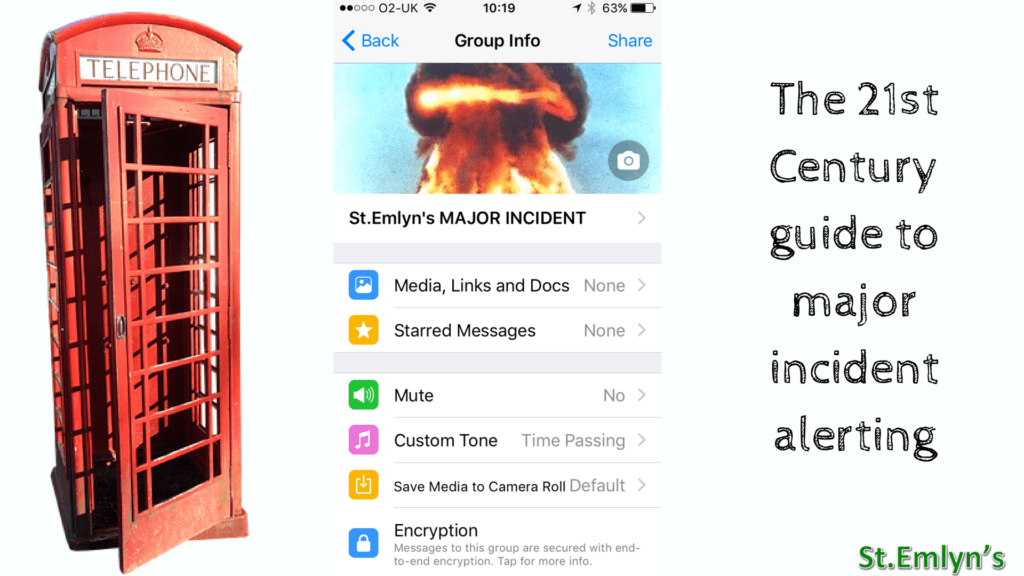
Drawing on the 2017 Manchester and London attacks, this post examines how hospitals alert and mobilise staff during a major incident. It discusses structured METHANE messages, coordinating responses and planning cover beyond the first wave, alongside the limitations of messaging groups.
Our thoughts are with everyone affected; patients, families, staff, relatives and the people of Manchester.
Would your hospital’s major incident plan work with the staff and resources actually available? This 2017 conference companion explores usable action cards, familiar roles, scalable command structures and local training, with attention to regional networks and an all-hazards approach.
An introductory 2015 overview of chemical, biological, radiological and nuclear incidents for emergency clinicians. The post considers recognising unusual presentations, triage, broad patterns of exposure and sources of specialist help, encouraging further preparation rather than presenting itself as a complete incident-management guide.
Natalie May and Iain Beardsell review the opening day of the 2015 London Trauma Conference in this report and podcast. Highlights include older trauma patients, human factors, brain and spinal injury, mass-casualty care and why effective systems matter more than any single intervention.
Dr Youri Yordanov describes the emergency department response to the Paris attacks of 13 November 2015. This podcast introduction and accompanying resources focus on organising teams and caring for critically injured casualties arriving without warning at an already busy Saint Antoine hospital.