Who might benefit from emergency department thoracotomy after traumatic cardiac arrest? This 2015 appraisal examines EAST guidance on patient selection, comparing injury patterns and signs of life while questioning estimated control outcomes, bias and the difference between impressive relative risks and small absolute benefits.
How can online learning support doctors whose shifts prevent them attending departmental teaching? This 2015 announcement explains St Emlyn’s redesigned introductory emergency medicine course, combining selected FOAMed resources with workplace teaching, trainee reflection and tutor support during its initial testing phase.
Highlights from the 2015 North West Emergency Medicine Regional Research Symposium, spanning heart failure trials, ECG interpretation, chest pain testing and post-cardiac-arrest care. The report also explores building research teams in district general hospitals and measuring outcomes that matter to trauma patients.
A 2015 account of preparing an emergency department for possible MERS-CoV cases, drawing on local outbreak planning. It covers specialist collaboration, isolation facilities, protective equipment, rehearsal and clear staff guidance, with explicit recognition that plans require local adaptation and review as evidence changes.
Three UK trainees reflect on what SMACC Chicago 2015 taught them about uncertainty, reading primary research and mastering the basics. Their account connects debates about sepsis and trauma with clearer team communication, personal resilience and the work required to turn conference inspiration into learning.
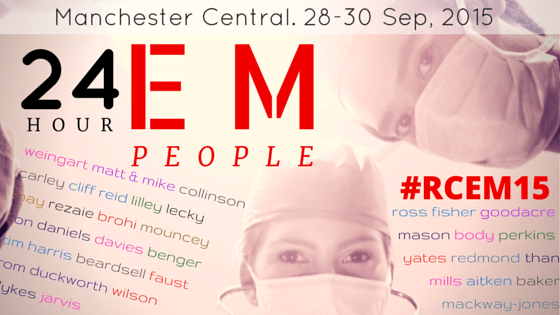
An archived preview of the Royal College of Emergency Medicine’s September 2015 conference in Manchester, themed ‘24-Hour EM People’. It introduces the planned speakers, ultrasound workshops, simulation activities and social programme, alongside reflections on how conferences can strengthen learning and professional community.