Does therapeutic hypothermia improve outcomes after cardiac arrest in children? This 2015 journal club examines a trial comparing cooling with active temperature control after out-of-hospital arrest, exploring neurological outcomes, confidence intervals, study limitations and why a non-significant result does not establish that two treatments are equivalent.
Highlights from the 2015 neuroanaesthesia and critical care meeting in Manchester, with a focus on collaboration around traumatic brain injury. Dan Horner reflects on variation in practice, fatigue and situational awareness, specialist intensive care, tracheostomy safety and communication with patients who experience awareness during anaesthesia.
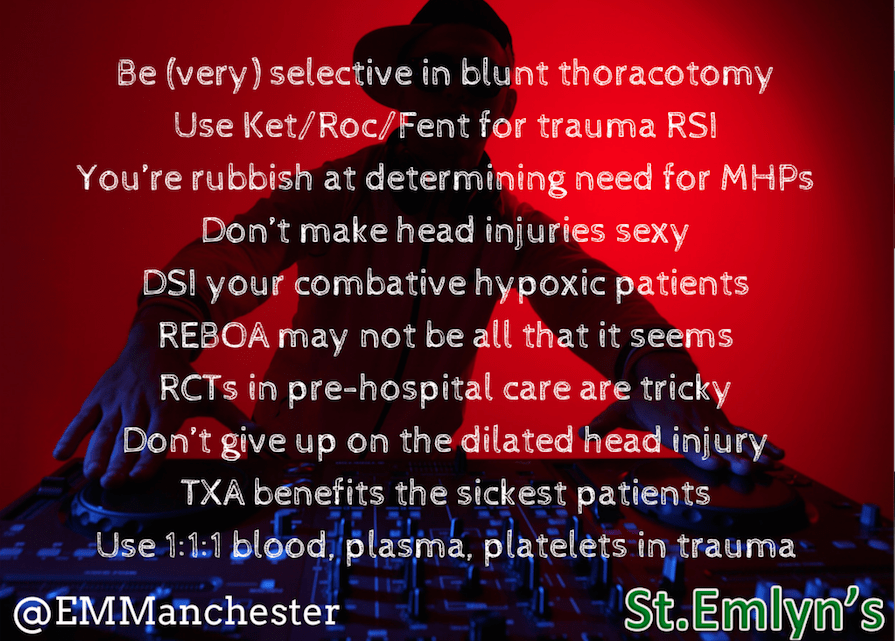
Simon Carley selects ten trauma papers from 2014–2015, with an accompanying discussion with Simon Laing. The review spans transfusion, brain injury, prehospital care, airway management, haemorrhage prediction and thoracotomy, linking to the original studies and highlighting questions raised by this period’s trauma research.
How did sepsis guidance respond to ProMISe, ProCESS and ARISE? This 2015 commentary examines changes to the Surviving Sepsis Campaign care bundles, particularly the shift away from mandatory central venous targets, and considers the resulting choices around assessing circulation and response to treatment.
Can a trauma team leader’s early judgement predict which patients will need massive transfusion? Simon Carley examines a 2015 study comparing clinical gestalt with scoring systems, questioning the outcome definition, selection of patients and the limits of relying on a single early assessment.
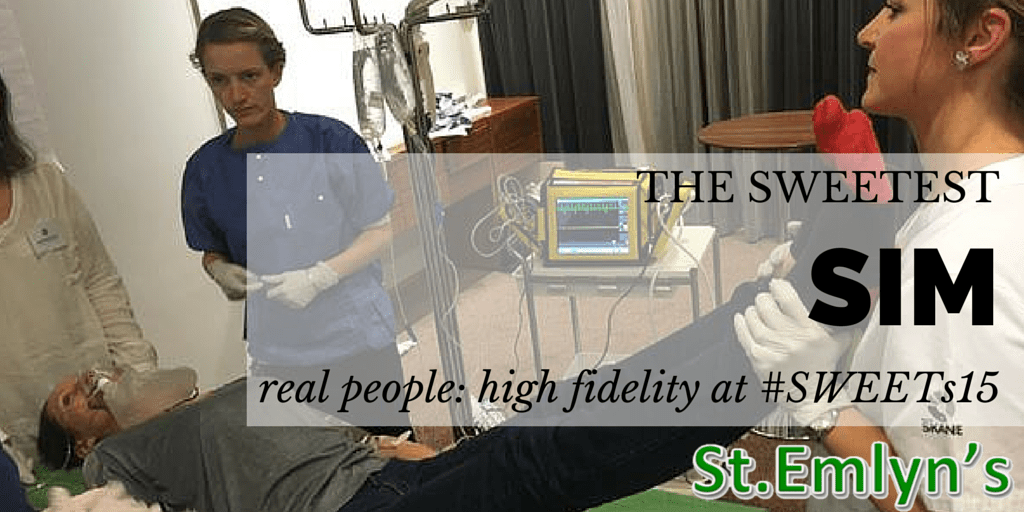
What changes when the simulated patient is a person rather than a mannequin? After playing a patient at SWEETs 2015, Natalie May reflects on explanations, emotional needs and patient feedback, alongside the educational benefits of clinician actors and the responsibility to protect their comfort and safety.