Emergency care is more pressured than ever—but is compassion being lost in the chaos? This post explores the reality of compassion fatigue, the systemic and cultural barriers to empathy, and practical, evidence-based strategies to reconnect with patients in meaningful ways.
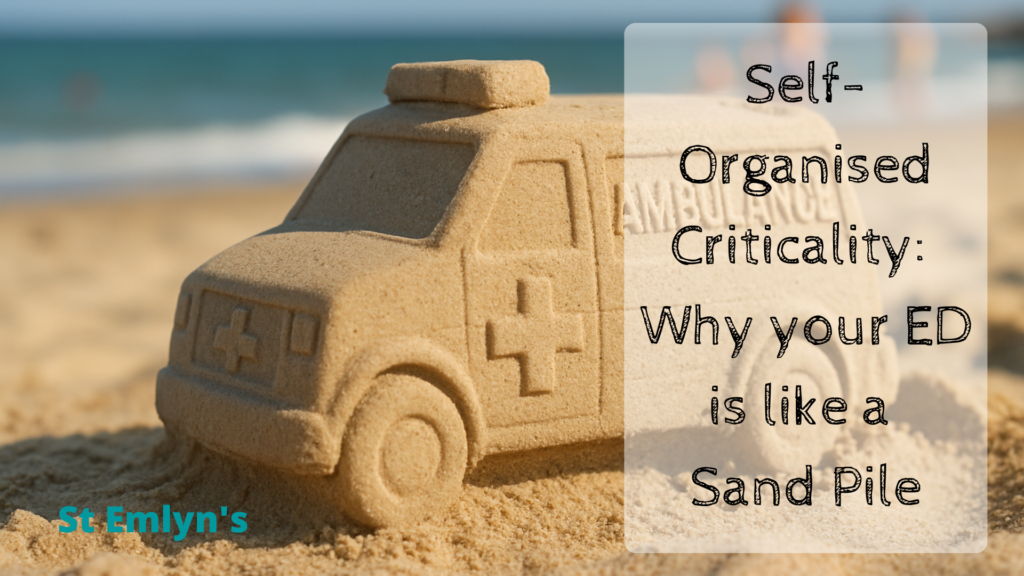
Emergency departments (EDs) often seem to shift from calm to crisis in an instant. Why? This article explores ED crowding through the lens of complexity science and self-organised criticality, explaining how minor changes—like a few extra patients—can trigger disproportionate chaos.
Can a trauma triage score work without monitoring equipment? We review the derivation and validation of sBATT using UK registry data, including how its observable signs predict early mortality and what remains uncertain about use by lay responders or in other settings.
Notes from days two and three of the 2024 Paediatric Emergencies Update in Noosa. Topics include ENT emergencies, extended duty of care, sodium regulation, neuroradiology and the challenges of preparing for paediatric patients in disasters.
How do intramuscular olanzapine and haloperidol compare for acute agitation in the ED? Greg Yates examines a small open-label randomised trial, considering sedation outcomes, adverse events and how blinding and patient selection affect the conclusions.
Recorded at the London Trauma Conference 2024, Peter Brindley discusses social media, artificial intelligence and the responsibilities of a medical digital presence. The conversation explores misinformation, patient beliefs and the questions AI raises for clinical judgement.