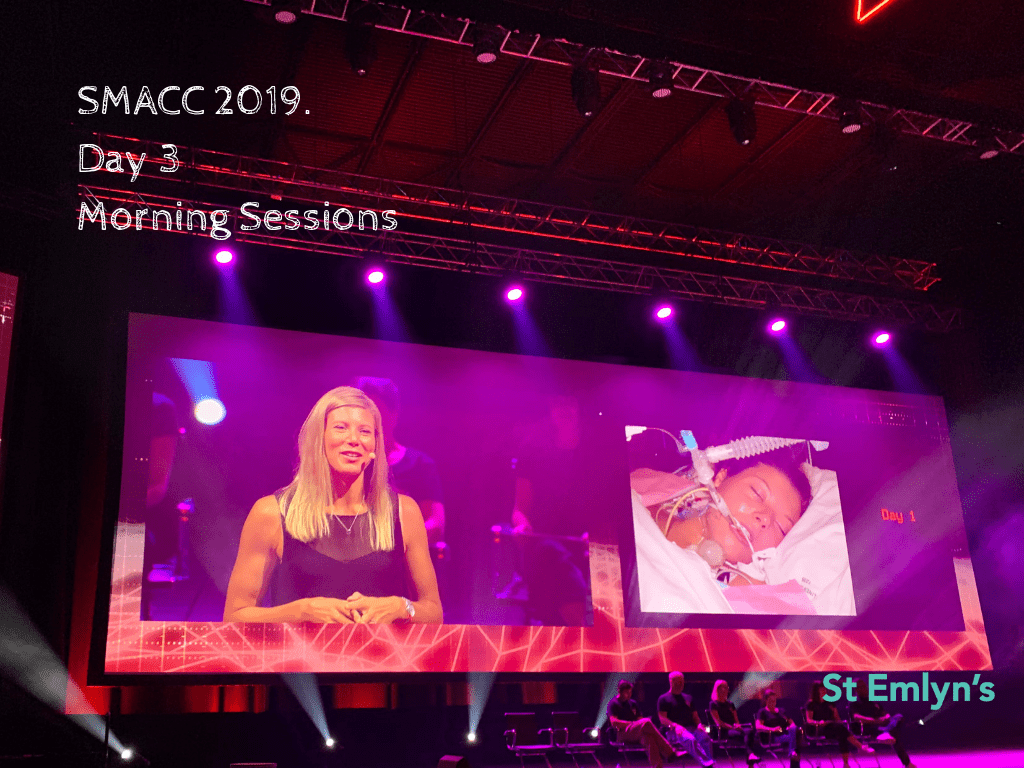
Advocacy and bedside care came together on the final morning of SMACC 2019. This report explores violence prevention, climate change and emergency care in Malawi, alongside debates about resuscitation, intubation and the balance between ultrasound technology and clinicians’ skills.
How can teams learn together and support the people doing the work? SMACC 2019’s second afternoon explored debriefing, psychological safety, peer review and a learning culture, followed by sessions on rest, reflection, self-care and tackling workplace bullying.
Supporting people affected by violence and abuse was a central theme of SMACC 2019’s first afternoon. This report also considers clinicians’ emotional responses, conversations that offer support, and the role of creativity in healthcare and education.
SMACC 2019 opened with patient stories, grief and compassionate communication before moving into bedside critical care. This report covers obstetric emergencies, echocardiography and prehospital trauma debates, showing how the Sydney meeting connected technical decisions with the people receiving care.
What makes overseas healthcare volunteering responsible and useful? Drawing on an EUSEM panel, Stevan Bruijns examines preparation, ethical limits, local partnerships and sustainability. The discussion challenges good intentions alone and considers how clinicians can contribute to global emergency care from home as well as abroad.
Good workplace relationships need deliberate attention. Stevan Bruijns reflects on how gratitude, generous interpretations of colleagues’ actions, celebrating successes and shared experiences can support emergency care teams, while recognising that no single team can meet every professional and personal need.