A round-up from the final day of the College of Emergency Medicine’s 2014 Exeter conference. Short talk summaries cover traumatic cardiac arrest, major trauma in older people and traumatic bleeding, alongside reflections on how freely shared conference resources can extend learning beyond those attending in person.
Day two highlights from the College of Emergency Medicine’s 2014 Exeter conference, with short recordings on rugby medicine, quality improvement, chest pain assessment, atrial fibrillation and mental health. The collection also links to the college’s mental health toolkit and the other daily reports.
Short video summaries from the opening day of the College of Emergency Medicine’s 2014 Exeter conference. The selection spans emergency airway management, clinical judgement, FOAMed, temperature management after cardiac arrest, sepsis, stroke and blood gas testing, sharing speakers’ reflections shortly after their presentations.
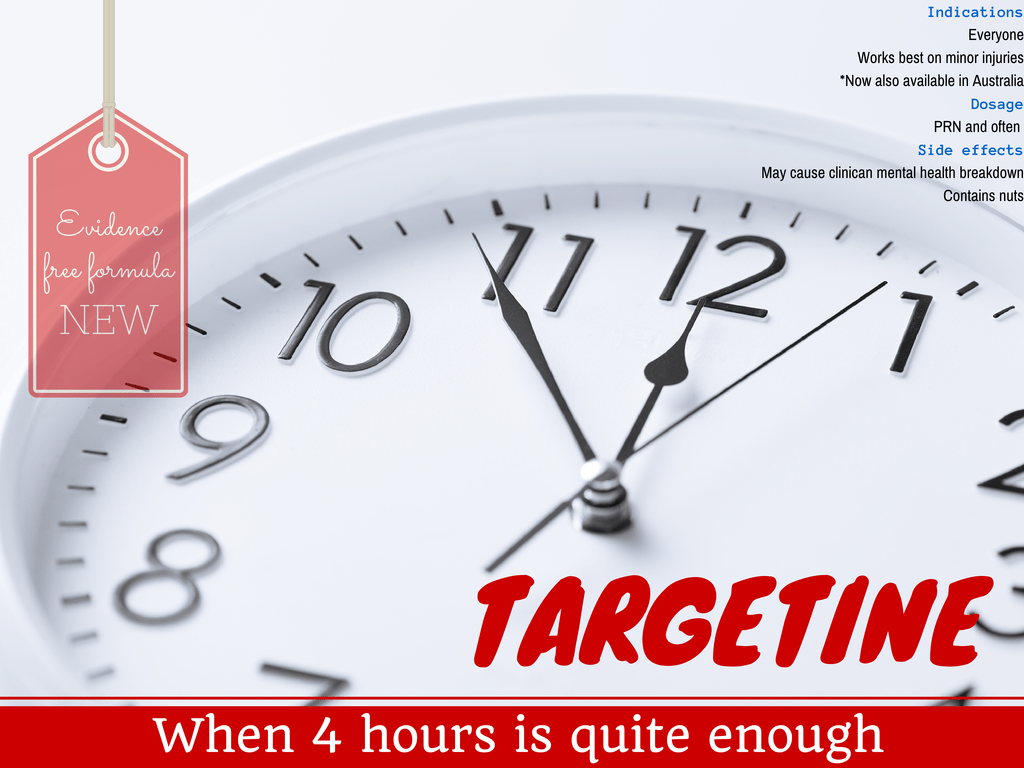
A 2014 satire recasts the emergency department four-hour target as a fictional drug, ‘Targetine’. Iain Beardsell uses the analogy to question the evidence behind performance targets, their unintended effects on priorities and staff wellbeing, and whether patient-centred outcomes receive the same scrutiny as compliance.
Rick Body introduces his SMACC Gold 2014 talk, ‘The Heart Under Stress’, on using history, examination and troponin testing when assessing possible acute coronary syndrome. The accompanying post also reflects on turning research into an engaging conference presentation, with storytelling and humour alongside the clinical discussion.
Who should be seen next when the emergency department cannot see everyone immediately? Rick Body uses hypothetical triage dilemmas to explore fairness, waiting time, clinical urgency and suffering, asking how fast-tracking, staffing decisions and performance targets affect the balance between individual patients and the wider department.