A 2019 appraisal of rocuronium versus suxamethonium for prehospital rapid-sequence intubation. The review examines first-pass success, the interpretation of a non-inferiority trial and the limits of detecting rare complications, while considering how airway choices depend on the wider clinical setting and available resources.
Can virtual reality make venepuncture and cannulation less painful for children? Natalie May appraises a 2019 randomised study, examining pain scores, differences between clinical settings and feedback from children and carers, while considering the limits and practicalities of this distraction technique.
Must stable patients with recent-onset atrial fibrillation undergo immediate cardioversion? This 2019 appraisal compares early cardioversion with a rate-control and delayed approach, examining a non-inferiority trial’s outcomes, spontaneous conversion and the questions it leaves about complications and practical care.
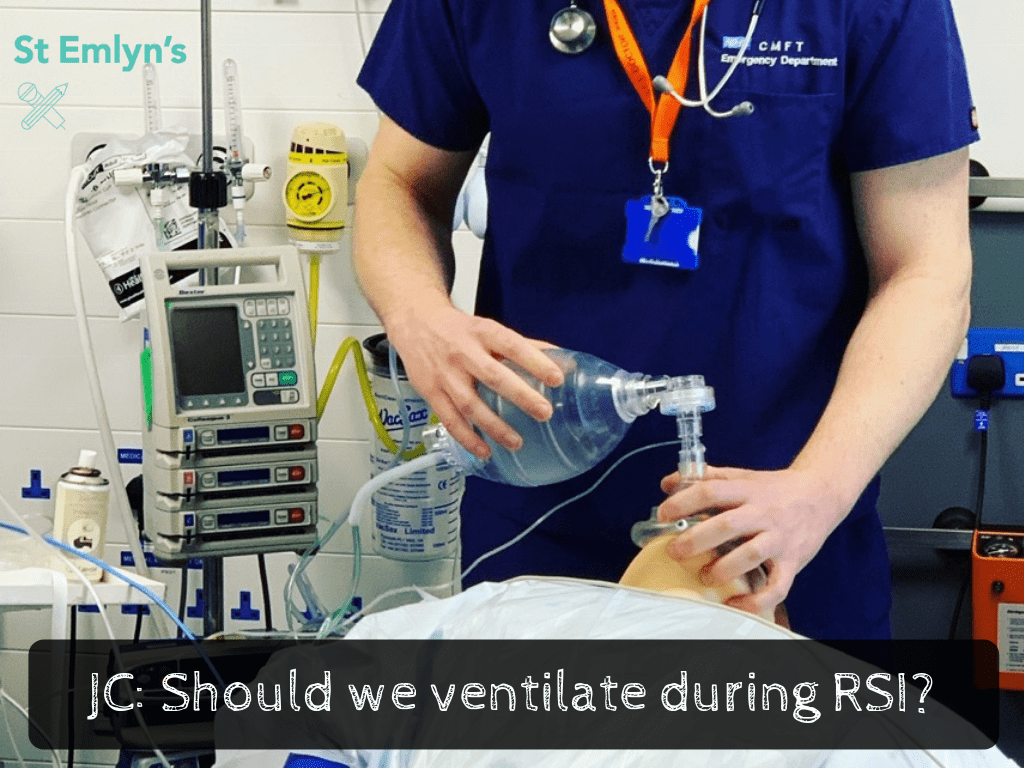
Should ventilation continue between induction and laryngoscopy during rapid sequence intubation? This 2019 appraisal examines a randomised trial in critically ill adults, weighing oxygen desaturation and aspiration outcomes against differences in technique, preoxygenation and the applicability of ICU findings to emergency departments.
Should adults receive midazolam or haloperidol before ketamine sedation in the ED? This 2019 trial appraisal weighs reduced agitation against longer recovery, examines the study’s size and outcome measures, and asks whether observed behaviour captures what matters to patients.
Does cricoid pressure still have a place in rapid sequence induction? Simon Carley appraises a large 2018 randomised trial, weighing aspiration outcomes against difficulties with laryngoscopy. He also considers the limits of applying operating-theatre evidence to emergency department patients and groups excluded from the study.