
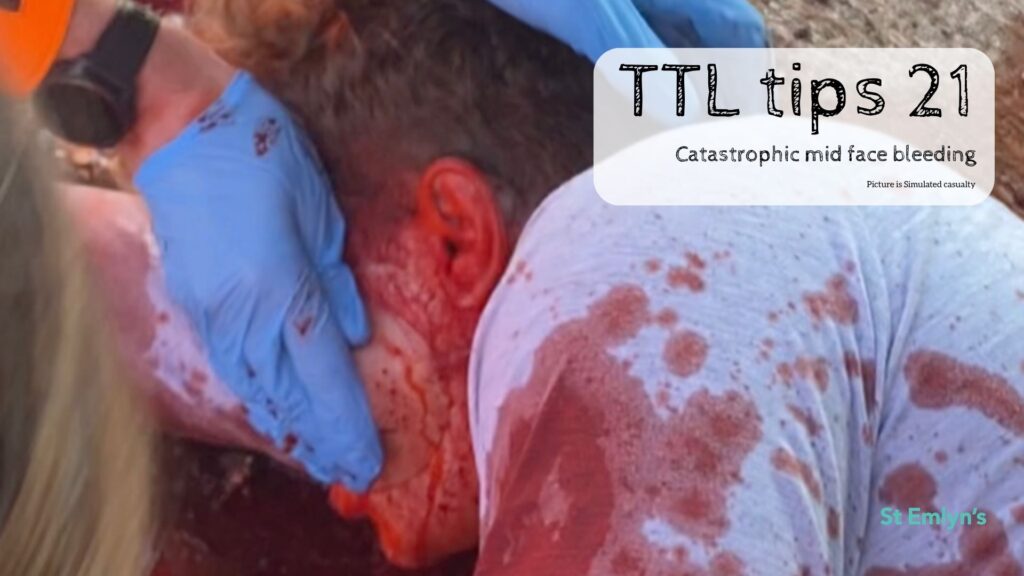
The face has a rich blood supply, and severe midface injuries can bleed a lot. That bleeding can threaten both the airway and the circulation, and controlling it can be difficult.
For catastrophic or uncontrolled bleeding associated with midface fractures, the “stacking” technique combines facial stabilisation with nasal balloon tamponade. It is a rescue technique for an intubated patient, requiring experienced clinicians and the right equipment.
The sequence matters: secure the airway, support the facial skeleton, then inflate the balloons.
- Secure the airway and ventilate. Get an experienced anaesthetist in the room early. Anticipate a difficult, heavily contaminated airway, with effective suction and a clear rescue plan. It might turn out to be fine, but best to have help in the room.
- Prepare the nasal balloon catheters. Position bilateral devices carefully along the floor of the nose, following the agreed protocol. Do not inflate them yet. Disrupted anatomy and possible skull-base injury make careful placement essential.
- Reduce and support the midface. An experienced clinician should restore alignment and position dental bite blocks between the upper and lower molars, either side of the tracheal tube.
- Support the mandible. The traditional stacking technique uses a cervical collar; some protocols use an alternative support. Follow the method your team has trained to use. If you’ve thrown away all your collars, you can put a big comedy looking bandage under chin and over the top of the patient’s head.
- Inflate the balloons in the prescribed sequence. Once support is in place, inflate the posterior and then anterior balloons according to the device and local protocol, coordinating inflation on both sides. Reassess bleeding and facial alignment throughout.
As TTL, bring senior anaesthetic and maxillofacial colleagues together early, coordinate haemorrhage resuscitation and keep definitive bleeding control moving. Stacking is a temporary measure, and persistent bleeding needs urgent escalation.
There is also a practical preparation point: know where the equipment is before you need it. If bite blocks are held in theatre maxillofacial sets, make sure the team knows how to obtain them urgently. Identify and resolve any gaps in the departmental kit.
Watch the Sydney HEMS teaching video on maxillofacial haemorrhage control and rehearse the technique against your local protocol.
