What’s the down time? St Emlyn’s
There is one question that is always asked when a patient who has experienced a cardiac arrest is brought to the ED. What’s the downtime? (Nearly) Every team leader in […]
What’s the down time? St Emlyn’s Read More
There is one question that is always asked when a patient who has experienced a cardiac arrest is brought to the ED. What’s the downtime? (Nearly) Every team leader in […]
What’s the down time? St Emlyn’s Read More
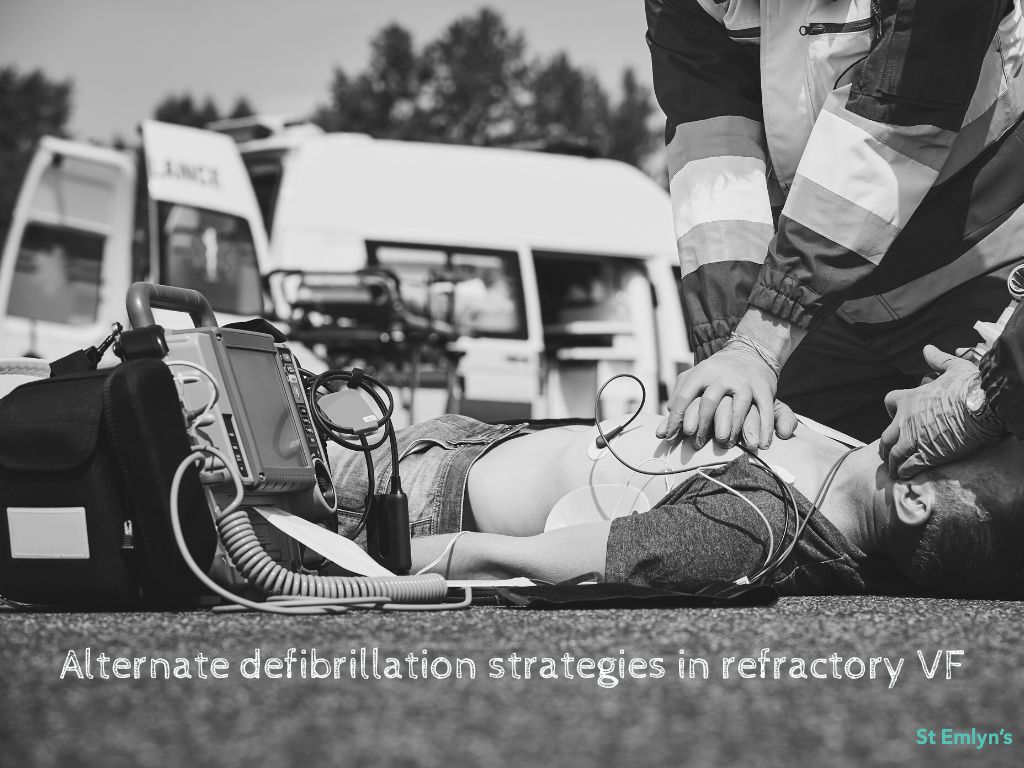
Review of an RCT comparing dual sequence defibrillation against antero-lateral and antero-posterior pad positions
Alternate defibrillation strategies in refractory ventricular fibrillation Read More
A quick update on an TTM2 trial published in the NEJM last month. As part of the chain of survival it’s important to optimise the post resuscitation phase, primarily to
JC: The TTM2 trial. Normothermia or hypothermia post cardiac arrest. Read More
If you’re an avid follower of FOAM, you’ll have seen many assertions that manual pulse checks by healthcare providers during cardiac arrest are pretty unreliable at best. The most commonly
JC: Finger on the Pulse? Read More
I don’t know if this has ever happened to you but when I was still a registrar, often I’d be in the midst of a resuscitation or major trauma case
JC: Pseudo PEA in the ED. St Emlyn's Read More
This is a question that we’ve addressed on the blog before and the evidence has been a little conflicting1–6. From a pathophysiological perspective the logic of using closed chest compressions
Should we use chest compressions in traumatic cardiac arrest? Read More
I’ve been meaning to do a blog on this paper for some time now. Paul Young, who’s opinion I have a lot of time for, seemed clearly excited about its
Ed – This blog is based on the talk Salim gave at #stemlynsLIVE in Manchester back in September 2018. The background and data below was first published on the REBEL
Beyond A(C)LS. Salim Rezaie at #stemlynsLIVE Read More