Why might a bleeding trauma patient have a slow heart rate? Rich Carden explores the Bezold-Jarisch reflex, its proposed role in bradycardia during haemorrhage and the danger of assuming that an absence of tachycardia means an absence of blood loss.
How can hospitals learn from a major incident while protecting those affected? This May 2021 post introduces the published hospital data from the Manchester Arena bombing, explaining the ethical challenges of reporting identifiable events and the development of a dedicated trauma-registry module.
What can a specialist prehospital service teach us about a rare emergency airway procedure? This review of London Air Ambulance's 20-year cricothyroidotomy experience separates procedural success from patient survival and considers the implications for training, preparation and interpreting retrospective data.
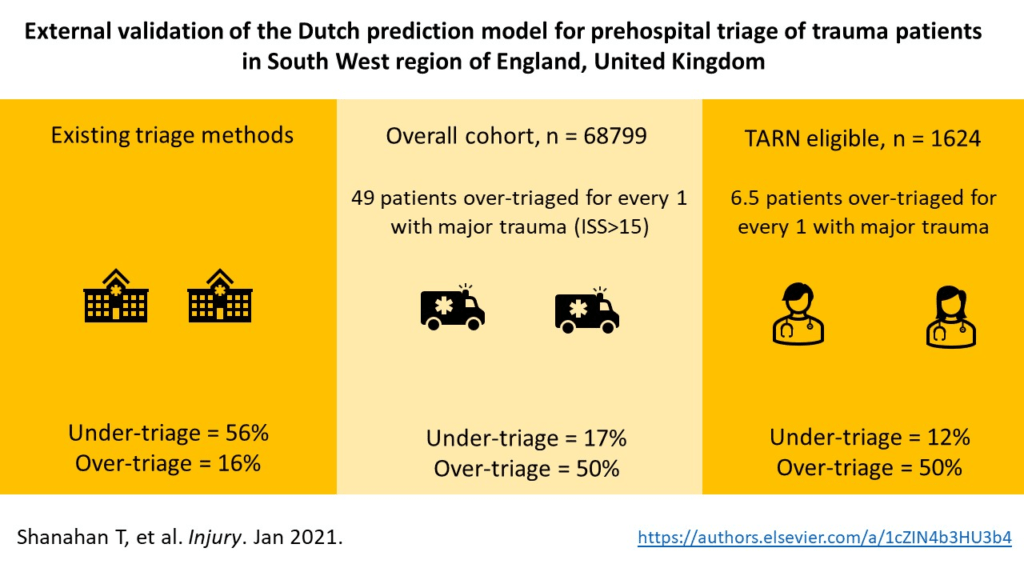
Can a Dutch prediction model improve prehospital major trauma triage in the UK? Tom Shanahan explains its retrospective external validation, the tradeoff between missed major trauma and over-triage, and why prospective testing and practical evaluation are needed before implementation.
What does STAAMP add to the evidence for prehospital tranexamic acid after trauma? This 2020 appraisal examines the lack of a clear overall mortality benefit, recruitment and power limitations, safety findings and the caution needed when interpreting encouraging timing, shock and dosing subgroups.
Could intramuscular tranexamic acid be useful when intravenous delivery is difficult? This 2020 review examines a small pharmacokinetic study in trauma patients who had already received IV TXA, distinguishing encouraging absorption data from evidence of improved outcomes or effectiveness as an initial dose.